State Guide
Data Centers in Texas: Lawsuits, Disputes, and Your Rights
Texas is building data centers faster than almost anywhere: Dallas-Fort Worth, San Antonio, the Stargate campus in Abilene, and a West Texas crypto corridor. Granbury residents have two pending nuisance suits over 24/7 facility noise. What Texas neighbors can do, and how to tell us about your situation.
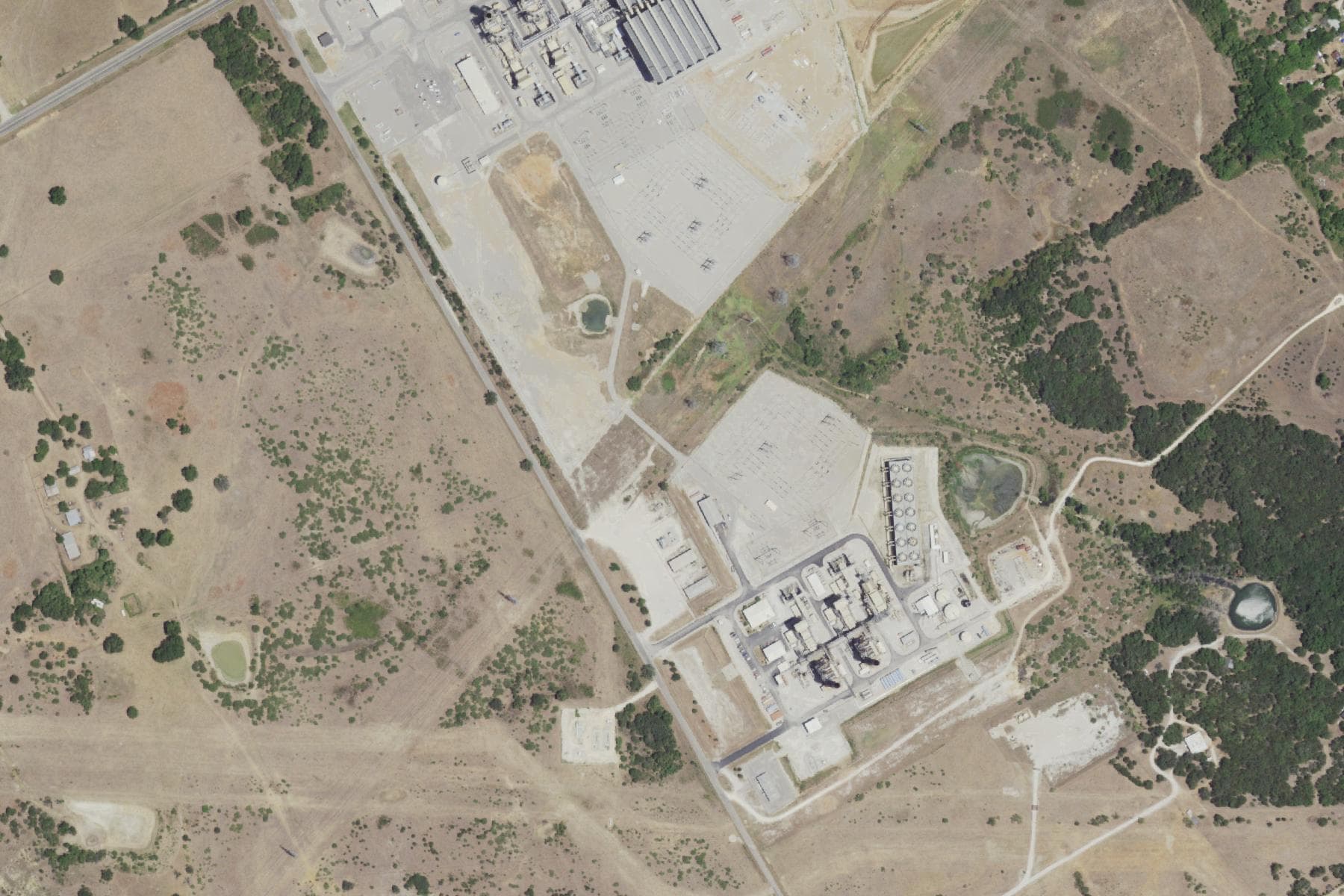
Wolf Hollow generating complex and adjacent mining site in Granbury, Texas, photographed 2022-07-06. The mine draws power behind the meter at the Wolf Hollow generating complex, on open ranchland where houses and small holdings sit in every direction. This 2022 imagery predates the rows of immersion units and the sound wall built on the residential side.
USDA Farm Service Agency / USGS National Map, National Agriculture Imagery Program. Cropped from NAIP 0.6 m aerial imagery, scene m_3209743_nw_14_060_20220706. (original)
Texas at a glance
Largest markets
- Market size
- Massive and accelerating; Dallas-Fort Worth is one of the largest data center markets in the country
- Hot spots
- Dallas-Fort Worth, San Antonio, Abilene (the Stargate AI campus), the West Texas crypto corridor, Hood County
- Key operators
- Hyperscale and AI operators across DFW and San Antonio; the Stargate project in Abilene; Marathon Digital Holdings (MARA) near Granbury
- Documented disputes
- Two pending Granbury nuisance suits over crypto mine noise: a 2024 state court case and a 2026 federal case
- Statewide action
- ERCOT rulemaking on large-load interconnection is underway
Key Takeaways
- Granbury residents filed the country's highest profile facility noise suit: an October 2024 private nuisance case against Marathon Digital Holdings over 24/7 fan noise, brought by Earthjustice and seeking a permanent injunction. It is still pending.
- A second, separate federal suit followed in May 2026: nine Hood County property owners suing over the same noise with nuisance, negligence, and emotional distress claims and more than $1 million at stake.
- The health record matters: Granbury residents documented migraines, tinnitus, and sleep loss among more than two dozen neighbors, exactly the kind of evidence that makes a nuisance case real.
- Texas counties have limited zoning power in unincorporated areas, which is why Granbury neighbors went straight to nuisance law rather than a permit fight.
- ERCOT is rewriting its rules for giant new loads, and nuisance and property damage claims carry filing deadlines, commonly two to six years depending on the claim. Document early and talk to a lawyer.
Data centers in Texas, from the registry
All 131 sites131 sites on the public record: 50 operating, 39 under construction, 0 permitted, 42 proposed. 15 carry documented opposition or litigation. 62.3 GW planned.
By county, alphabetically. Each profile carries capacity, land, utility, water, subsidies, jobs, a timeline, and every source.
Andrews County (3 sites)
- Cipher Stingray HPC Data Center · Andrews · Cipher DigitalUnder construction · 100 MW
- Bear Bitcoin Mine · Andrews · WindHQ LLC / Canaan Inc.Operating · 40 MW
- Chief Mountain Bitcoin Mine · Andrews · WindHQ LLC / Canaan Inc.Operating · 40 MW
Angelina County (1 site)
- HyperDataGrid Lufkin Data Center (Former Timber Mill Site) · Lufkin · HyperDataGridProposed · 20 MW
Armstrong County (1 site)
- Goodnight Campus · Claude · Google / CrusoeUnder construction · 933 MW · Supported
Austin County (1 site)
- CleanSpark Austin County AI Data Center Campus · CleanSpark, Inc.Proposed · 285 MW
Bastrop County (1 site)
- AUS02 / Cedar Creek Campus · Cedar Creek · EdgeConneXUnder construction · 384 MW
Bell County (2 sites)
- Rowan Project Temple · Temple · Rowan Digital InfrastructureUnder construction · 300 MW · Mixed reception
- Meta Temple Data Center · Temple · MetaOperating · 152 MW
Bexar County (5 sites)
- CyrusOne SAT2-SAT4 (San Antonio) · San Antonio · CyrusOneOperating · 36 MW
- CyrusOne SAT1 (San Antonio) · San Antonio · CyrusOneOperating
- Lumen San Antonio 2 · San Antonio · Lumen TechnologiesOperating
- Vantage San Antonio TX11 · San Antonio · Vantage Data CentersOperating
- Vantage San Antonio TX22 · San Antonio · Vantage Data CentersUnder construction
Bosque County (1 site)
- CyrusOne Bosque County Campus (Thad Hill Energy Center) · CyrusOneUnder construction · 400 MW
Brazoria County (1 site)
- CleanSpark Brazoria County (Second Texas) Campus · CleanSpark, Inc.Proposed · 300 MW
Brazos County (1 site)
- RELLIS Data and Research Center · Bryan · ThisWay Global, Inc.Under construction
Briscoe County (2 sites)
- Soluna Project Dorothy · Silverton · Soluna HoldingsOperating · 98 MW
- Soluna Project Grace · Silverton · Soluna HoldingsUnder construction · 2 MW
Caldwell County (2 sites)
- PowerHouse Caldwell County Data Center · Uhland · PowerHouse Data CentersProposed · 4 GW · Contested
- Tract Caldwell Valley Technology Park · Uhland · TractProposed · 2 GW
Cameron County (1 site)
- Soluna Project Ellen · Rio Hondo · Soluna HoldingsProposed · 100 MW
Carson County (1 site)
- Project Matador · Amarillo · Fermi AmericaUnder construction · Contested
Childress County (2 sites)
- IREN Horizon, Childress, TX · Childress · IREN (Iris Energy)Under construction · 750 MW · Supported
- Soluna Project Fei · Childress · Soluna HoldingsProposed · 100 MW
Collin County (7 sites)
- Lambda Plano AI Data Center (Aligned DFW-04) · Plano · LambdaUnder construction · 100 MW
- STACK DFW01 (Plano) · Plano · STACK InfrastructureOperating · 80 MW
- Aligned DFW-01 · Plano · Aligned Data CentersOperating · 60 MW
- CyrusOne DFW3-DFW5 (Allen) · Allen · CyrusOneOperating · 50 MW
- Flexential Dallas - Plano · Plano · FlexentialOperating · 13 MW
- BlockchAIn Collin County AI GPU Hosting Site · BlockchAIn Digital Infrastructure, Inc.Under construction
- TierPoint Dallas-Allen · Allen · TierPointOperating
Culberson County (1 site)
- Hut 8 Salt Creek Facility · American Bitcoin (Hut 8)Operating · 63 MW
Dallas County (15 sites)
- STACK DFW02 (Lancaster) · Lancaster · STACK InfrastructureUnder construction · 500 MW
- Crow Holdings Stemmons Corridor Data Center Campus · Dallas · Crow Holdings (developed and leased by CleanArc Data Centers)Proposed · 245 MW
- QTS Irving 1 · Irving · QTS Data CentersOperating · 165 MW
- Stream Data Centers DFWA (DFW VII) · Garland · Stream Data CentersOperating · 43 MW
- Edged Dallas (Irving) · Irving · Edged EnergyOperating · 24 MW
- Prime DFW01-01 · Dallas · Prime Data CentersOperating · 8 MW
- Flexential Dallas - Downtown Dallas · Dallas · FlexentialOperating · 6.66 MW
- Equinix Dallas DA11 · Dallas · EquinixOperating
- Equinix Dallas DA12 (West Dallas) · Dallas · EquinixProposed
- Flexential Dallas - Richardson · Richardson · FlexentialOperating
- Lumen Dallas 1 · Dallas · Lumen TechnologiesOperating
- Lumen Dallas 6 · Dallas · Lumen TechnologiesOperating
- Microsoft Irving Data Centers · Irving · MicrosoftProposed
- NTT Global Data Centers Dallas TX1 · Garland · NTT Global Data CentersOperating
- TierPoint Dallas · Dallas · TierPointOperating
Denton County (2 sites)
- Core Scientific Denton Data Center (Denton 1) · Denton · Core ScientificUnder construction · 260 MW
- QumulusAI Denton Modular Data Center · Denton · QumulusAI, Inc.Proposed · 20 MW
Dickens County (1 site)
- Galaxy Helios Data Center Campus · Afton · Galaxy DigitalOperating · 1.6 GW · Supported
Ector County (3 sites)
- Texas Critical Data Centers (TCDC) · Sharon AI + New Era Energy & Digital (joint venture)Proposed · 250 MW
- Cipher Digital Odessa Facility · Odessa · Cipher DigitalOperating · 207 MW
- Sangha Renewables Ector County Bitcoin Mining Facility · Odessa · Sangha RenewablesOperating · 19.9 MW
El Paso County (1 site)
- Meta El Paso AI Data Center Campus · El Paso · MetaUnder construction · 1 GW · Contested
Ellis County (4 sites)
- Google Red Oak Campus · Red Oak · GoogleOperating · Mixed reception
- Red Oak Campus · Red Oak · Compass DatacentersProposed · Mixed reception
- PowerHouse Grand Prairie Campus · Grand Prairie · PowerHouse Data CentersUnder construction · 1.8 GW
- Red Oak Campus · Red Oak · DataBankUnder construction · 480 MW
Freestone County (1 site)
- CyrusOne Freestone Energy Center Campus · Fairfield · CyrusOneUnder construction · 760 MW
Glasscock County (1 site)
- Marathon Digital Garden City Facility · Garden City · MARA HoldingsOperating · 200 MW
Gray County (1 site)
- Google Meitner Energy Center · Pampa · GoogleUnder construction · Mixed reception
Hale County (2 sites)
- Aligned Data Centers Project Caprock · Abernathy · Aligned Data CentersUnder construction · 540 MW · Mixed reception
- Fluidstack Abernathy AI Campus · Abernathy · FluidstackUnder construction · 168 MW
Hall County (1 site)
- QTS-Lancium Hall County Data Center Campus · Turkey · QTS Data Centers / LanciumProposed
Harris County (1 site)
- Skybox Houston One · Katy · Skybox DatacentersOperating · 26 MW
Haskell County (1 site)
- Google Haskell County Data Center Campus · Haskell · GoogleUnder construction · Mixed reception
Hays County (1 site)
- CloudBurst San Marcos GigaCenter · San Marcos · CloudBurst Data CentersUnder construction · 1.2 GW · Mixed reception
Hill County (2 sites)
- Project Aquila · RCM Hill, LLCProposed · 1.2 GW · In litigation
- Nexus Hubbard Data Center & Power Campus · Hubbard · Nexus Data CentersUnder construction · 612 MW · Contested
Hood County (4 sites)
- MARA Granbury Facility · Granbury · MARA HoldingsOperating · 300 MW · In litigation
- Fort Spunky · Pacifico EnergyProposed · 100 MW · In litigation
- Comanche Circle · Tolar · Sailfish Digital Ventures (SDV)Proposed · 2 GW · Contested
- Big Digital Energy-10NetZero Hood County AI Data Center Campus · Big Digital Energy, Inc. / 10NetZero, Inc. (50/50 joint venture)Proposed · 311 MW
Hunt County (1 site)
- Telios Quinlan Campus · Quinlan · Core ScientificProposed · 430 MW · Contested
Kaufman County (2 sites)
- Prometheus Hyperscale Kaufman County Campus · Prometheus HyperscaleProposed · 200 MW
- Flexential Kaufman County Campus (Talty) · Talty · FlexentialProposed · 108 MW
La Salle County (1 site)
- Cipher Reveille HPC Data Center · Cotulla · Cipher DigitalProposed · 70 MW
Lamar County (1 site)
- Soluna Project Annie · Paris · Soluna HoldingsProposed · 75 MW
Matagorda County (1 site)
- Site MAT 1177 · MARA HoldingsProposed · 1 GW
McCulloch County (1 site)
- Cipher Mikeska HPC Data Center · Brady · Cipher DigitalProposed
McLennan County (2 sites)
- Project Merlin (Helios II) · McGregor · Galaxy DigitalProposed · 3.5 GW · Contested
- Cipher McLennan HPC Data Center · Waco · Cipher DigitalProposed · 500 MW · Contested
Medina County (1 site)
- Microsoft San Antonio SAT89/SAT90 Data Centers · Castroville · MicrosoftUnder construction · Mixed reception
Milam County (3 sites)
- Stargate Milam County Campus · OpenAI / SoftBank (SB Energy)Under construction · 1.2 GW · Supported
- Riot Platforms Whinstone Facility · Rockdale · Riot PlatformsOperating · 750 MW
- Bitdeer Rockdale Facility · Rockdale · BitdeerOperating · 170 MW
Mitchell County (1 site)
- Cipher Barber Lake Campus · Colorado City · Cipher DigitalUnder construction · 300 MW
Navarro County (1 site)
- Riot Platforms Corsicana Facility · Corsicana · Riot PlatformsOperating · 1 GW · Contested
Nolan County (2 sites)
- IREN Sweetwater Campus · Sweetwater · IREN (Iris Energy)Under construction · 2 GW · Mixed reception
- Crusoe Nolan County Data Center · Sweetwater · Crusoe Energy SystemsProposed · 200 MW
Nueces County (3 sites)
- Hut 8 Beacon Point AI Campus · Robstown · Hut 8Under construction · 352 MW · Mixed reception
- Peak Mining Texas 1 (Saxet Energy Park) · Corpus Christi · Peak MiningOperating · 300 MW
- Peak Mining Texas 2 · Corpus Christi · Peak MiningUnder construction · 300 MW
Pecos County (4 sites)
- GW Ranch · Pacifico EnergyProposed · 7.7 GW
- Poolside Project Horizon AI Campus · Poolside AIProposed · 2 GW
- Lancium Fort Stockton Clean Campus · Fort Stockton · LanciumOperating · 325 MW
- Amazon Pecos County Data Center Campus · Amazon Data Services, Inc.Proposed
Potter County (1 site)
- Hut 8 Vega Facility · Amarillo · American Bitcoin (Hut 8)Operating · 205 MW
Randall County (1 site)
- Alborz Bitcoin Mine · Happy · WindHQ LLC / Canaan Inc.Operating · 40 MW
Reeves County (3 sites)
- Microsoft Pecos Data Center Campus · Pecos · MicrosoftProposed · 2 GW · Supported
- Core Scientific Pecos AI Campus · Pecos · Core ScientificUnder construction · 1.5 GW
- BlockchAIn Reeves County AI GPU Hosting Site · BlockchAIn Digital Infrastructure, Inc.Proposed
Scurry County (1 site)
- Energy Vault Snyder AI Campus · Snyder · Energy Vault, Inc.Under construction · 500 MW
Shackelford County (1 site)
- Vantage Frontier Campus · Vantage Data CentersUnder construction · 1.4 GW · Supported
Smith County (1 site)
- Barrio Energy Tyler Data Center (West Erwin Street) · Tyler · Barrio Energy / Barrio Resources LLC (with Vulcan Core)Proposed · 12 MW · In litigation
Somervell County (1 site)
- AWS Project Spectrum (Somervell/Hood County) · Amazon Data Services, Inc.Proposed
Tarrant County (2 sites)
- Aligned DFW-03 · Mansfield · Aligned Data CentersOperating
- Meta Fort Worth Data Center · Fort Worth · MetaOperating
Taylor County (2 sites)
- Stargate Abilene · Abilene · OpenAI / Oracle / CrusoeOperating · 1.2 GW · Mixed reception
- Lancium Clean Campus (Crusoe / Stargate Site 1) · Abilene · CrusoeOperating · 1.2 GW · Supported
Tom Green County (2 sites)
- Westline Site / Dove Creek Technology Campus · San Angelo (Tankersley area, unincorporated) · Beacon Data Centers (via Westline TX Holdings)Proposed · Contested
- Cipher Colchis Campus · San Angelo · Cipher DigitalProposed · 1 GW
Travis County (6 sites)
- Tesla Cortex 2.0 AI Training Cluster (Giga Texas) · Austin · TeslaUnder construction · 500 MW
- Core Scientific Austin Data Center (Austin 1) · Austin · Core ScientificOperating · 200 MW
- Element Critical Austin One · Austin · Element CriticalOperating · 5 MW
- Digital Realty AUS11 · Austin · Digital RealtyOperating
- Lumen Austin 1 · Austin · Lumen TechnologiesOperating
- Lumen Austin 3 · Austin · Lumen TechnologiesOperating
Upton County (1 site)
- King Mountain Facility (50% JV) · McCamey · Hut 8Operating · 280 MW
Victoria County (1 site)
- Crusoe Victoria AI Factory · Victoria · CrusoeProposed · 1.5 GW · Contested
Walker County (1 site)
- Cipher Milsing HPC Data Center · Huntsville · Cipher DigitalProposed
Webb County (1 site)
- Data City, Texas · Laredo · Energy Abundance Development CorporationProposed · 5 GW
Wharton County (1 site)
- AWS Project Eagle (Wharton County) · Boling · Amazon Data Services, Inc.Proposed
Wilbarger County (1 site)
- Google Wilbarger County Campus · Vernon · GoogleUnder construction
Willacy County (1 site)
- Soluna Project Kati · Raymondville · Soluna HoldingsUnder construction · 166 MW
Williamson County (1 site)
- Switch: The Rock (Round Rock) · Round Rock · SwitchUnder construction · 185 MW
Winkler County (1 site)
- Cipher Black Pearl Campus · Wink · Cipher DigitalUnder construction · 300 MW
Wise County (1 site)
- BlockchAIn Wise County Data Mining Site · BlockchAIn Digital Infrastructure, Inc.Under construction
County not on record (2 sites)
- PowerHouse Circle T Data Center Campus · Westlake · PowerHouse Data CentersProposed · 300 MW
- MARA Flared/Stranded-Gas Mining Fleet (TX + ND) · Midland/Odessa area (representative) · MARA HoldingsOperating · 25 MW
In this article
Texas is building data centers, AI campuses, and crypto mines faster than almost any state in the country, and Texas neighbors are already in court. Dallas-Fort Worth ranks among the largest data center markets anywhere, San Antonio is growing quickly, the giant Stargate AI campus is rising in Abilene, and cheap power has pulled a corridor of crypto mining operations into West Texas. The most important fight so far is in Granbury, where residents living beside a Marathon crypto mining site have filed two separate lawsuits over relentless fan noise. Those cases are widely seen as the legal test bed for the AI data center noise suits coming everywhere else. Here is where things stand and what you can do if a facility is affecting your home.
The data center footprint in Texas
Everything about the Texas build-out is big. Dallas-Fort Worth has long been one of the country's largest data center markets, and the AI boom has pushed development into San Antonio and far beyond the major metros. In Abilene, the Stargate project is turning a mid-sized West Texas city into the site of one of the largest AI campuses in the world. And across West Texas, inexpensive power and available land created a cluster of crypto mining operations, including the Marathon Digital Holdings (MARA) site at the Wolf Hollow plant near Granbury in Hood County.
The state's independent grid is part of the story. ERCOT is now running a rulemaking on how enormous new loads connect to the system, because data centers and mining operations of this size change the economics of the grid for everyone else. For neighbors, though, the build-out usually arrives as something much more immediate: a wall of mechanical noise, construction traffic, and an industrial facility where open land used to be.
What residents are dealing with
The Texas complaint record is dominated by one issue: noise.
- Around-the-clock fan noise. Residents near the Marathon crypto mining site in Granbury describe a constant roar from cooling fans running 24 hours a day. Court filings and reporting document migraines, tinnitus, and sleep loss among more than two dozen residents.
- Health impacts as evidence. The Granbury record shows what strong documentation looks like: named residents, specific symptoms, dated complaints, and sound readings, assembled over years.
- Limited local rules. Much of the growth is happening in unincorporated areas where Texas counties have limited zoning power, so neighbors often cannot count on a county ordinance to control an industrial neighbor.
- Grid and bill anxiety. With data centers and mines claiming huge shares of ERCOT capacity, residents worry about reliability and rates, a fight playing out in the ERCOT large-load rulemaking rather than in court.
If any of this sounds familiar, our guides on noise claims and documenting harm walk through the playbook in detail.
Lawsuits and disputes in Texas
Granbury residents v. Marathon (state court, 2024). In October 2024, Earthjustice filed a private nuisance suit in Texas state court on behalf of Granbury residents against Marathon Digital Holdings over 24/7 fan noise at the Wolf Hollow site. The suit seeks a permanent injunction, and the case fought through discovery disputes across 2025. It remains pending.
Hood County property owners v. Marathon (federal court, 2026). In May 2026, a separate group of nine Hood County property owners filed a federal complaint over the same noise, alleging private nuisance, negligence, and intentional infliction of emotional distress, with more than $1 million in claimed damages. Also pending.
Both cases are covered in depth in our article on the Granbury bitcoin mine noise lawsuits.
The ERCOT large-load rulemaking. There is no consumer lawsuit over data center electricity costs in Texas. The cost fight is regulatory: ERCOT is reviewing how facilities of this scale interconnect and what they owe the system. Residents concerned about bills should follow that docket; our guide on data centers and your electric bill explains how the cost-shifting issue works.
Your legal options in Texas
Texas neighbors typically have four paths, and Granbury shows the first one in action:
- Private nuisance and negligence claims for noise, dust, vibration, and property damage, seeking damages and an injunction. Because counties in unincorporated Texas have limited zoning power, nuisance law is often the primary tool, and these cases are commonly taken on a contingency fee.
- Zoning and permit challenges where a project sits inside a city that actually zones, including challenges to rezoning decisions and permit conditions. Deadlines after an approval are short.
- Ordinance and code enforcement in cities with noise ordinances, which builds the paper record a later suit needs even when it solves nothing by itself.
- Regulatory participation at ERCOT and the Public Utility Commission on interconnection and rate design, where the electricity cost fight actually lives.
Statutes of limitations apply to damage claims, commonly two to six years depending on the claim type; a Texas attorney can confirm exactly which deadlines govern your situation. See our guide to lawsuit deadlines for how the clocks work.
If you live near a Texas data center
Do what Granbury did: build the record. Keep a dated log of noise and impacts, take decibel readings at your property line at different hours, note health effects like sleep loss and headaches with dates, photograph dust and construction damage, and put every complaint to the operator or local officials in writing.
Then get a legal read on it. Our free intake form lets you tell us what is happening; where a participating attorney who handles these matters in Texas is available, we may share your information with them with your consent, but we cannot promise that anyone will contact you.
Texas cases we are tracking
- The Granbury Noise Lawsuits: The Texas Cases Writing the Playbook for AI Data Center Noise Claims
Granbury, Texas residents, represented by Earthjustice, sued Marathon Digital Holdings in October 2024 over 24/7 fan noise from the bitcoin mine at the Wolf Hollow power plant, documenting migraines, tinnitus, and sleep loss. A separate federal complaint by nine Hood County property owners followed in May 2026, seeking more than $1 million. Both cases are pending, and together they are the precedent engine for AI data center noise litigation.
Frequently asked questions
Can I sue a data center in Texas?
Yes. Texas residents are doing it right now: Granbury neighbors filed a private nuisance suit against Marathon Digital Holdings in 2024 over constant facility noise, and nine Hood County property owners filed a separate federal suit in 2026. Both cases are pending, and the same nuisance and negligence theories apply to AI data centers.
What is happening with the Granbury bitcoin mine lawsuits?
Two cases are pending. The 2024 state court nuisance suit, filed by Earthjustice for Granbury residents, seeks a permanent injunction against the noise and worked through discovery fights in 2025. A separate 2026 federal suit by nine Hood County property owners adds negligence and emotional distress claims and seeks more than $1 million.
What can I do about data center or crypto mine noise in Texas?
Document it first: dated logs, decibel readings at your property line, and notes on health effects like sleep loss. In unincorporated areas Texas counties have limited zoning power, so the main legal tool is a private nuisance claim, which is exactly what Granbury residents filed. An attorney can evaluate whether your record supports a case.
Will data centers raise my electric bill in Texas?
That fight is happening at the grid level, not in court. ERCOT is running a rulemaking on how very large loads like data centers and crypto mines connect to the system and what they pay. No consumer lawsuit over data center electricity costs has been filed in Texas as of August 2026.
How long do I have to file a claim against a data center in Texas?
Nuisance and property damage claims carry statutes of limitations, commonly in the range of two to six years depending on the claim type, and ongoing noise raises tricky timing questions. The safest assumption is that the clock is already running, so document now and talk to a Texas attorney early.
Article sources
Our editorial standards require primary sources: government publications, regulator data, company filings, and established industry research.
Is a data center disrupting your home in Texas?
Tell us what is happening. Where a participating attorney who handles data center cases in your state is available, we may share your information with them with your consent. It is free and carries no obligation, but we cannot promise that anyone will contact you.
- Tell us about your situation
- Independent attorneys
- No obligation
Attorney or law firm handling data center matters? Speak with us