Claim Center
Data Centers and Your Electric Bill: Fighting the Cost Shift
Data center power demand is reshaping electric rates, and the fight over who pays is live at utility commissions and the Ohio Supreme Court. What the cost shift is, what protections exist, and how residents make themselves heard.
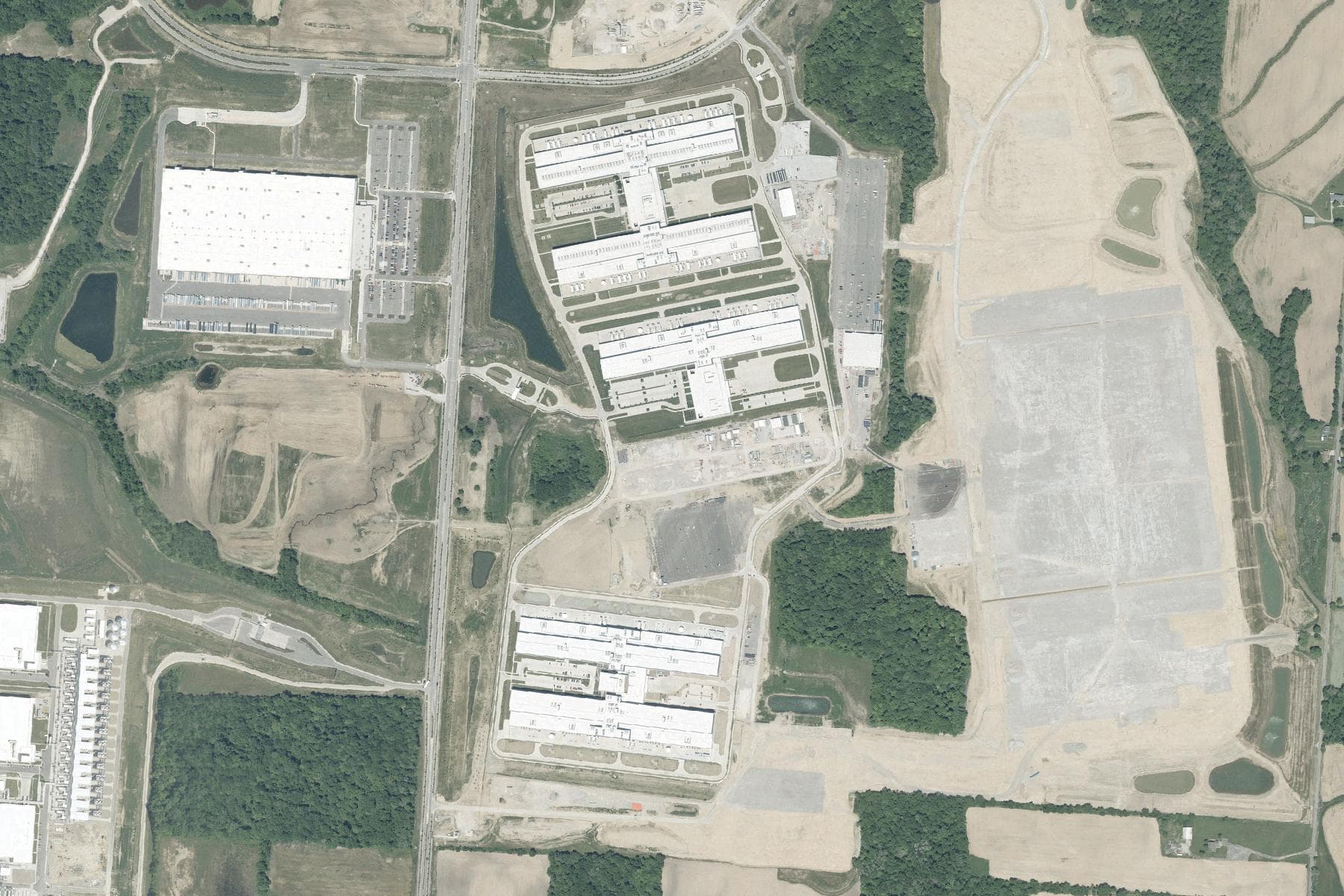
Meta's data center campus in New Albany, Ohio, photographed 2023-05-21. No single site is on trial in the AEP tariff appeal. This is what the demand looks like on the ground: an operating campus in Licking County, and beside it a graded pad for the next one. Who pays for the power those buildings draw is the whole fight.
USDA Farm Service Agency / USGS National Map, National Agriculture Imagery Program. Cropped from NAIP 0.3 m aerial imagery, scene m_4008258_ne_17_030_20230521. (original)
SueDataCenters.org is not affiliated with, endorsed by, or sponsored by Meta. This photograph illustrates reporting and is not evidence of any claim.
Key Takeaways
- Data center load requires grid build-out, and without safeguards those costs spread across everyone's bills.
- Ohio regulators forced data centers onto a special tariff carrying their own costs; the rule is on appeal at the Ohio Supreme Court with Amazon, Google, and Microsoft in the fight.
- Virginia, Pennsylvania, and Oregon created data center rate classes or tariffs in 2025 to insulate households; Oracle sued Wisconsin's commission over its version.
- There is no consumer class action over data center rates yet; the effective lever today is participation at your state utility commission.
If your electric bill keeps climbing while a data center corridor rises nearby, you are watching the biggest quiet fight in the industry: who pays for the grid the AI build-out requires. The honest status: no consumer class action exists yet, and the battles are happening at public utility commissions and state supreme courts, where the rules protecting your bill are being written right now, with or without you.
How data centers reach your bill
A hyperscale campus can demand as much power as a small city, and serving it means new generation, substations, and transmission. Utilities recover infrastructure costs from ratepayers, so unless regulators wall off data center costs, households subsidize them. That is why the Public Utilities Commission of Ohio ordered AEP Ohio's data center tariff in July 2025: customers over 25 megawatts must pay for at least 85 percent of their subscribed capacity for 12 years, so speculative build-out cannot land on residents. The tariff is now on appeal at the Ohio Supreme Court, challenged from both directions, including by a coalition of Amazon, Google, and Microsoft.
The protections spreading state to state
Virginia's State Corporation Commission approved a dedicated data center rate class in November 2025. Pennsylvania's PPL settlement created that state's first data center tariff. Oregon's POWER Act directs a separate rate class for loads over 20 megawatts. Wisconsin's commission imposed collateral requirements strong enough that Oracle sued over them in June 2026. The pattern is clear: states that act shield households; states that do not, spread the costs. The full picture is in our Ohio rate fight coverage and the electric bill guide.
What a household can actually do
Rate cases are public proceedings: you can comment, attend hearings, and support consumer advocates intervening in data center tariff dockets. If a specific facility near you is also causing physical harms, noise, water, dust, those are separate claims worth a legal read, and bundling the story helps both. Tell us what is happening; where a participating attorney in your state is available, we may share your information with them with your consent, but we cannot promise that anyone will contact you. And for the rate fight itself, your state consumer advocate's office is the direct channel.
The real cases behind this claim
- The Ohio Data Center Electric Rate Fight: Who Pays for the Grid AI Is Demanding?
In July 2025, Ohio regulators ordered AEP Ohio to create a data center tariff requiring 25 MW+ customers to pay for at least 85 percent of their subscribed capacity for 12 years. The Ohio Manufacturers' Association appealed to the Ohio Supreme Court in November 2025, and a coalition including Amazon, Google, and Microsoft is challenging the tariff as discriminatory. There is no consumer class action; here is what the tariff protects residents from and how ratepayers can engage.
The deep dive
Data Centers and Your Electric Bill: Who Pays for the Power Boom?
When a data center demands power plant-scale electricity, the grid upgrades land on everyone's bills unless regulators stop it. No consumer class action exists yet; the fight lives at utility commissions, and residents can join it. Here is how the cost shift works and how to participate.
Read the full guide →
Frequently asked questions
Are data centers raising electric bills?
Data center load requires major grid investment, and without regulatory safeguards those costs spread to all customers. Several states, including Ohio, Virginia, Pennsylvania, and Oregon, created special data center tariffs or rate classes in 2025 and 2026 specifically to prevent that shift.
Can I sue over data center electricity costs?
No consumer class action over data center-driven rates exists yet, and rate design is decided at public utility commissions rather than in damage suits. Residents participate by commenting in rate dockets and supporting consumer advocates. Physical harms from a nearby facility are separate, suable claims.
What is a data center tariff?
A special rate category requiring very large loads to pay for the grid capacity they demand, like Ohio's rule requiring 25 megawatt-plus customers to pay for at least 85 percent of subscribed capacity for 12 years, so households do not subsidize the build-out.