Claim Types
Data Centers and Your Electric Bill: Who Pays for the Power Boom?
When a data center demands power plant-scale electricity, the grid upgrades land on everyone's bills unless regulators stop it. No consumer class action exists yet; the fight lives at utility commissions, and residents can join it. Here is how the cost shift works and how to participate.
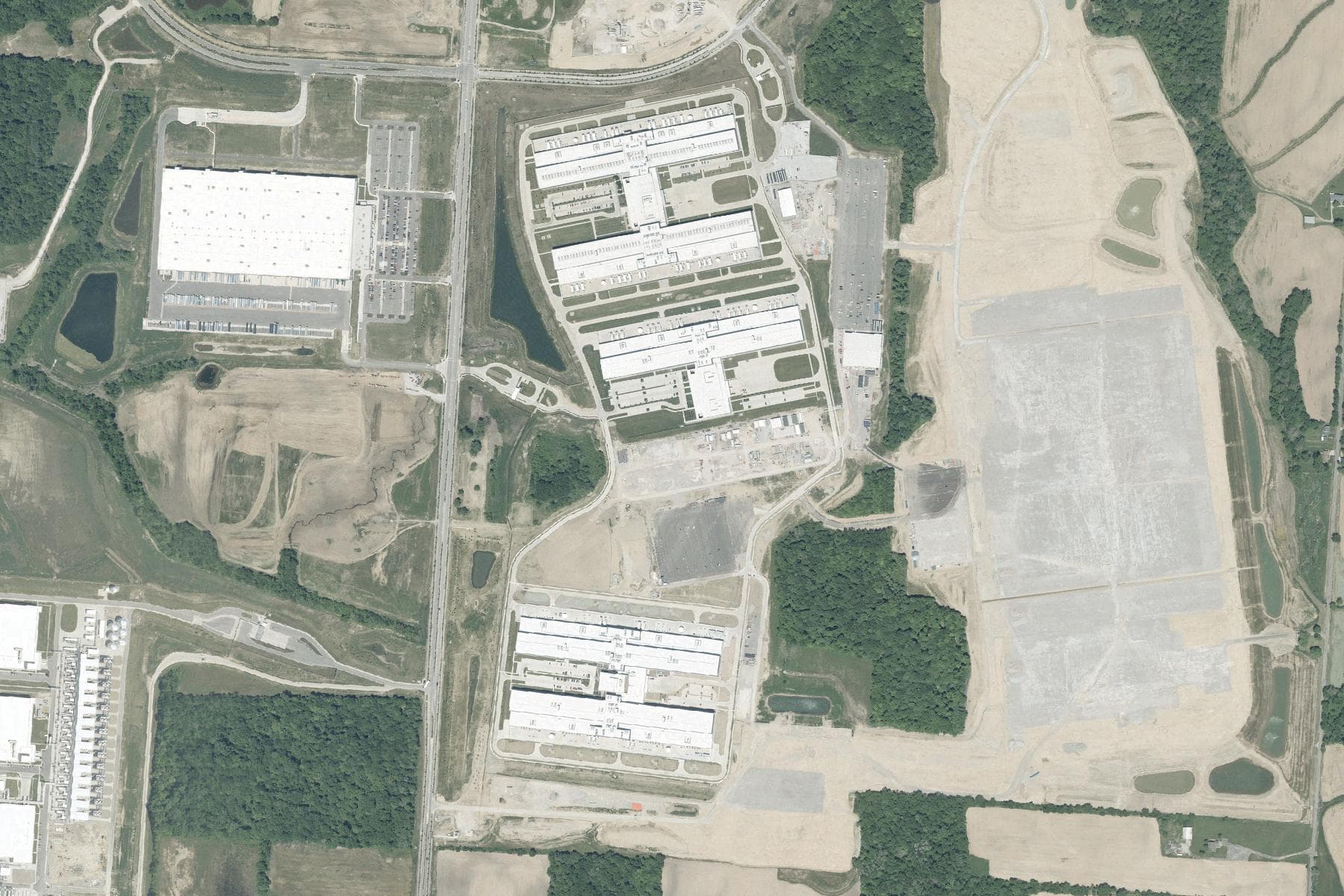
Meta's data center campus in New Albany, Ohio, photographed 2023-05-21. No single site is on trial in the AEP tariff appeal. This is what the demand looks like on the ground: an operating campus in Licking County, and beside it a graded pad for the next one. Who pays for the power those buildings draw is the whole fight.
USDA Farm Service Agency / USGS National Map, National Agriculture Imagery Program. Cropped from NAIP 0.3 m aerial imagery, scene m_4008258_ne_17_030_20230521. (original)
SueDataCenters.org is not affiliated with, endorsed by, or sponsored by Meta. This photograph illustrates reporting and is not evidence of any claim.
Key Takeaways
- The cost-shifting problem is structural: serving a single hyperscale campus can require new generation and transmission whose costs flow into general rates, meaning households can end up subsidizing the grid build-out for the world's richest companies.
- Let us be honest: NO consumer class action over data center electric rates exists as of August 2026. The fight is regulatory, at public utility commissions, state supreme courts, and FERC, and that is where residents have real, underused power.
- Ohio is the flagship: regulators ordered AEP Ohio's data center tariff in July 2025, making large data centers pay for at least 85% of their subscribed capacity for 12 years, and the appeal, Ohio Supreme Court Case 2025-1458, will shape the national playbook.
- The protective tools spreading state to state are special data center rate classes and tariffs: Virginia's SCC approved one in November 2025, Pennsylvania's PPL settlement created that state's first, and Oregon's POWER Act wrote one into law.
- Industry is fighting back in court, and not only against consumers: Oracle sued Wisconsin's utility commission in June 2026 over its large-load rules, and an Amazon, Google, and Microsoft coalition is challenging Ohio's tariff.
In this article
If your electric bill is climbing while data centers multiply nearby, you are asking the right question, but the answer is not the one most guides on this site give. There is no lawsuit to join: as of August 2026, no consumer class action over data center electricity costs exists anywhere in the country. The real fight over who pays for the power boom happens at public utility commissions and, increasingly, state supreme courts, and residents can participate directly: commenting, intervening in rate cases, and backing consumer advocates. This guide explains how data center load shifts costs onto households, what Ohio, Virginia, Pennsylvania, and Oregon have done about it, why Oracle is suing Wisconsin's regulators, and exactly how you get a voice in the process.
The cost-shifting problem, in plain English
Electric rates are built on a simple bargain: the utility spends money to serve everyone, regulators check the math, and the costs are spread across customers roughly in proportion to what they use. Data centers break the proportions. A single hyperscale AI campus can demand as much power as a city, and serving it means new generation, new substations, and new high-voltage transmission lines built years before the facility pays a full bill.
The risk lands on households in three ways:
- Shared infrastructure costs. Unless regulators wall them off, the grid upgrades driven by data center load flow into the general rate base, where every customer pays a slice. You buy the wire; the data center uses it.
- Scarcity pricing. Enormous new demand tightens regional power markets, and higher wholesale prices pass through to everyone's bills.
- Stranded-asset risk. If a utility builds for a data center that shrinks, cancels, or leaves, the mortgage on that infrastructure does not leave with it. Someone keeps paying, and absent protections, it is the remaining customers.
None of this requires villainy; it is what the existing rules do when a new class of gigantic customers arrives faster than the rules adapt. The question regulators across the country are now answering is who bears the cost and the risk: the data centers that cause it, or everyone else. That allocation is decided in rate cases and tariff proceedings, which is why this guide is about participation rather than litigation.
Ohio: the flagship fight, now at the state supreme court
Ohio, whose New Albany and Columbus corridor is one of the fastest growing data center markets in the country, produced the nation's marquee cost-allocation ruling. On July 9, 2025, the Public Utilities Commission of Ohio ordered AEP Ohio to create a data center specific tariff. Its core terms:
- Data center customers of 25 megawatts or more must pay for at least 85% of their subscribed capacity, whether or not they use it, for 12 years.
- A four-year ramp-up period phases obligations in.
- An exit fee, based on three years of minimum charges, applies if a project walks away.
The design targets the cost-shift directly: if a data center reserves grid capacity, it pays for that capacity, so households are not left covering infrastructure built on a hyperscaler's promise.
Nobody on the industrial side liked it. In November 2025, the Ohio Manufacturers' Association appealed to the Ohio Supreme Court, Case No. 2025-1458, and a coalition including Amazon, Google, and Microsoft is challenging the tariff as discriminatory. The appeal is pending as of August 2026, and the outcome will echo far beyond Ohio: a tariff upheld gives every state commission a tested template, while a reversal sends regulators back to the drawing board. We track it at our Ohio rate fight page.
The protections spreading state to state
Ohio is not alone. A wave of states has moved to insulate ordinary customers by putting very large loads in their own rate category:
Virginia. The State Corporation Commission approved a data center rate class in November 2025, a landmark in the world's largest data center market, where transmission build-out for Loudoun and Prince William campuses had long fed into general rates.
Pennsylvania. PPL's $275 million rate case settlement includes the state's first data center tariff, folding large-load protections into the everyday machinery of a rate case.
Oregon. The POWER Act, enacted in August 2025, wrote the concept into statute, directing a separate rate class for loads of 20 megawatts or more, legislation rather than a commission order, and therefore harder to unwind.
Federal level. FERC has directed regional grid operators to review their large-load interconnection rules, the wholesale-market counterpart to what states are doing at retail.
The common thread: make the customers who cause power plant-scale costs pay power plant-scale bills, through minimum take obligations, long contract terms, exit fees, and collateral requirements. The details are decided tariff by tariff, state by state, in proceedings that are public.
Industry pushback has now reached the courts from the other direction. In June 2026, Oracle sued the Wisconsin Public Service Commission over the collateral requirements in its large-load tariff rules, a case worth watching because it tests how far commissions can go in demanding financial security from data center customers before the grid is built for them. That suit is pending.
Why there is no ratepayer lawsuit, and what residents can do instead
Why can't you just sue over your bill? Because rates set by a utility commission are, by design, the exclusive product of a regulatory process: challenges go through that process and up to the courts on appeal, the way the Ohio tariff went to the state supreme court. Courts routinely turn away freestanding suits over approved rates. That is why no consumer class action exists here, and why anyone promising you one today is ahead of the law.
The regulatory process, though, is genuinely open, and residents use it less than they could:
1. Comment in rate cases and tariff dockets. Every rate increase and every data center tariff gets a docket number at your state commission (PUCO in Ohio, the SCC in Virginia, the PSC or PUC elsewhere). Commissions accept written public comments from any customer and hold public hearings in major cases. Comments become part of the record commissioners must consider.
2. Intervene, preferably as a group. Formal intervention makes you a party: you can submit evidence, cross-examine utility witnesses, and appeal. Community organizations and coalitions of residential customers are routinely granted intervention in big-load proceedings; Indiana's Citizens Action Coalition, for example, has intervened in utility dockets over data center projects. A neighborhood association with counsel can do the same in your state.
3. Back your consumer advocate. Most states fund an official residential ratepayer advocate. They are chronically outgunned by utility and hyperscaler legal teams; public support, documented bill impacts, and organized turnout strengthen their hand.
4. Push for a tariff where none exists. If your state has no data center rate class, that is the ask: cite Ohio's order, Virginia's rate class, PPL's settlement, and Oregon's POWER Act as working models, in comments, in legislative testimony, and at county hearings where new campuses seek approval.
5. Use the approval process. Grid impact is a legitimate issue when a data center seeks rezoning or a special use permit. Conditions negotiated at approval, and the leverage of an organized community, are covered in our guide to fighting a proposed data center.
What winning looks like for ratepayers
Because this is regulation rather than litigation, victory is not a check in the mail; it is bill protection compounding over decades. Concretely, wins look like: a data center tariff adopted in your state with strong minimum-take and exit-fee terms; long contract commitments that keep stranded costs off the general rate base; collateral requirements that survive challenges like Oracle's; transmission costs for dedicated data center lines assigned to the customers who caused them; and rate case outcomes where documented residential impact tempers increases. Each one shifts millions of dollars of grid costs from households to hyperscalers, permanently.
Two honest caveats. First, tariffs protect against cost shifting; they do not roll back increases already embedded in rates or lower wholesale market prices. Second, this landscape is moving fast, and the Ohio Supreme Court's ruling in Case 2025-1458 could strengthen or shake every tariff built on the AEP model.
If your concern goes beyond the bill, if the data center near you also brings noise, water, dust, or construction damage, those are different legal animals with real compensation claims attached, and they are covered in our other guides. A good first step is our free intake form lets you tell us what is happening; where a participating attorney in your state is available, we may share your information with them with your consent, but we cannot promise that anyone will contact you. A licensed attorney is the one who can sort which of your issues belong at the utility commission and which support a damages claim.
Frequently asked questions
Are data centers raising my electric bill?
They can. Serving hyperscale campuses requires new generation and transmission, and unless regulators assign those costs to the data centers through special tariffs, they flow into general rates that all customers pay. Several states, including Ohio, Virginia, Pennsylvania, and Oregon, have created data center rate classes or tariffs specifically to stop this cost shifting.
Can I sue over data center electricity costs?
Not realistically today. As of August 2026 no consumer class action over data center electric rates exists, because rates are set through utility commission proceedings and challenged on appeal from those proceedings, as in the Ohio Supreme Court tariff case. Residents' real lever is participating at the commission: public comments, intervention, and supporting the state's consumer advocate.
What is the Ohio data center tariff case?
In July 2025 Ohio regulators ordered AEP Ohio to create a data center tariff requiring customers of 25 megawatts or more to pay for at least 85% of their subscribed capacity for 12 years, with a four-year ramp and a three-year exit fee. The Ohio Manufacturers' Association appealed to the Ohio Supreme Court in November 2025, Case No. 2025-1458, joined by a coalition including Amazon, Google, and Microsoft arguing the tariff is discriminatory. The appeal is pending.
How do I comment on a utility rate case?
Find the docket on your state utility commission's website, search the utility's name plus "data center" or "large load," and file a written comment through the docket's online portal or attend a public hearing. Any customer may comment, comments enter the official record, and organized groups can go further by formally intervening as parties in the case.
Why did Oracle sue the Wisconsin Public Service Commission?
In June 2026 Oracle sued Wisconsin's utility regulator over the collateral requirements in its rules for large electric loads like data centers. The case, which is pending, tests how much financial security commissions can demand from data center customers before utilities build infrastructure to serve them, and its outcome will influence large-load rules in other states.
Which states make data centers pay their own electricity infrastructure costs?
Ohio ordered a data center tariff for AEP Ohio in 2025, now on appeal at the state supreme court. Virginia's State Corporation Commission approved a data center rate class in November 2025, Pennsylvania's PPL rate settlement created that state's first data center tariff, and Oregon's POWER Act of 2025 established a separate rate class for loads of 20 megawatts or more. FERC has also directed regional grid operators to review large-load interconnection rules.
Article sources
Our editorial standards require primary sources: government publications, regulator data, company filings, and established industry research.
- 1.PUCO: PUCO orders AEP Ohio to create data center specific tariff (July 2025)
- 2.Ohio Capital Journal: Ohio Manufacturers' Association challenges new utility billing for data centers (Nov 2025)
- 3.KJK: Legal analysis of AEP Ohio's data center tariff and PUCO's approval (Nov 2025)
- 4.Utility Dive: PPL electric rate case settlement includes data center tariff
- 5.American Action Forum: Virginia's new data center electricity rate class
- 6.The Daily Reporter: Oracle sues Wisconsin Public Service Commission over data center rules (June 2026)
- 7.Legal Planet: A tariff on data centers could help them pay their fair share (June 2026)
Related reading
- Can You Sue a Data Center? What Neighbors Can Actually Do in 2026
Yes, neighbors are suing data centers and winning real concessions: noise class actions, well water claims, voided rezonings, and Clean Air Act suits. Here is who has a case, the six legal theories that work, and what to do first.
- How to Fight a Proposed Data Center Before It Breaks Ground
Approval fights are the most successful category of data center litigation. Here is the playbook: reading the rezoning file, spotting notice and open meetings defects, organizing neighbors, referendums and recalls, moratoriums, and the short appeal clocks that decide everything.
- Do Data Centers Lower Property Values? What You Can Prove, and What It Pays
The honest answer: the evidence on data centers and home values is contested and depends heavily on location and impacts. But where noise, water damage, or construction harm is real, lost value becomes a damages line inside a nuisance or damage case. Here is how to prove it and what buyouts look like.
- Finding a Lawyer for a Data Center Case: Who to Hire and What to Ask
Three kinds of lawyers handle data center cases: land use attorneys, environmental litigators, and plaintiff firms. How the fees actually work, the questions to ask in a first consult, what to bring, the red flags to avoid, and what our free intake form does and does not do.
Is a data center disrupting your home?
Tell us what is happening. Where a participating attorney who handles data center cases in your state is available, we may share your information with them with your consent. It is free and carries no obligation, but we cannot promise that anyone will contact you.
- Tell us about your situation
- Independent attorneys
- No obligation
Attorney or law firm handling data center matters? Speak with us