Compensation
Do Data Centers Lower Property Values? What You Can Prove, and What It Pays
The honest answer: the evidence on data centers and home values is contested and depends heavily on location and impacts. But where noise, water damage, or construction harm is real, lost value becomes a damages line inside a nuisance or damage case. Here is how to prove it and what buyouts look like.
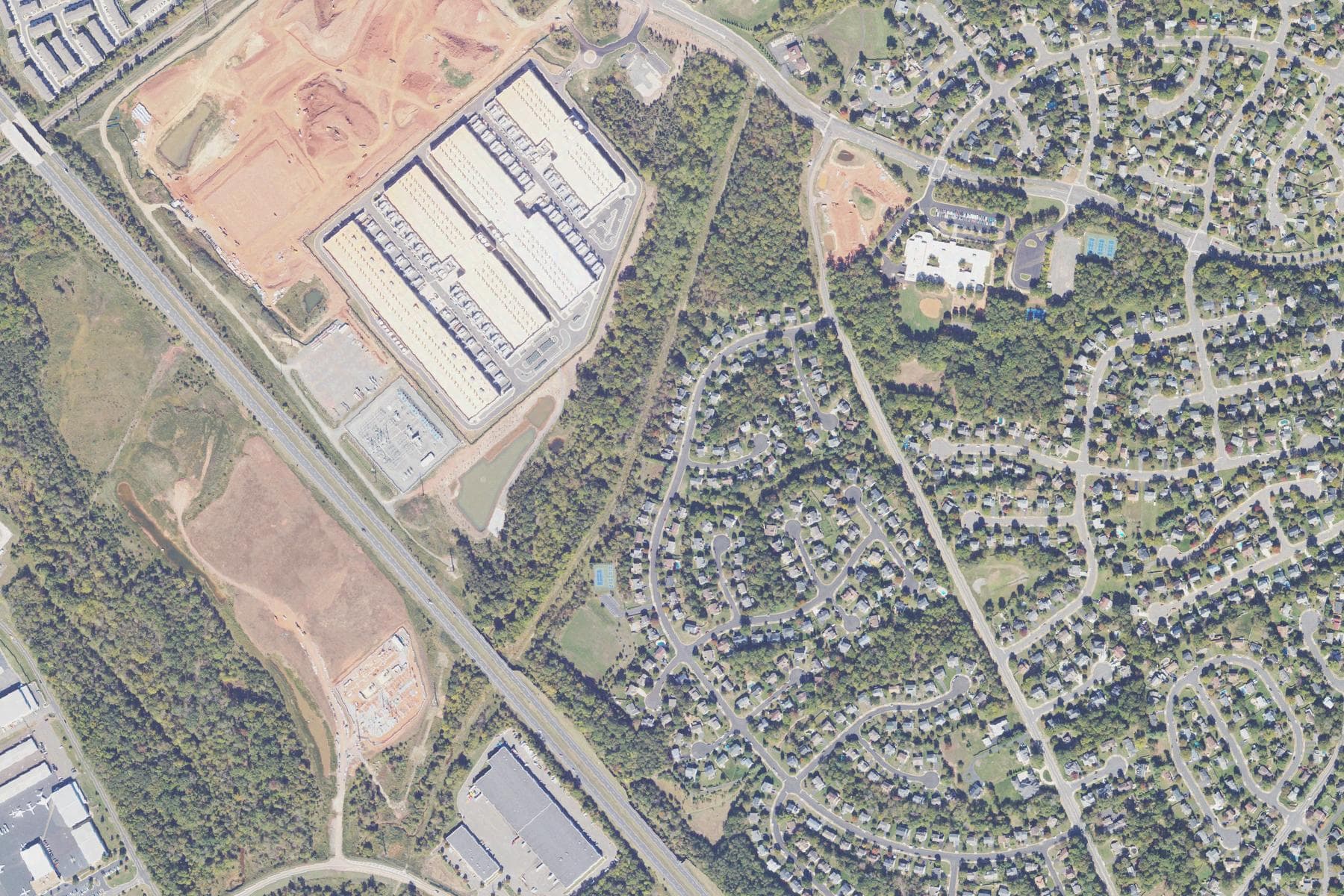
Amazon Web Services's data center cluster in Bristow, Virginia, photographed 2023-10-11. Four data centers and their substation on one side of a thin line of trees, and the Great Oak subdivision on the other. The nearest houses sit a few hundred feet from the buildings, and the bare red ground to the north is the next phase going in.
USDA Farm Service Agency / USGS National Map, National Agriculture Imagery Program. Cropped from NAIP 0.6 m aerial imagery, scene m_3807720_ne_18_060_20231011. (original)
SueDataCenters.org is not affiliated with, endorsed by, or sponsored by Amazon Web Services. This photograph illustrates reporting and is not evidence of any claim.
Key Takeaways
- There is no single honest answer to whether data centers lower home values; the effect is contested and location-dependent. A quiet, screened facility on an industrial corridor is a different animal from a humming campus 600 feet from a subdivision.
- Courts do not compensate fear of a data center. They compensate proven loss tied to proven interference, which means an appraisal and comparable sales analysis attached to documented harm like noise, water damage, or dust.
- Diminished property value is usually a damages category inside a nuisance or property damage case, not a standalone lawsuit. The claim that carries it is the interference itself.
- The strongest proof pairs a licensed appraisal with before-and-after comparable sales and, where available, evidence of stigma: buyers walking away, longer days on market, price cuts after disclosure.
- Buyout negotiations are a real endgame. Operators sometimes purchase the worst affected homes rather than litigate, and organized neighbors negotiate from far stronger ground than individuals.
In this article
Do data centers lower property values? The honest answer is that the evidence is contested and depends heavily on the situation: how close the homes are, whether the facility hums, lights up the night sky, or damaged wells during construction, and what the local market was doing anyway. Anyone who tells you there is a universal percentage is selling something. What the law actually offers is narrower and more useful: where a data center's noise, water damage, dust, or construction harm is documented, the loss in your home's value becomes a compensable damages category inside a nuisance or property damage case, and in approval fights, protecting value is a reason to show up before the project is built. This guide explains what plaintiffs must actually prove, how value loss gets into a case, and how buyout negotiations work.
What the evidence actually shows, and does not
Start with candor, because your credibility in front of a county board or a court depends on it. Data centers are not landfills; they are quiet compared to many industrial uses, they generate tax revenue, and in established industrial corridors they can be unremarkable neighbors. Studies and market analyses of their effect on nearby home prices point in different directions depending on the market, the distance, and the years measured, and operators can always produce an expert saying values are fine.
What is not contested is that specific impacts harm specific homes:
- Proximity to real interference. A house 600 feet from a humming campus, like the Great Oak homes near Amazon's data centers in Manassas, Virginia, is experiencing something a buyer can hear during a showing. Roughly 300 homes lived with that noise before Amazon's engineering changes cut it by about 10 decibels.
- Physical damage. A well that turned brown during construction, as the Louisa County, Virginia homeowner now suing Amazon alleges, is a defect a seller must disclose and a buyer will price.
- Transformation of setting. When 22 million square feet of buildings are proposed across roughly 2,000 acres next to rural homes and a historic battlefield, as with the Prince William Digital Gateway, the character of the place, and what people will pay to live there, is plainly at stake. That is part of why residents fought the rezoning and won.
So reframe the question. Not "do data centers lower property values in general," but "did this facility's documented impacts lower the value of this home." That question has a legal answer.
What plaintiffs must actually show
Courts compensate proven loss, not anxiety about loss. To put property value on the table, you need three things:
1. A qualifying harm. Value loss rides on an underlying claim: private nuisance (the hum, lights, odors), negligence or trespass (well damage, flooding, cracks, dust), or an illegal approval you are challenging. Generalized dislike of the facility does not qualify; documented interference does.
2. A professional valuation. A licensed appraiser values your home as impacted and as it would be unimpacted, and the difference is your diminution claim. Serious cases use appraisers experienced in litigation, sometimes supported by broader market studies. Your own opinion of your home's worth is admissible in many states but carries little weight against a defense expert.
3. Market corroboration. The most persuasive evidence is behavior, not theory:
- Comparable sales near the facility versus similar homes farther away, before and after it arrived.
- Your own sale history: listings that drew no offers, buyers who withdrew after hearing the hum or reading the disclosure, price reductions, extended days on market.
- Written statements from real estate agents about buyer reactions in the neighborhood.
- Assessment appeals: if the county lowered your tax assessment because of the facility, the government itself has conceded impact. If it has not, an appeal is worth filing, both for the tax savings and the record.
"Stigma" damage, the discount buyers demand even after a problem is fixed, is recognized in many states, particularly following contamination. It still requires expert proof; it is a valuation category, not a vibe.
How value loss becomes money: inside a case, not a standalone suit
Here is the structural point this guide exists to make: you generally cannot walk into court with "my home is worth less because a data center moved in" as the whole case. Value loss is a damages line inside a claim about what the facility did. In practice it shows up four ways:
Inside a nuisance case. Nuisance plaintiffs recover for lost use and enjoyment, and where the interference is ongoing or permanent, diminished property value. The Granbury, Texas noise plaintiffs and the Microsoft Fairwater class action in Wisconsin are nuisance cases at heart; for households in a certified class or a group suit, the value of every affected home becomes part of the settlement math.
Inside a property damage case. Where construction damaged a well, foundation, or drainage, damages include both repair costs and any remaining loss in value after repair, including stigma where the state recognizes it. The Louisa County suit against Amazon pairs property damage with nuisance for exactly this reason.
Inside an approval fight. Zoning challenges do not pay damages, but they are the cheapest way to protect value ever invented, because they can stop or shrink the project before it exists. Courts voided the Digital Gateway rezoning, the largest proposed data center project in the world, over defective public notice. Impact on surrounding homes is also a legitimate argument before planning commissions, where the standard is community impact, not courtroom proof. See our guide on fighting a proposed data center.
Through disclosure leverage. Once you have documented impacts, sellers must generally disclose them, which operators know. That unpleasant fact is part of why negotiated resolutions, mitigation plus compensation, happen: every unresolved complaint follows the neighborhood's deeds around.
Buyouts: when the operator just buys the house
The quiet endgame in the worst proximity cases is a buyout: the operator or developer purchases the most affected homes outright, often at pre-impact value plus a premium, usually with confidentiality attached. Buyouts appear around heavy industry of every kind, and around data centers the same logic applies: for an operator running a multi-billion dollar campus, buying a ring of houses is cheap insurance against years of litigation and hostile hearings.
If a buyout conversation reaches your street, keep four things in mind:
- Anchor to unimpacted value. The point of a buyout is to make you whole as if the facility were not there. Get your own appraisal of pre-impact value; do not negotiate from the operator's number or from post-impact comps.
- Negotiate as a group where you can. A dozen households with counsel and a shared appraiser get better terms than twelve separate handshakes, and the operator cannot play neighbors against each other.
- Read the release carefully. Buyout agreements release your claims and typically bind you to confidentiality. Understand what you are giving up, especially if you have health claims, before signing. Have a lawyer review it; this is not a form real estate deal.
- A pending case raises the price. Operators pay more to resolve documented, filed claims than to quiet neighbors with no leverage. The evidence you build for a nuisance case is the same evidence that funds a fair buyout.
What to do if you believe your home has lost value
Work the problem in this order. First, document the underlying harm, noise logs, water tests, photos, complaint records, because value loss is only as strong as the interference behind it; our evidence guide shows how. Second, build the value file: baseline appraisal, comparable sales, agent statements, assessment records. Third, join forces with neighbors, because neighborhood-wide evidence multiplies every individual claim and opens the doors of a class or group case. Fourth, check your deadlines: the underlying claims carry a statute of limitations, commonly two to six years depending on the state, and approval challenges run on clocks measured in weeks.
Then get a professional read on what you have. Our free intake form lets you tell us what is happening; where a participating attorney who handles these matters is available, we may share your information with them with your consent, but we cannot promise that anyone will contact you. There is no cost and no obligation; an attorney can tell you whether your documentation supports a damages claim, what a realistic recovery looks like, and whether your street's situation points toward litigation, negotiation, or a buyout. For the broader picture of what these cases pay, see what a data center lawsuit is worth.
Frequently asked questions
Do data centers lower property values?
The evidence is contested and depends on location and impacts. A screened facility in an industrial corridor may have little effect, while homes close to a humming campus, or with wells damaged during construction, face real, provable losses. Legally, what matters is not a general trend but whether documented impacts from a specific facility reduced the value of your specific home.
Can I sue a data center for lowering my property value?
Usually not as a standalone claim. Lost value is recovered as damages inside a case about what the facility did: a nuisance claim over noise or odors, or a negligence and property damage claim over wells, flooding, or cracks. You prove the interference, then an appraiser quantifies the value loss it caused.
How do I prove a data center reduced my home's value?
With a licensed appraisal comparing your home's value with and without the facility's impacts, supported by comparable sales near versus away from the site, your own listing history if buyers walked away or you cut the price, statements from local agents, and any reduction in your tax assessment. Documented harm like noise readings or water tests must anchor the valuation.
Will a data center company buy my house?
It happens. In the worst proximity situations, operators sometimes buy out the most affected homes rather than litigate, typically at negotiated prices with confidentiality terms. Neighbors who negotiate as a group, with their own appraisal of pre-impact value and legal counsel, consistently get better terms than individuals approached one at a time.
Do I have to disclose a nearby data center when selling my house?
Disclosure rules vary by state, but known material problems affecting the property, like documented noise intrusion or a damaged well, generally must be disclosed. That obligation cuts both ways: it is part of why value loss is real, and part of the leverage neighbors have when negotiating mitigation or compensation with an operator.
Article sources
Our editorial standards require primary sources: government publications, regulator data, company filings, and established industry research.
- 1.American Bar Association, Business Law Today: Emerging Data Center Litigation (July 2026)
- 2.ClassAction.org: Data center noise and water pollution lawsuit overview
- 3.Virginia Mercury: Louisa homeowner sues Amazon over data center construction (July 2026)
- 4.Wisconsin Examiner: Mount Pleasant residents file class action over Microsoft data center noise (2026)
- 5.Data Center Knowledge: Amazon tones down its data center noise after residents sound the alarm
- 6.Technical.ly: Digital Gateway data center battle heads to Virginia Supreme Court (2026)
Related reading
- Can You Sue a Data Center? What Neighbors Can Actually Do in 2026
Yes, neighbors are suing data centers and winning real concessions: noise class actions, well water claims, voided rezonings, and Clean Air Act suits. Here is who has a case, the six legal theories that work, and what to do first.
- How Much Is a Data Center Lawsuit Worth? An Honest Breakdown
No honest source can promise you a number. What we can do is map every category of recovery these cases pursue: repair and remediation, diminished property value, loss of use and enjoyment, injunctions and engineering fixes, community funds, and negotiated buyouts, plus what makes a case worth more or less.
- The Evidence That Wins Data Center Cases: What to Document and How
Data center cases are won on records, not memories. The complete evidence manual: dated logs, decibel readings done right, baseline well tests, timestamped photos, the county complaint paper trail, public records requests, medical documentation, and appraisals.
- How to Fight a Proposed Data Center Before It Breaks Ground
Approval fights are the most successful category of data center litigation. Here is the playbook: reading the rezoning file, spotting notice and open meetings defects, organizing neighbors, referendums and recalls, moratoriums, and the short appeal clocks that decide everything.
Is a data center disrupting your home?
Tell us what is happening. Where a participating attorney who handles data center cases in your state is available, we may share your information with them with your consent. It is free and carries no obligation, but we cannot promise that anyone will contact you.
- Tell us about your situation
- Independent attorneys
- No obligation
Attorney or law firm handling data center matters? Speak with us