Claim Center
Data Center Water Problems: Wells, Contamination, and Claims
Failed wells, sediment, and huge water draws near data center campuses have produced the first homeowner suits, including a 2026 case against Amazon in Virginia. What water claims look like, the evidence that matters, and how to tell us about your situation.
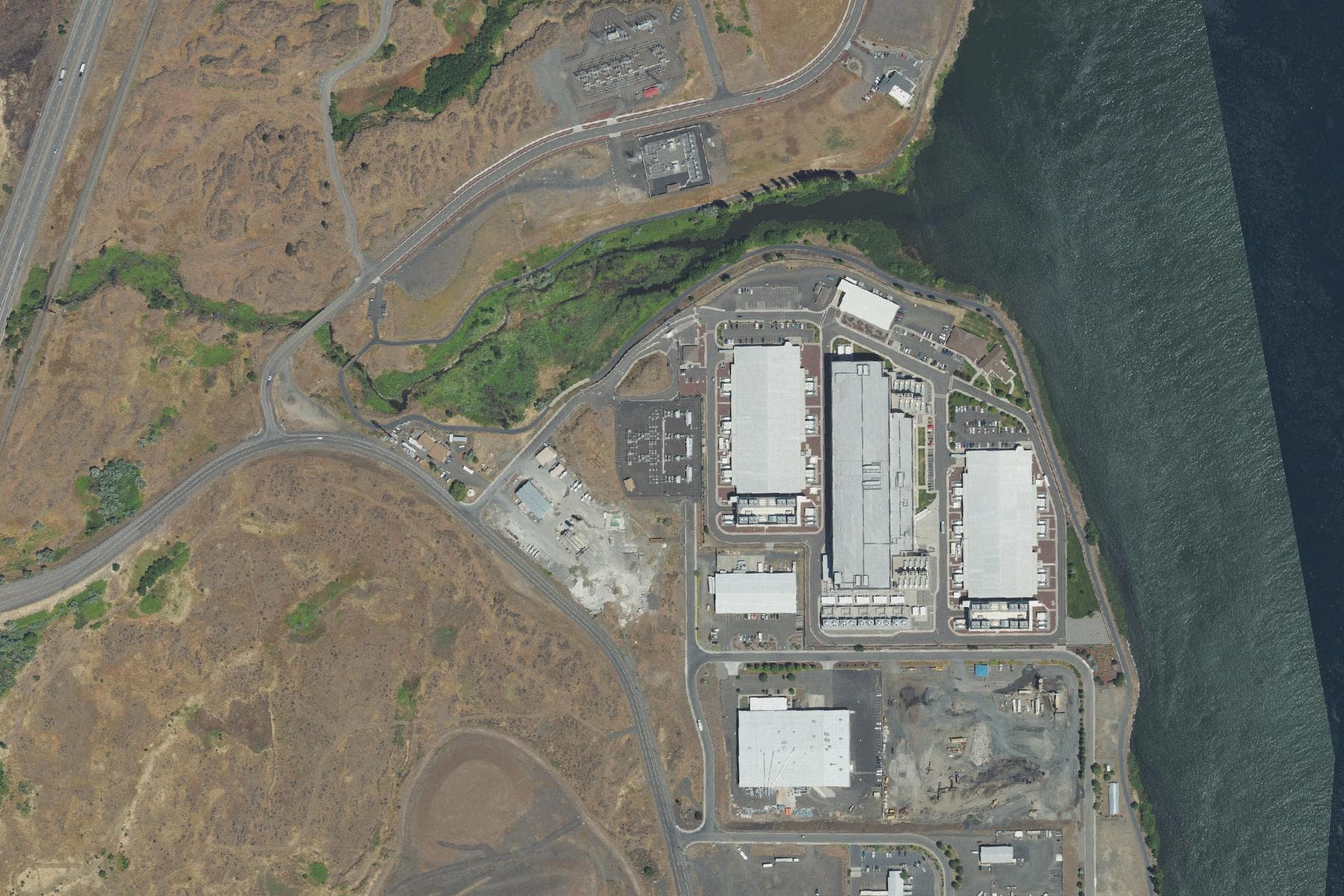
Google's data center campus in The Dalles, Oregon, photographed 2022-07-01. The campus sits directly on the Columbia River, and the rows of cooling units along each hall are what the water goes to. The public records fight was over how much of it the city was selling.
USDA Farm Service Agency / USGS National Map, National Agriculture Imagery Program. Cropped from NAIP 0.3 m aerial imagery, scene m_4512123_sw_10_030_20220701. (original)
SueDataCenters.org is not affiliated with, endorsed by, or sponsored by Google. This photograph illustrates reporting and is not evidence of any claim.
Key Takeaways
- A Louisa County, Virginia homeowner sued Amazon in July 2026 over brown well water, dust, and noise from data center construction, one of the first individual suits of its kind.
- In Georgia, homeowners near Meta's Newton County campus report failed and sediment-filled wells; the story is complaints and petitions so far, not a lawsuit, and residents with similar facts should get a legal read.
- Data centers can draw hundreds of thousands of gallons a day, and public records fights like The Dalles case in Oregon pried water usage data open nationwide.
- A baseline water test now, before or early in construction nearby, is the single most valuable piece of evidence in a future well claim.
When wells fail, turn muddy, or lose pressure after a data center breaks ground nearby, homeowners are no longer just complaining, they are filing suit. In July 2026 a Louisa County, Virginia homeowner sued Amazon over brown, contaminated well water and construction impacts, and in Georgia the well complaints around Meta's Newton County campus have become a national story. If your water changed after a campus arrived, the law gives you claims worth evaluating, and evidence you should start collecting today.
How data centers cause water problems
Two different mechanisms hurt neighbors. Construction: mass grading, blasting, and dewatering can disturb aquifers and send sediment into nearby wells, which is what the Georgia homeowners near Meta's Stanton Springs campus describe, a well that failed and filled with sediment roughly 1,000 feet from the site, with a $25,000 replacement quote. Operations: evaporative cooling can consume enormous volumes, on the order of hundreds of thousands of gallons per day at large campuses, competing with wells and municipal systems. Records pried open in Oregon showed Google's campus consuming roughly 29 percent of The Dalles's water supply.
The legal theories for water harm
Water cases stack several claims: negligence (careless construction damaged your well), nuisance (interference with your home's basic habitability), and trespass (sediment or contaminants physically entering your property). Damages cover testing, treatment systems, well repair or replacement, alternative water costs, and diminished property value.
The active template is the Louisa County suit against Amazon. The second is the Newton County families' suit against Meta, filed in late August 2026 after more than a year of petitions and regulatory pressure. Both cases start with the same evidence.
What to do if your water changed
Get a certified lab test immediately and keep the chain of results. Photograph discolored water with timestamps. Log pressure loss and outages. Report it to your county health department and your state environmental agency in writing. Save every receipt for bottled water, filtration, and repairs. Then tell us about your situation; where a participating attorney in your state is available, we may share your information with them with your consent, but we cannot promise that anyone will contact you. A licensed attorney is the one who can evaluate negligence, nuisance, and trespass claims and the deadlines that apply. The full playbook is in our water claims guide.
The real cases behind this claim
- Louisa County Homeowner v. Amazon: Brown Well Water, Dust, and Noise Reach the Courthouse
In late July 2026, a Louisa County, Virginia homeowner sued Amazon over data center campus construction, alleging brown and contaminated well water, dust, and loud noise, under nuisance, negligence, and property damage theories. It is one of the first individual homeowner damage suits against a hyperscaler in Virginia. What the case claims and what neighbors with similar problems should document.
- Georgia Families Sue Meta Over Their Wells: The Newton County Data Center Water Lawsuit
After more than a year of muddy wells, petitions, and a congressional visit, four Newton County families sued Meta and the local development authority in late August 2026, alleging that clearing, blasting, and excavation for the Stanton Springs data center disturbed the aquifer and filled their well water with silt. What the suit says, what Meta says, and what it means for every homeowner on a well near a data center site.
- The Dalles v. The Oregonian: The Case That Made Google's Water Use Public
In 2021 the City of The Dalles, Oregon sued its own newspaper to keep Google's water use secret as a trade secret. The December 2022 settlement released ten years of records showing Google used about 29 percent of the city's water, paid the paper's legal fees, and ended Google's site-level water secrecy nationwide. Why this settled case still matters to every data center neighbor.
The deep dive
Data Center Water Contamination and Well Damage: Your Legal Options
Wells running dry or turning brown near data center construction are now a documented national pattern, and the first homeowner suit is pending against Amazon in Virginia. Here is what the law offers when a data center damages your water, and how to build the proof.
Read the full guide →
Frequently asked questions
Can I sue a data center for contaminating my well?
If construction or operations damaged or contaminated your well, you may have negligence, nuisance, and trespass claims for repair costs and lost property value. A Louisa County, Virginia homeowner filed exactly this kind of suit against Amazon in 2026. Prompt certified testing is the key evidence.
My well went dry after a data center was built. What can I do?
Document it: certified water tests, photos, dated logs, and written reports to the county health department. Then have an attorney evaluate claims against the operator or its contractors. State groundwater law varies, which is why a state-specific legal read matters.
How much water does a data center use?
It varies by cooling design, but large campuses can consume hundreds of thousands of gallons a day. Records released in The Dalles, Oregon showed Google's campus using roughly 29 percent of the city's water, and reporting on Meta's Newton County, Georgia facility described about 500,000 gallons a day.
Who pays to replace a well damaged by construction?
If you can tie the damage to the project, the operator or its contractors can be liable for repair or replacement, alternative water, and related costs. Without litigation or a negotiated agreement, homeowners usually pay out of pocket, which is why documentation and early legal review matter.