Claim Types
Data Center Water Contamination and Well Damage: Your Legal Options
Wells running dry or turning brown near data center construction are now a documented national pattern, and the first homeowner suit is pending against Amazon in Virginia. Here is what the law offers when a data center damages your water, and how to build the proof.
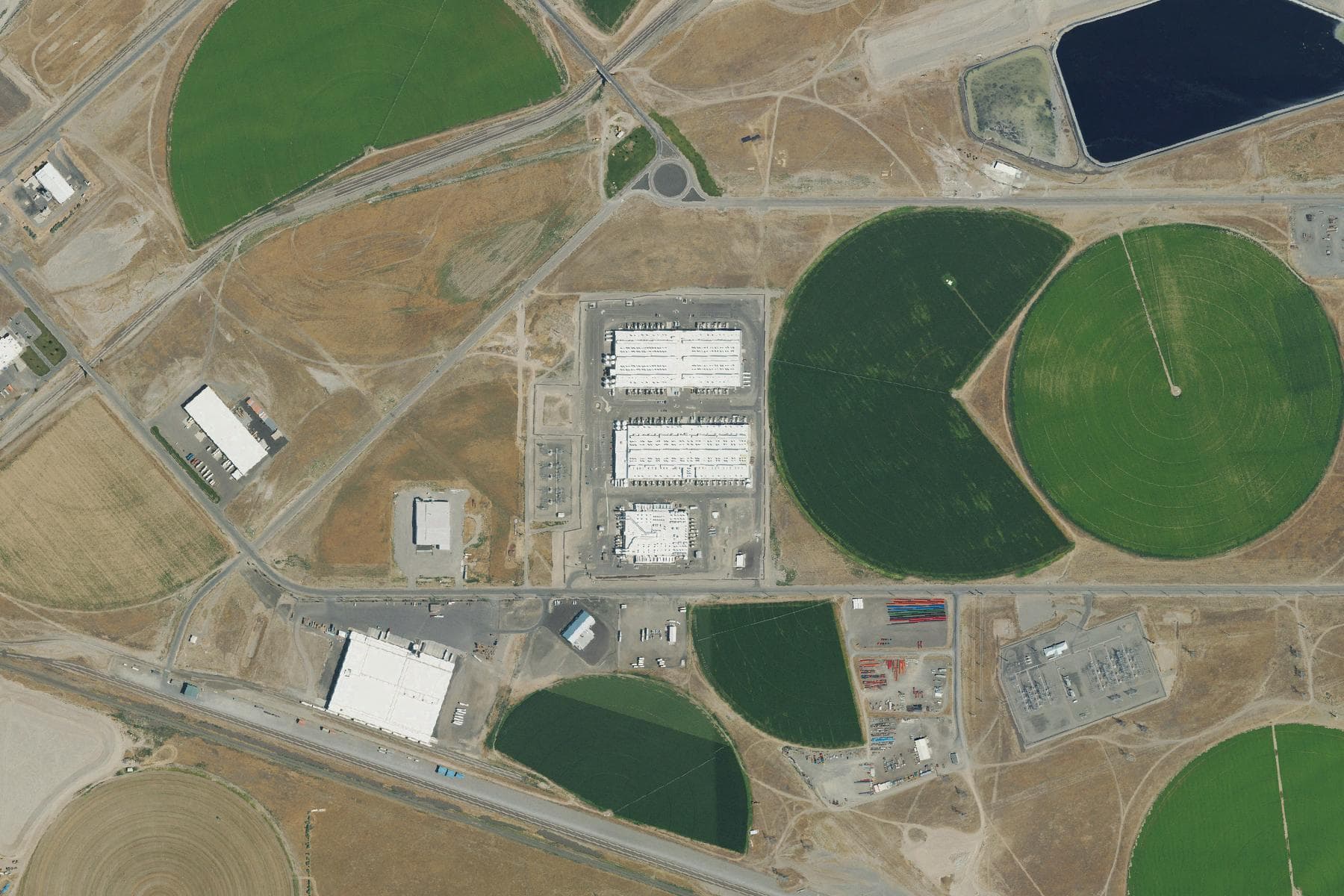
Amazon Web Services's data center campus in Boardman, Oregon, photographed 2022-07-16. The nitrate case is visible in one frame: the data centers, the substation that powers them, the circle-pivot fields that take the treated wastewater, and the lagoon it passes through. Groundwater beneath this ground has been contaminated for decades.
USDA Farm Service Agency / USGS National Map, National Agriculture Imagery Program. Cropped from NAIP 0.3 m aerial imagery, scene m_4511911_ne_11_030_20220716. (original)
SueDataCenters.org is not affiliated with, endorsed by, or sponsored by Amazon Web Services. This photograph illustrates reporting and is not evidence of any claim.
Key Takeaways
- The first individual homeowner water suit against a hyperscaler is live: in July 2026 a Louisa County, Virginia homeowner sued Amazon over brown, contaminated well water, dust, and noise from data center construction, pleading nuisance, negligence, and property damage.
- Most water disputes are not lawsuits yet. The widely reported well failures near Meta's Newton County, Georgia campus remain complaints and petitions, and the Cheyenne, Wyoming contamination traced to a Meta contractor was handled as a utility enforcement action, not litigation.
- Data center water use is enormous and often opaque: Google's campus used about 29% of The Dalles, Oregon's city water, a figure that only became public after the city sued its own newspaper and lost the fight to keep it secret.
- The legal theories that fit water harm are negligence, private nuisance, and trespass, with damages covering testing, treatment, well replacement, and lost property value.
- Baseline water testing before or early in construction is the single most valuable piece of evidence you can create. Without a before picture, operators argue your water was always bad.
In this article
If a data center's construction or operations damaged your well or your water, you may have claims for negligence, private nuisance, and trespass, and the first test case is pending right now: in late July 2026, a Louisa County, Virginia homeowner sued Amazon over data center construction that allegedly left the home with brown, contaminated well water, along with dust and constant noise. It is one of the first individual homeowner damage suits against a hyperscale operator in Virginia. But most water disputes around data centers have not become lawsuits, and an honest guide has to show both paths: what residents have won through complaints and enforcement, and what a court case requires. This guide covers how data centers affect neighboring water, the disputes on the record, the legal theories that fit, and the evidence, starting with a baseline test, that makes or breaks a claim.
How data centers damage neighbors' water
Water problems around data centers arrive through several distinct doors, and the legal claim depends on which one hit you.
Construction disturbance. Grading hundreds of acres, blasting rock, and drilling foundations can disrupt the shallow groundwater that residential wells draw from. The signature complaint is a well that turns muddy or fails outright during or shortly after nearby construction. Beverly Morris of Mansfield, Georgia, who lives roughly 1,000 feet from Meta's data center site, reported that her well filled with sediment after construction; she spent $5,000 trying to fix it and was quoted $25,000 for a replacement well.
Massive water withdrawals. Data centers use evaporative cooling at industrial scale. Meta's Newton County, Georgia facility uses roughly 500,000 gallons per day, about 10% of the county's usage. In The Dalles, Oregon, Google's campus was consuming about 29% of the entire city's water supply. Where homes rely on the same aquifer, large withdrawals raise obvious concerns about drawdown, though connecting a specific dry well to a specific withdrawal is a technical fight requiring hydrogeology experts.
Contamination from site activity. In Cheyenne, Wyoming, city water officials traced a rare bacterium, Cupriavidus gilardii, found in the recycled-water irrigation system in February 2026, to an industrial discharger identified as a contractor for Meta's 715,000 square foot data center. The city drained and disinfected the reuse system, switched parks to drinking water, and permanently terminated the discharger's privileges. Drinking water was not affected, and no lawsuit was filed: it was an enforcement and utility action. But it shows the contamination pathway is real, and that a contractor's conduct can be the source.
Runoff and sedimentation. Stripped, graded land sheds stormwater fast. Poorly controlled runoff carries sediment into creeks, ponds, and low-lying properties, a problem that overlaps with our construction damage guide.
The Louisa County suit: the case to watch
In late July 2026, a Louisa County, Virginia homeowner filed suit against Amazon over its data center campus construction in the county. The complaint describes brown, contaminated well water, dust, and loud noise, and pleads the classic residential-harm trio: private nuisance, negligence, and property damage. The case is newly filed and pending.
Why it matters beyond one household:
- It is a template. Reporting describes it as one of the first individual homeowner damage suits against a hyperscaler in Virginia, the largest data center market in the world. If the claims survive early motions, every similarly situated homeowner near a construction site has a model complaint.
- It targets the operator, not just the builder. Suing Amazon itself, rather than only the grading contractor, tests how far liability reaches up the chain, which matters because operators have the deep pockets and the incentive to settle quietly.
- It pairs water with dust and noise. Real construction harm rarely comes one category at a time, and pleading them together presents the full interference with the home.
We track the case at our Louisa County v. Amazon page.
What the water fights on the record teach
The Dalles, Oregon: secrecy loses. In 2021, the City of The Dalles sued a reporter for The Oregonian, claiming Google's water use was a trade secret exempt from public records law. The city settled in December 2022: it released ten years of records showing the Google campus used about 29% of the city's water, paid $53,173 of the newspaper's legal fees (reimbursed by Google), and Google stopped claiming site-level water use as a trade secret nationwide. By 2026, The Dalles was seeking additional water from the Mount Hood National Forest as Google's demand grew. Lesson: water use data exists, it is usually reachable through public records requests, and the industry's own flagship lost the fight to hide it. See our case page.
Cheyenne: enforcement can work fast. The Wyoming episode never needed a courtroom. Utility officials traced the contamination, cut off the discharger, and remediated the system. If your water utility or health department can identify a source, an enforcement complaint is often the fastest route to stopping ongoing contamination, and the agency's findings become powerful evidence if you later sue for the damage already done.
Georgia: pressure without litigation has limits. Years of well complaints near Meta's campus have produced studies, media attention, and political pressure, but no compensation fund and no filed case. For homeowners with a five-figure well replacement bill, complaints alone have not paid it. That gap between attention and compensation is exactly what individual damage suits like Louisa County exist to close.
The legal theories for water harm
Negligence. The workhorse for construction-related well damage. The claim: the developer or its contractors failed to use reasonable care in blasting, grading, dewatering, or managing the site, and that failure damaged your well or water supply. Damages include testing, treatment systems, hauled water, well repair or replacement, and diminished property value.
Private nuisance. Fits ongoing interference: contaminated or sediment-laden water that makes normal use of your home impossible, or persistent conditions like dust settling into cisterns. Nuisance also supports injunctive relief ordering the interference abated, not just a check.
Trespass. A physical invasion of your property, and courts in many states treat contaminants, sediment, or diverted water crossing onto your land as exactly that. Trespass claims can be attractive because the invasion itself is the wrong; the fight is mostly about causation and the extent of harm.
These theories are usually pleaded together, as the Louisa County complaint does. Which combination fits, and what the statute of limitations allows, commonly two to six years depending on the state and the claim, is a question for an attorney in your state. Groundwater rights also vary sharply from state to state, which affects claims based on drawdown rather than contamination.
Build your evidence now, starting with a baseline test
Water cases are causation cases. The operator's defense is always the same: your well was old, your water was always like this, the aquifer was declining anyway. Your job is to make that argument impossible.
1. Get a baseline water test immediately. If construction has not started, or has just started, pay for a certified lab test of your well now: bacteria, sediment, metals, and general chemistry. Your county health department can point you to accredited labs, and some offer low-cost testing. A dated pre-construction result is the single most valuable document in a future claim.
2. Document your well's history. Drilling records, depth, pump service invoices, and past test results establish that the well worked before. Photograph clear water from your taps, with timestamps, while it is still clear.
3. When problems start, test again and keep samples. Retest through the same certified lab so results are comparable. Photograph and video discolored water; keep dated jars. Log every day the water is unusable and every dollar spent on bottled water, hauling, filtration, or repairs.
4. Report to the authorities. File with your county health department, the state environmental agency, and your water utility if you are on a system. The Cheyenne episode shows agencies can trace sources; their findings are evidence you could never generate yourself.
5. Pull the public file. The project's stormwater permits, erosion and sediment control plans, water withdrawal permits, and any groundwater studies are public records. The Dalles settlement shows even claimed trade secrets can be pried loose.
6. Canvass the neighbors. One muddy well is an anecdote; a dozen on the same timeline surrounding the same construction site is a pattern that supports every individual case, and possibly a class action or coordinated group claim.
Our evidence guide has the complete documentation checklist.
What you can recover, and your next step
A successful water claim can cover the full cost of restoring what you had: testing and monitoring, treatment and filtration systems, well repair or a replacement well (the Georgia reporting puts a replacement at $25,000), temporary water supplies, related property repairs, diminished property value, and loss of use and enjoyment of your home. Where contamination is ongoing, courts can also order the source stopped. In negotiated resolutions, operators sometimes fund municipal water hookups for affected streets, which permanently solves the problem.
If your water changed after data center construction began near you, act on two tracks at once: report and test now to stop the harm and freeze the evidence, and get a legal read on your facts. Our free intake form lets you tell us what is happening; where a participating attorney who handles these matters is available, we may share your information with them with your consent, but we cannot promise that anyone will contact you. It costs nothing to submit, there is no obligation, and an attorney can tell you whether your timeline and test results support a claim like the one now pending in Louisa County.
Frequently asked questions
Can I sue a data center for contaminating my well water?
Potentially yes. If construction or operations damaged or contaminated your well, negligence, private nuisance, and trespass claims can cover repair costs, replacement, and lost property value. A Louisa County, Virginia homeowner filed exactly this kind of suit against Amazon in July 2026 over brown well water, dust, and noise from data center construction.
Why did my well turn muddy after data center construction started?
Large-scale grading, blasting, and foundation work can disturb the shallow groundwater residential wells draw from, pushing sediment into the supply. It is the signature complaint near data center construction sites, including the widely reported well failures near Meta's Newton County, Georgia campus. Test your water through a certified lab and report it to your county health department right away.
How much water does a data center use?
Verified figures are striking: Meta's Newton County, Georgia facility uses about 500,000 gallons per day, roughly 10% of the county's usage, and Google's campus in The Dalles, Oregon was using about 29% of that city's water supply. Site-level numbers only became public in The Dalles after a public records fight that Google ultimately stopped resisting.
Did anyone sue Meta over the Georgia well water problems?
Yes. In late August 2026, four Newton County families sued Meta and the local development authority in Gwinnett County court, alleging that clearing, blasting, and excavation for the Stanton Springs campus disturbed the aquifer and filled their wells with silt. Meta says its commissioned groundwater study found the facility was likely not the cause. Separately, Amazon agreed in March 2026 to a $20.5 million settlement in an Oregon groundwater nitrate class action, while denying wrongdoing.
What water tests do I need before a data center is built near me?
Get a certified laboratory baseline test of your well covering bacteria, sediment, metals, and general chemistry before or as early in construction as possible, and keep your well's drilling and service records. A dated before-and-after comparison from the same lab is the strongest causation evidence a water damage claim can have.
Who is liable if a data center contractor pollutes the water supply?
Both the contractor and potentially the data center operator can face responsibility. In Cheyenne, Wyoming, officials traced bacteria in the city's reuse water system to a contractor for Meta's data center and permanently cut off its discharge privileges, an enforcement action rather than a lawsuit. In court, homeowners typically name the operator and contractors together and let discovery sort out fault.
Article sources
Our editorial standards require primary sources: government publications, regulator data, company filings, and established industry research.
- 1.Virginia Mercury: Louisa homeowner sues Amazon over data center construction (July 2026)
- 2.NewsNation: Meta data center neighbors in Georgia report muddy water
- 3.CBS News Atlanta: AOC presses EPA over Morgan County drinking water concerns tied to data center development
- 4.Fortune: Data center water wars in Georgia and Arizona (May 2026)
- 5.Columbia Gorge News: The Dalles settles Oregonian lawsuit, releases Google water records (2022)
- 6.OPB: As Google's water demands grow, The Dalles aims to pull more from Mount Hood forest (Jan 2026)
- 7.Fortune: Wyoming officials say Meta data center contractor responsible for contaminating water system (July 2026)
Related reading
- Can You Sue a Data Center? What Neighbors Can Actually Do in 2026
Yes, neighbors are suing data centers and winning real concessions: noise class actions, well water claims, voided rezonings, and Clean Air Act suits. Here is who has a case, the six legal theories that work, and what to do first.
- Data Center Construction Damage: Cracks, Dust, Flooding, and Who Pays
Building a hyperscale campus means years of blasting, grading, and truck traffic next to your home. Cracked foundations, dust, flooding, and fouled wells are compensable. Here is how the claims work, why pre-construction surveys matter, and whether to pursue the contractor or the operator.
- The Evidence That Wins Data Center Cases: What to Document and How
Data center cases are won on records, not memories. The complete evidence manual: dated logs, decibel readings done right, baseline well tests, timestamped photos, the county complaint paper trail, public records requests, medical documentation, and appraisals.
- How Much Is a Data Center Lawsuit Worth? An Honest Breakdown
No honest source can promise you a number. What we can do is map every category of recovery these cases pursue: repair and remediation, diminished property value, loss of use and enjoyment, injunctions and engineering fixes, community funds, and negotiated buyouts, plus what makes a case worth more or less.
Is a data center disrupting your home?
Tell us what is happening. Where a participating attorney who handles data center cases in your state is available, we may share your information with them with your consent. It is free and carries no obligation, but we cannot promise that anyone will contact you.
- Tell us about your situation
- Independent attorneys
- No obligation
Attorney or law firm handling data center matters? Speak with us