Lawsuit Tracker
The Dalles v. The Oregonian: The Case That Made Google's Water Use Public
In 2021 the City of The Dalles, Oregon sued its own newspaper to keep Google's water use secret as a trade secret. The December 2022 settlement released ten years of records showing Google used about 29 percent of the city's water, paid the paper's legal fees, and ended Google's site-level water secrecy nationwide. Why this settled case still matters to every data center neighbor.
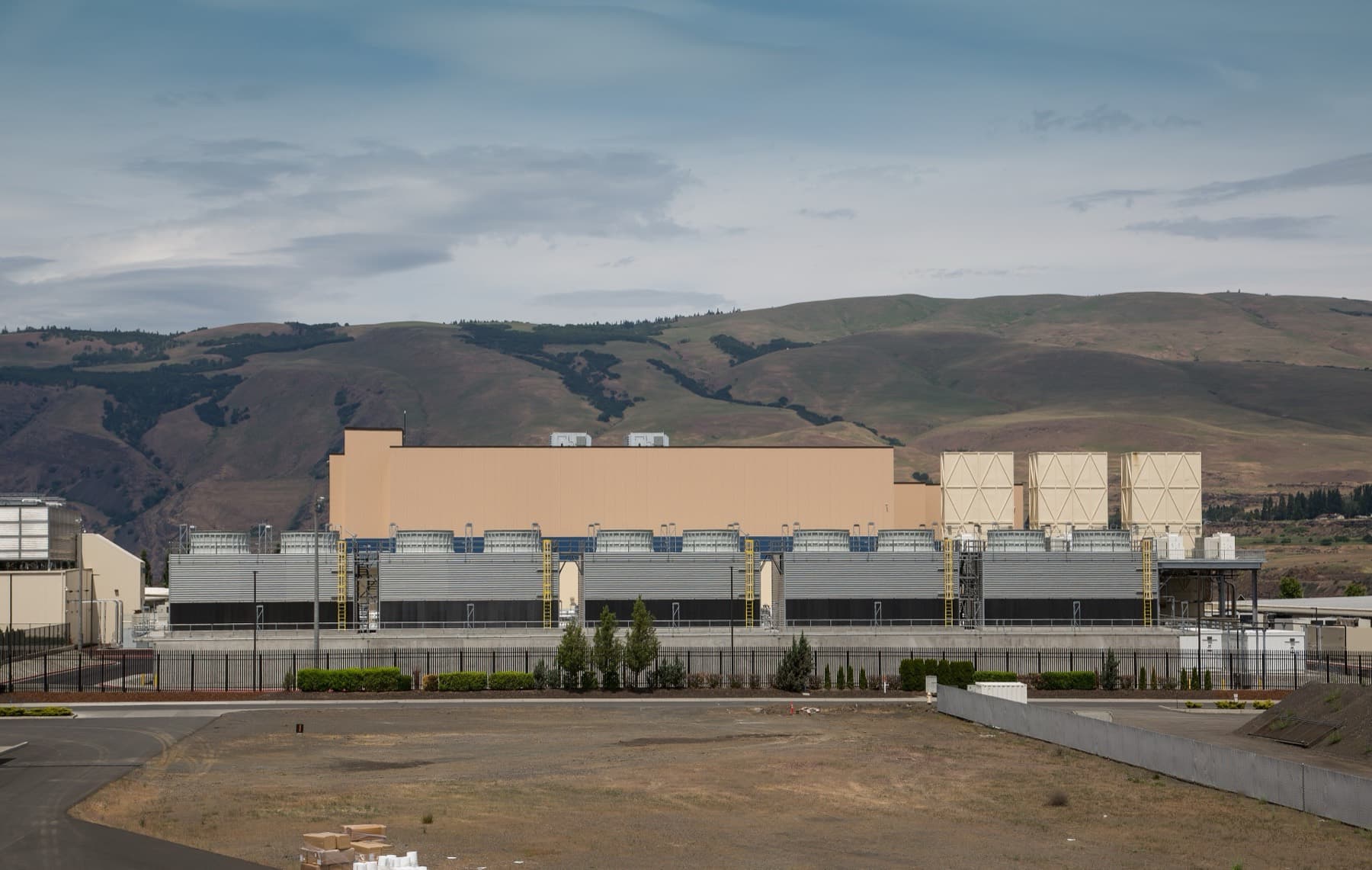
Google's data center in The Dalles, Oregon, photographed 2015-05-17. Google's Oregon campus sits on the Columbia River, and how much water it draws there stayed secret until a newspaper went to court to find out.
Tony Webster / Wikimedia Commons / CC BY 2.0. Resized for web. (license) (original)
SueDataCenters.org is not affiliated with, endorsed by, or sponsored by Google. This photograph illustrates reporting and is not evidence of any claim.
Case facts
Settled
- Status
- Settled December 14, 2022, Wasco County Circuit Court
- Case
- City of The Dalles v. Mike Rogoway and The Oregonian
- Court
- Wasco County Circuit Court, Oregon
- Filed
- 2021; settled December 14, 2022
- Dispute
- City claimed Google's water use records were exempt trade secrets after the newspaper requested them
- Settlement
- City released 10 years of records and paid $53,173 in the newspaper's legal fees, reimbursed by Google
- What the records showed
- Google's campus used roughly 29 percent of the city's water
Key Takeaways
- In 2021, the City of The Dalles, Oregon sued journalist Mike Rogoway and The Oregonian in Wasco County Circuit Court to block a public records request, arguing Google's water use figures were trade secrets.
- The case settled on December 14, 2022: the city released ten years of water records showing Google's campus used roughly 29 percent of the city's water, and paid $53,173 toward the newspaper's legal fees, money Google reimbursed.
- After the settlement, Google dropped its claim that site-level water use is a trade secret nationwide, opening the data for communities everywhere.
- By 2026, The Dalles was seeking additional water from Mount Hood National Forest sources as Google's demand continued to grow.
- The lesson for neighbors: public records are a weapon, and data center water use is now gettable.
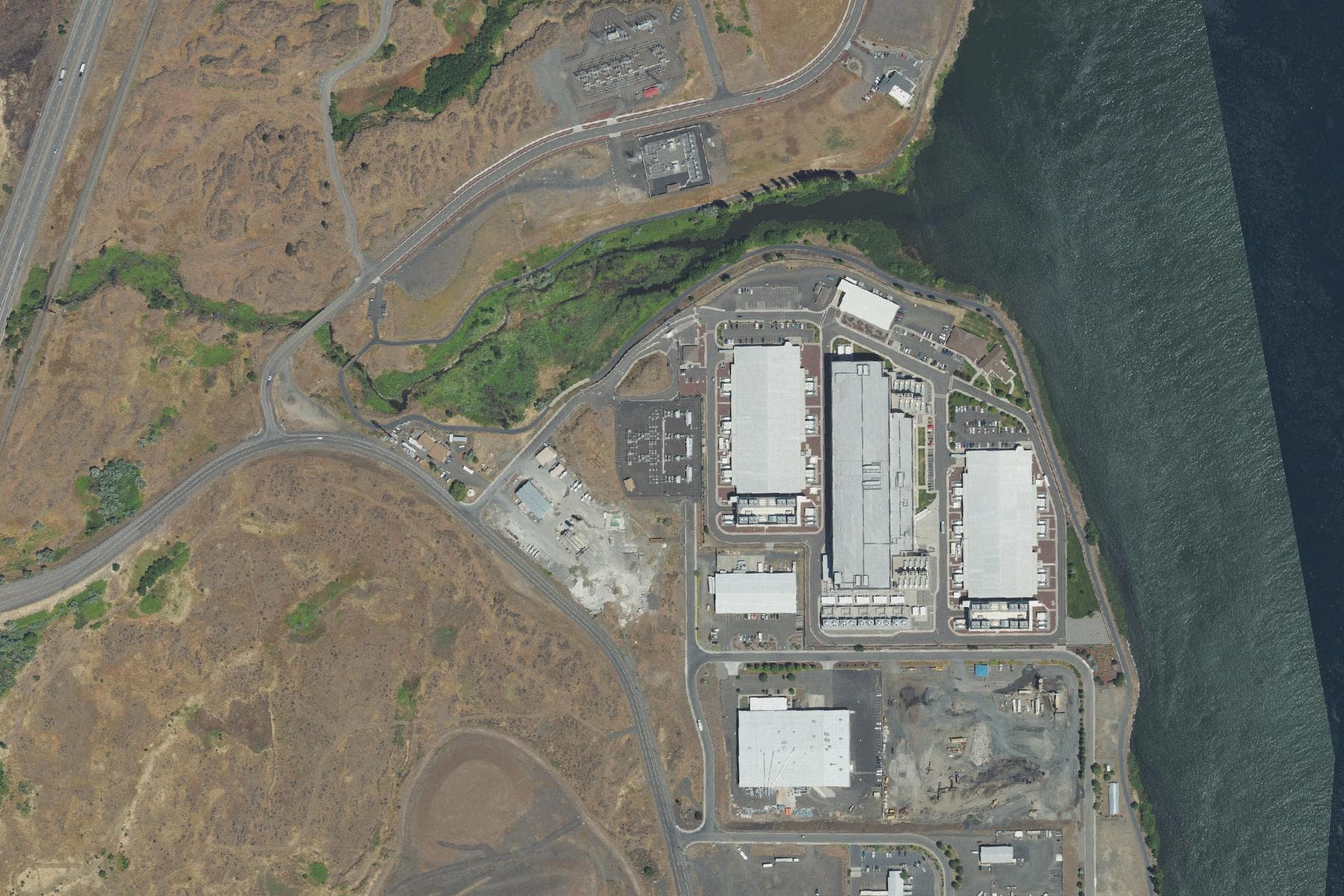
Google's data center campus in The Dalles, Oregon, photographed 2022-07-01. The campus sits directly on the Columbia River, and the rows of cooling units along each hall are what the water goes to. The public records fight was over how much of it the city was selling.
USDA Farm Service Agency / USGS National Map, National Agriculture Imagery Program. Cropped from NAIP 0.3 m aerial imagery, scene m_4512123_sw_10_030_20220701. (original)
SueDataCenters.org is not affiliated with, endorsed by, or sponsored by Google. This photograph illustrates reporting and is not evidence of any claim.
In this article
How much water does the data center down the road actually use? Until a fight in a small Oregon city, the industry's standard answer was: that is a trade secret. The case that broke the secrecy was City of The Dalles v. Mike Rogoway and The Oregonian, filed in Wasco County Circuit Court in 2021, in which a city sued its own newspaper to stop a public records request about Google's water consumption. It settled on December 14, 2022, and the terms rewrote the rules: ten years of records came out, showing Google's campus used roughly 29 percent of the city's water; the city paid $53,173 of the paper's legal fees, with Google reimbursing the bill; and Google stopped claiming site-level water use as a trade secret anywhere in the country. This is the settled case every data center neighbor should know, because it is the reason you can now get the numbers.
A city sues its own newspaper
The Dalles sits on the Columbia River east of Portland, and it was one of Google's earliest data center homes. As the company planned expansion in a dry region, Oregonian reporter Mike Rogoway asked a basic accountability question: how much of the city's water was Google using? He filed a public records request with the city for the numbers.
The question was not academic. Data centers cool themselves with water, the city was being asked to support Google's growth with public water supply, and residents had no way to weigh that trade without the consumption figures. Every community facing a data center proposal since has confronted the same blind spot: officials negotiate water commitments with the operator, and the public is asked to trust the math it is not allowed to see.
Instead of releasing the records or simply denying the request, the city took the extraordinary step of suing the journalist and his newspaper in 2021 in Wasco County Circuit Court, asking a judge to declare Google's water figures exempt from disclosure as trade secrets. The posture was remarkable: a public utility's customer consumption data, held by a public body, treated as a corporate secret worth litigating over, with the city carrying the banner. Google's fingerprints were on the arrangement from the start, and the eventual settlement confirmed it, with Google reimbursing the city's payment of the paper's fees.
The settlement that opened the books
The case never reached a trial ruling on the trade secret question. On December 14, 2022, the parties settled, and the terms amounted to a near-total win for disclosure:
- Ten years of water records were released. They showed Google's campus consumed roughly 29 percent of The Dalles' water supply, a number the public had never seen.
- The city paid $53,173 of the newspaper's legal fees. Google reimbursed the city, an acknowledgment of whose interests the suit had served.
- Google changed its national posture. After the settlement, the company stopped claiming site-level water use as a trade secret nationwide, releasing figures for its data centers across the country.
That last term is why a case from a city of about 16,000 people echoes everywhere. One records fight, pushed to litigation and won in settlement, changed what the world's largest data center operators concede the public is entitled to know.
What has happened since: demand keeps growing
Transparency did not shrink Google's thirst; it just made the numbers public while they grew. By 2026, reporting showed The Dalles working to secure additional water for the future, looking to sources connected to Mount Hood National Forest as Google's demand continued to climb. The disclosure fight settled who gets to see the ledger. The supply fight, how much water a region commits to computing in a warming West, is still being negotiated in plain view, which is exactly where a decision like that belongs.
The Dalles records also gave every other community a benchmark. When residents in Georgia's Newton County worried about a Meta campus drawing roughly half a million gallons a day, or when Arizona and Georgia water fights made national headlines, journalists and neighbors could compare against real disclosed figures instead of estimates, because this case pried the first real ones loose.
Why a public records case belongs in a lawsuit tracker
Most disputes on this site are nuisance, zoning, or environmental cases. This one is different: nobody sued over harm. The litigation was about information, and it shows a truth that runs through every other case we track: the fight is usually won or lost on what the public can prove, and what the public can prove depends on what it can see.
Records requests are cheap, fast, and available to anyone. They do not require standing, a lawyer, or a filing fee. And as The Dalles shows, when a government or operator resists, the resistance itself becomes the story, and fee-shifting provisions in public records laws mean a wrongful denial can end with the government paying the requester's lawyers. Neighbors used exactly this insight in the Bessemer, Alabama fight, where litigation pressed the city on what councilors reviewed, and in open meetings cases like Festus, Missouri, where the paper trail is the case.
What this case means for you
If you live near an existing or proposed data center and water is your worry, The Dalles gives you a working playbook before you ever think about suing:
- File a records request with the water utility. Ask for the facility's consumption history, projections, and any supply or rate agreements. Cite the operator's own nationwide disclosures if a trade secret objection comes back.
- Get the numbers before the approval vote. Consumption commitments made in development agreements are public documents, and they are easiest to change before they are signed.
- Pair the data with your own evidence. If your well or water service has already changed, disclosed usage figures plus your documentation are the foundation of a potential claim.
If a data center's water use has affected your property, or officials are stonewalling the records that would show it, a free intake form lets you tell us what is happening; where a participating attorney who handles these matters is available, we may share your information with them with your consent, but we cannot promise that anyone will contact you. For the harm side of the equation, see our guide to water contamination claims and the evidence worth documenting.
Frequently asked questions
Why did The Dalles sue The Oregonian over Google's water use?
After Oregonian reporter Mike Rogoway requested records of Google's water consumption, the City of The Dalles sued him and the newspaper in Wasco County Circuit Court in 2021, arguing the figures were exempt trade secrets. The case settled in December 2022 with the records released.
How much of The Dalles' water does Google use?
The ten years of records released under the December 14, 2022 settlement showed Google's campus used roughly 29 percent of the city's water supply. By 2026, the city was seeking additional water from Mount Hood National Forest sources as Google's demand grew.
Is data center water use public record?
When a data center buys water from a municipal utility, consumption records are held by a public body and are generally reachable under state public records law. After The Dalles settlement, Google stopped claiming site-level water use as a trade secret nationwide, which substantially weakened that objection industry-wide.
Who paid the legal fees in The Dalles Google records case?
Under the settlement, the city paid $53,173 toward The Oregonian's legal fees, and Google reimbursed the city for that payment.
Article sources
Our editorial standards require primary sources: government publications, regulator data, company filings, and established industry research.
Related cases
- Georgia Families Sue Meta Over Their Wells: The Newton County Data Center Water Lawsuit
After more than a year of muddy wells, petitions, and a congressional visit, four Newton County families sued Meta and the local development authority in late August 2026, alleging that clearing, blasting, and excavation for the Stanton Springs data center disturbed the aquifer and filled their well water with silt. What the suit says, what Meta says, and what it means for every homeowner on a well near a data center site.
- Coweta County's Project Sail Lawsuit: Residents Sue to Void a $17 Billion Data Center Rezoning
Seventeen Coweta County residents, farmers, and landowners are suing the county and Atlas Development LLC to void the rezoning of rural conservation land for a $17 billion hyperscale data center campus near Sargent Road. The suit says the county broke its own rules and Georgia rezoning law. Status, claims, and what it means for neighbors.
- Louisa County Homeowner v. Amazon: Brown Well Water, Dust, and Noise Reach the Courthouse
In late July 2026, a Louisa County, Virginia homeowner sued Amazon over data center campus construction, alleging brown and contaminated well water, dust, and loud noise, under nuisance, negligence, and property damage theories. It is one of the first individual homeowner damage suits against a hyperscaler in Virginia. What the case claims and what neighbors with similar problems should document.
Is a data center disrupting your home?
Tell us what is happening. Where a participating attorney who handles data center cases in your state is available, we may share your information with them with your consent. It is free and carries no obligation, but we cannot promise that anyone will contact you.
- Tell us about your situation
- Independent attorneys
- No obligation
Attorney or law firm handling data center matters? Speak with us