Lawsuit Tracker
Georgia Families Sue Meta Over Their Wells: The Newton County Data Center Water Lawsuit
After more than a year of muddy wells, petitions, and a congressional visit, four Newton County families sued Meta and the local development authority in late August 2026, alleging that clearing, blasting, and excavation for the Stanton Springs data center disturbed the aquifer and filled their well water with silt. What the suit says, what Meta says, and what it means for every homeowner on a well near a data center site.
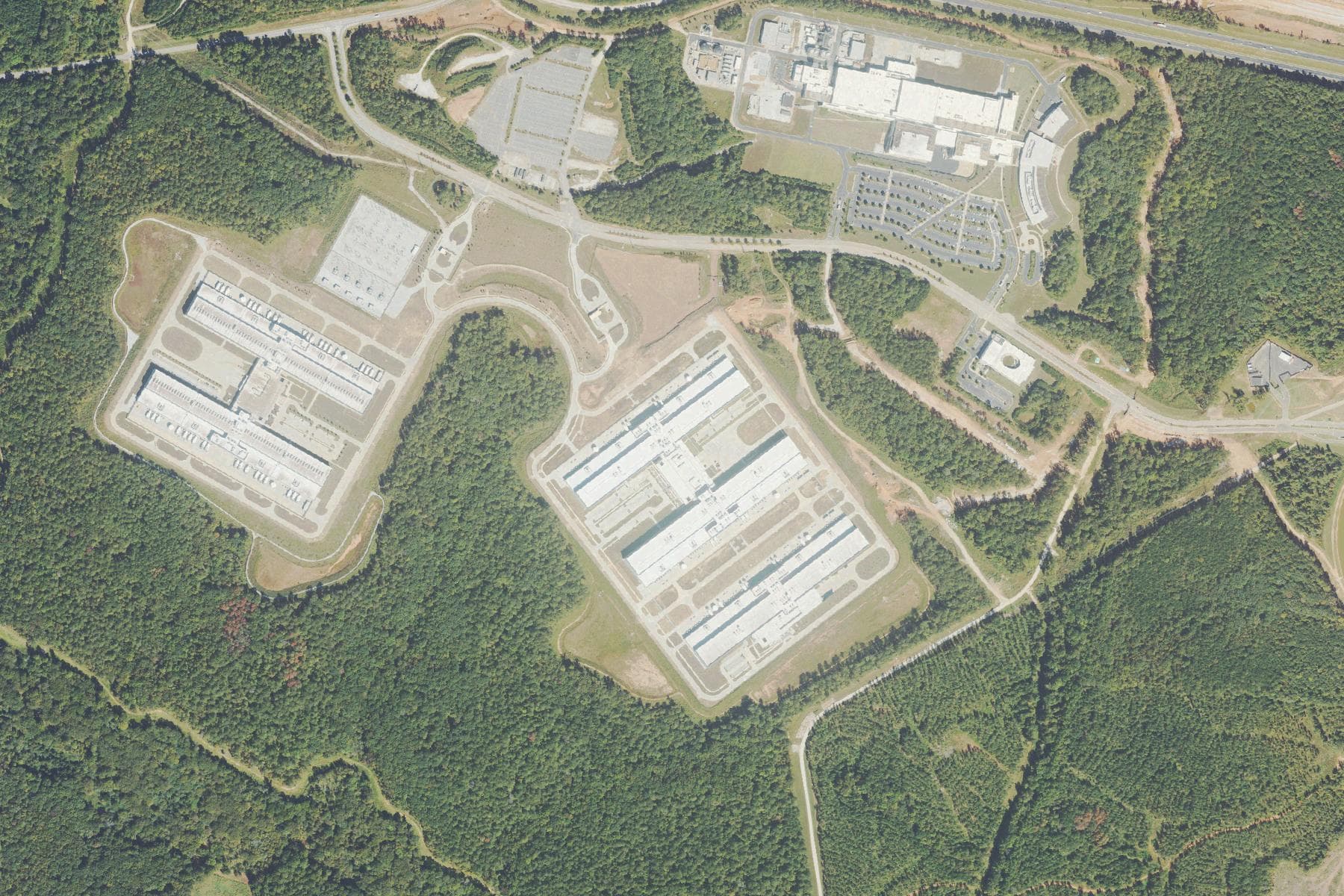
Meta's data center campus in Social Circle, Georgia, photographed 2023-10-08. Meta's building clusters at Stanton Springs, cut into forest on the Newton County line. Neighbours on private wells reported sediment and failures after construction here, and the company's own study is on record.
USDA Farm Service Agency / USGS National Map, National Agriculture Imagery Program. Cropped from NAIP 0.6 m aerial imagery, scene m_3308327_nw_17_060_20231008. (original)
SueDataCenters.org is not affiliated with, endorsed by, or sponsored by Meta. This photograph illustrates reporting and is not evidence of any claim.
Case facts
Active litigation
- Status
- Pending, filed late August 2026, Gwinnett County
- Case
- Four Newton County families, including Beverly and Jeff Morris, v. Meta Platforms and the Joint Development Authority of Jasper, Morgan, Newton and Walton Counties
- Court
- Gwinnett County, Georgia (state court), per the Atlanta Journal-Constitution
- Filed
- Late August 2026, reported September 2026
- Project
- Meta Stanton Springs data center, Newton County, roughly 45 minutes east of downtown Atlanta; ground broken 2018; more than $1 billion
- Core allegation
- Tree clearing, blasting, and excavation disturbed the underground aquifer, sending silt, sediment, clays, and fines into private wells, clogging lines and damaging appliances
- Water use
- Roughly 500,000 gallons per day, about 10 percent of county usage, per earlier reporting
- Meta's position
- A study it commissioned found groundwater flows away from the plaintiffs' properties; Meta says it will defend against what it calls baseless lawsuits
Key Takeaways
- Four families living near Meta's Stanton Springs campus in Newton County sued Meta and the four-county development authority in late August 2026, turning the most widely reported data center water complaints in the country into a lawsuit.
- The complaint, as reported, alleges that clearing, blasting, and excavation for the more than $1 billion campus disturbed the aquifer and filled wells with muddy water, turbidity, silt, sediment, fines, and clays that clogged water lines and damaged appliances.
- Beverly and Jeff Morris, whose well failed after construction began, are the lead voices; the Morrises had earlier reported spending about $5,000 on the problem and receiving a $25,000 quote to replace the well.
- Meta says a groundwater study it commissioned found water flows away from the plaintiffs' properties and that construction and operation were likely not the cause. That causation dispute is the whole case.
- The lesson has not changed, only the stakes: a baseline well test from before construction is the single most valuable piece of evidence a homeowner can have, and most of these plaintiffs never had the chance to take one.
In this article
Yes, Meta has now been sued over the well problems near its Georgia data center. In late August 2026, four families who live near the Stanton Springs campus in Newton County filed suit against Meta Platforms and the Joint Development Authority of Jasper, Morgan, Newton and Walton Counties, the public body that recruited the project. The families, led by Beverly and Jeff Morris, allege that the tree clearing, blasting, and excavation needed to build the more than $1 billion campus disturbed the aquifer under their homes and turned their well water murky brown with silt and sediment. For more than a year this was the biggest data center water story in the country with no lawsuit attached to it. Now it has one, and the fight it sets up, the neighbors' wells against Meta's commissioned groundwater study, is the fight every homeowner on a well near a data center site should understand.
What the lawsuit alleges
Meta's Stanton Springs campus sits in Newton County, roughly 45 minutes east of downtown Atlanta, on the edge of the Newton and Morgan county line near Social Circle and Mansfield. Ground was broken in 2018. As the campus grew, nearby homeowners on private wells began reporting the same thing: water that had been clear for decades turned cloudy, then muddy, then brown.
The complaint, filed in Gwinnett County and reported by the Atlanta Journal-Constitution in September 2026, names four families as plaintiffs and two defendants: Meta Platforms, which owns and operates the campus, and the Joint Development Authority of Jasper, Morgan, Newton and Walton Counties, the four-county public body that assembled the site and courted the project. According to the reporting, the families allege that the extensive tree clearing, blasting, and excavation required to build the campus disturbed the area's underground aquifer, polluting their well water with what the suit describes as muddy water, turbidity, silt, sediment, fines, and clays. The material clogged water lines and damaged household appliances.
The suit also reaches beyond water. The families describe sporadic dust storms from the cleared land and night lighting so intense it obscures the stars, the kind of loss-of-enjoyment facts that sit at the heart of a private nuisance claim. The reporting does not spell out every legal count, and we will update this page when the complaint itself is available.
The Morris family, and the year before the filing
Beverly Morris of Mansfield, whose home sits roughly 1,000 feet from the site, has been the public face of the Stanton Springs complaints since the story first spread from local outlets to national news. Her well failed and filled with sediment after construction began. In earlier reporting she described spending about $5,000 dealing with the problem and being quoted roughly $25,000 for a full well replacement. Today, according to the AJC, the Morrises haul in water: about 55 gallons a day for their horses and 50 gallons a month for the household.
The complaints reached Washington before they reached a courthouse. Rep. Alexandria Ocasio-Cortez visited the Morris home in May 2026 and carried a sample of their water to a congressional hearing on the EPA, pressing the agency on drinking water concerns in the area. Meta, for its part, sent neighbors an apology letter in June 2025 and agreed to dim the campus lights. What it has never agreed to is responsibility for the wells.
The volume numbers give the complaints their context. Earlier reporting put the facility's water use at roughly 500,000 gallons per day, about 10 percent of the county's usage, an industrial-scale draw on the same ground that supplies rural household wells. That is why the complaints were never dismissed locally as coincidence even before there was a case to point to.
What Meta says, and why the study is the whole fight
Meta's answer, as reported, is that a groundwater study it commissioned found that groundwater flows away from the plaintiffs' properties and that the data center's construction and operation were likely not the cause of their water problems. The company says it will defend itself from what it calls baseless lawsuits.
That positions the case exactly where every data center water dispute ends up: on causation. The families must show that something the defendants did on the site changed what is coming out of their taps. Meta will argue that the hydrology points the other way, that rural wells fail for many reasons, and that the timing is coincidence. A court will weigh competing hydrogeologists, and the side with better baseline data usually has the advantage.
That is the hard truth of the case. The plaintiffs' strongest fact is the timeline: clear water for years, then blasting and excavation, then silt. Their weakest fact is the one almost no rural homeowner has, a laboratory test of the well from before the machines arrived. Our guide to data center water contamination claims walks through how these claims are built, and our evidence guide explains why the baseline test matters more than anything else.
Why this case matters beyond Georgia
Homeowner well suits against data center operators are rare, and until 2026 the only one on the tracker was the Louisa County suit against Amazon in Virginia, which alleges brown well water, dust, and noise from a campus under construction. The Newton County case adds a second, aimed at a different hyperscaler, with a different construction mechanism (aquifer disturbance from clearing and blasting rather than operational draw) and a public development authority as a co-defendant.
That second defendant is worth watching. Development authorities assemble land, grant tax abatements, and recruit projects, and they are usually treated as bystanders once construction starts. Naming the JDA puts the question of whether the public body that brought the project in owes anything to the neighbors it affected in front of a judge.
The case also lands in a state where data center water is already a political issue. Georgia has produced the Coweta County Project Sail rezoning suit and dozens of local moratoriums, and the Stanton Springs complaints are the story that made rural well owners across the Southeast start asking what happens to their water when a campus is built next door. Our Georgia page tracks the full picture.
What this means for you if your well changed after a data center arrived
If your water changed after construction started nearby, the Newton County plaintiffs' experience is the roadmap, including its hard parts:
- Test now, and keep testing. A certified lab test today establishes a record even if it is not a true baseline. Repeat on a schedule. Save every report.
- Document the timeline. Dated photos of discolored water, receipts for filters, pumps, and appliance repairs, and a log of when the problems started relative to clearing, blasting, and construction milestones.
- Talk to neighbors. One well failing is an anomaly; four families with the same timeline is a case. The Georgia plaintiffs filed together for a reason.
- Understand the deadline. Property damage and nuisance claims carry statutes of limitations, commonly in the two to six year range depending on the state, and the clock arguably started when your water changed. Our deadlines guide explains why waiting is expensive.
Then talk to a lawyer while the evidence is fresh. Our free intake form lets you tell us what is happening; where a participating attorney who handles these matters is available, we may share your information with them with your consent, but we cannot promise that anyone will contact you. Whether your facts add up to a claim is a lawyer's call, not ours. The Newton County families waited more than a year to make theirs, and the study Meta commissioned in the meantime is now the biggest obstacle in their way.
Frequently asked questions
Has anyone sued Meta over the Georgia data center well water problems?
Yes. In late August 2026, four families living near Meta's Stanton Springs data center in Newton County, Georgia, including Beverly and Jeff Morris, sued Meta Platforms and the Joint Development Authority of Jasper, Morgan, Newton and Walton Counties in Gwinnett County court. They allege that clearing, blasting, and excavation for the campus disturbed the aquifer and filled their wells with silt and sediment.
What does the Meta Georgia water lawsuit claim?
As reported by the Atlanta Journal-Constitution, the families allege that construction of the more than $1 billion campus disturbed the underground aquifer and polluted their well water with muddy water, turbidity, silt, sediment, fines, and clays that clogged water lines and damaged appliances. They also describe dust storms from cleared land and night lighting that obscures the stars.
What is Meta's response to the Newton County well lawsuit?
Meta says a groundwater study it commissioned found that groundwater flows away from the plaintiffs' properties and that the data center's construction and operation were likely not the cause of their water issues. The company has said it will defend itself against what it calls baseless lawsuits.
Can I sue a data center if my well went bad after construction?
Possibly. Homeowners have filed suits over well damage near data center construction in Georgia and Virginia, typically on nuisance, negligence, and property damage theories. The decisive issue is causation, which is why a laboratory water test from before construction, or as early as possible, matters so much. An attorney can evaluate your timeline, your test results, and your state's deadlines.
Article sources
Our editorial standards require primary sources: government publications, regulator data, company filings, and established industry research.
- 1.Atlanta Journal-Constitution: Georgia families sue Meta, accuse its data center of tainting their water (September 2026)
- 2.NewsNation: Meta data center in Georgia and neighbors' muddy water
- 3.CBS News Atlanta: AOC presses EPA over Morgan County drinking water concerns tied to Georgia data center development
- 4.Fortune: Data center water wars in Georgia and Arizona (May 13, 2026)
Related cases
- Louisa County Homeowner v. Amazon: Brown Well Water, Dust, and Noise Reach the Courthouse
In late July 2026, a Louisa County, Virginia homeowner sued Amazon over data center campus construction, alleging brown and contaminated well water, dust, and loud noise, under nuisance, negligence, and property damage theories. It is one of the first individual homeowner damage suits against a hyperscaler in Virginia. What the case claims and what neighbors with similar problems should document.
- Coweta County's Project Sail Lawsuit: Residents Sue to Void a $17 Billion Data Center Rezoning
Seventeen Coweta County residents, farmers, and landowners are suing the county and Atlas Development LLC to void the rezoning of rural conservation land for a $17 billion hyperscale data center campus near Sargent Road. The suit says the county broke its own rules and Georgia rezoning law. Status, claims, and what it means for neighbors.
- The Dalles v. The Oregonian: The Case That Made Google's Water Use Public
In 2021 the City of The Dalles, Oregon sued its own newspaper to keep Google's water use secret as a trade secret. The December 2022 settlement released ten years of records showing Google used about 29 percent of the city's water, paid the paper's legal fees, and ended Google's site-level water secrecy nationwide. Why this settled case still matters to every data center neighbor.
- Amazon's $20.5 Million Nitrate Settlement: The First Big Tech Data Center Water Payout
Amazon Data Services agreed in March 2026 to pay $20.5 million to settle a class action alleging that wastewater from its 13 eastern Oregon data centers contributed to nitrate contamination in the Lower Umatilla Basin, where tens of thousands of residents rely on groundwater. Amazon denies wrongdoing. What the case alleged, how the money will be used, and why it is the benchmark for every data center water claim that follows.
Is a data center disrupting your home?
Tell us what is happening. Where a participating attorney who handles data center cases in your state is available, we may share your information with them with your consent. It is free and carries no obligation, but we cannot promise that anyone will contact you.
- Tell us about your situation
- Independent attorneys
- No obligation
Attorney or law firm handling data center matters? Speak with us