State Guide
Data Centers in Georgia: Lawsuits, Disputes, and Your Rights
Georgia is a top-5 data center market and the center of the water fight: the most widely reported well complaints in the country near Meta's Newton County site, a resident lawsuit to void the Project Sail rezoning in Coweta County, and a moratorium bill in the legislature. What Georgia neighbors can do, and how to tell us about your situation.
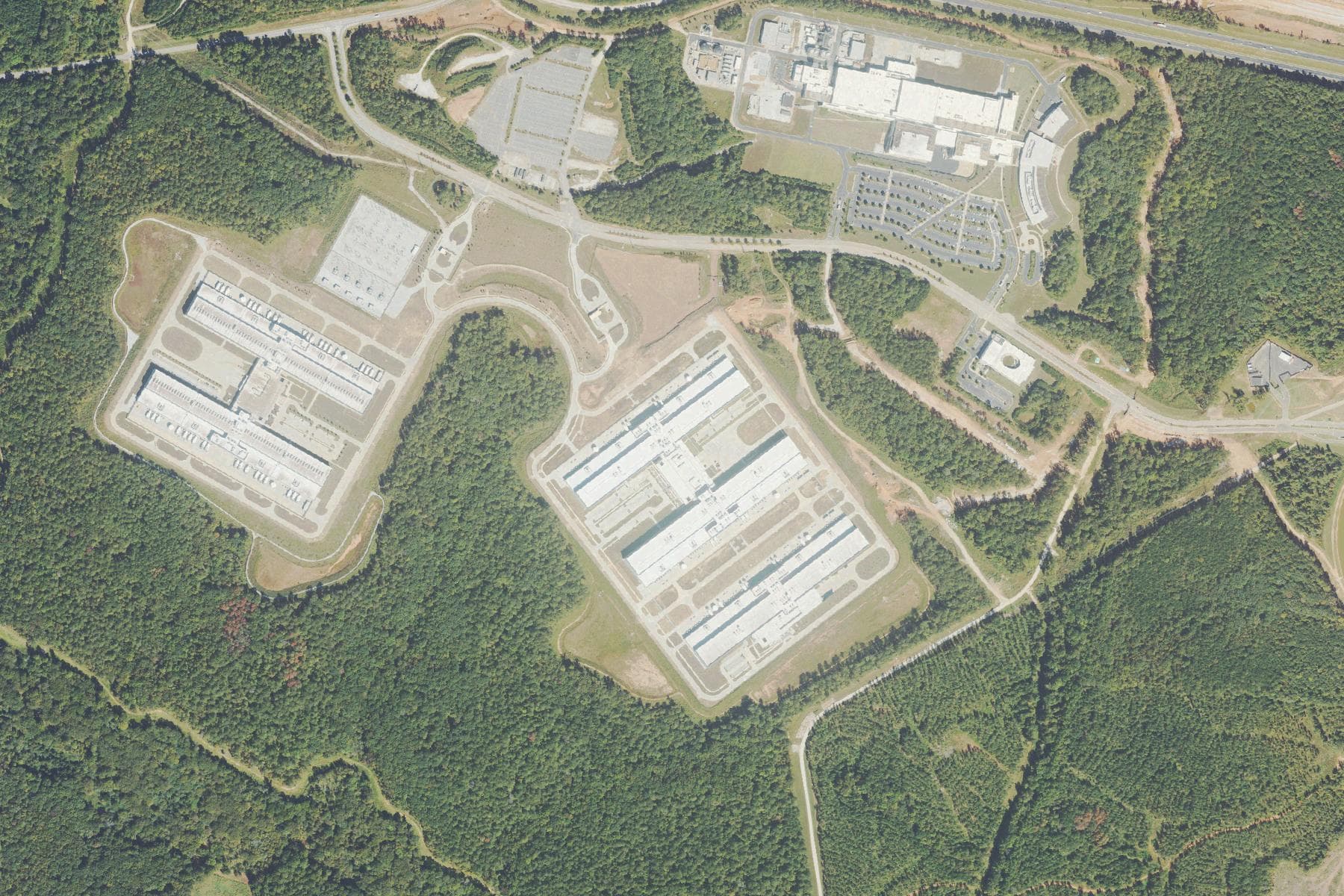
Meta's data center campus in Social Circle, Georgia, photographed 2023-10-08. Meta's building clusters at Stanton Springs, cut into forest on the Newton County line. Neighbours on private wells reported sediment and failures after construction here, and the company's own study is on record.
USDA Farm Service Agency / USGS National Map, National Agriculture Imagery Program. Cropped from NAIP 0.6 m aerial imagery, scene m_3308327_nw_17_060_20231008. (original)
SueDataCenters.org is not affiliated with, endorsed by, or sponsored by Meta. This photograph illustrates reporting and is not evidence of any claim.
Georgia at a glance
Largest markets
- Market size
- Top-5 national market, anchored by metro Atlanta and spreading into rural counties
- Hot spots
- Metro Atlanta, Douglas County, Newton and Morgan counties, Coweta County, Fayette County
- Key operators
- Meta (Stanton Springs, Newton County), Atlas Development (Project Sail, Coweta), plus the hyperscalers and developers building out metro Atlanta and Douglas County
- Documented disputes
- Coweta Project Sail rezoning suit (filed May 2026, pending); Meta Newton County well-water suit (four families v. Meta and the JDA, filed late August 2026, pending); Fayetteville suit threat mooted by developer withdrawal March 2026
- Statewide action
- HB 1012 would bar local permits for new data centers until March 1, 2027; introduced but not enacted as of August 2026
Key Takeaways
- Seventeen Coweta County residents, farmers, and landowners sued in May 2026 to void the rezoning for Project Sail, a $17 billion hyperscale campus sited inside a state-designated Most Significant Groundwater Recharge Area with roughly 103 acres of wetlands. The case is pending.
- The most widely reported homeowner well complaints in the country come from Newton County, where a Mansfield homeowner about 1,000 feet from Meta's Stanton Springs site says her well failed after construction; in late August 2026 four families, including hers, sued Meta and the four-county development authority.
- Meta's facility uses roughly 500,000 gallons of water per day, about 10 percent of county usage, and the water fight has drawn national politics, with AOC pressing the EPA over Morgan County water in 2026.
- Resident pressure works even without a filing: Fayette County residents and Flint Riverkeeper announced plans to sue over a proposed Fayetteville data center, and the developer withdrew in March 2026.
- Georgia's legislature is weighing HB 1012, which would bar local permits for new data centers until March 1, 2027; it had not been enacted as of August 2026.
Data centers in Georgia, from the registry
All 79 sites79 sites on the public record: 26 operating, 8 under construction, 20 permitted, 19 proposed, 6 cancelled. 26 carry documented opposition or litigation. 16.1 GW planned.
By county, alphabetically. Each profile carries capacity, land, utility, water, subsidies, jobs, a timeline, and every source.
Bartow County (7 sites)
- Project Springbank (Atlas Development Bartow County Campus) · Adairsville · Atlas Development LLCCancelled · 432 MW · Opposed
- Atlas Development Stiles Road Data Center (Euharlee Road) · Cartersville · Atlas Development LLCCancelled · Opposed
- Oakley Real Estate Partners Brown Farm Road Data Center · Cartersville · Oakley Real Estate PartnersProposed · Opposed
- Project Bunkhouse (Digital Realty Data Center Campus) · Stilesboro · Digital RealtyPermitted · 1.3 GW · Mixed reception
- Switch KEEP 2.0 Atlanta North Campus · Cartersville · SwitchPermitted · Mixed reception
- DataBank Project Indo · Cartersville · DataBankProposed · 200 MW
- Kingston Technology Hub (Thor Equities) · Kingston · Thor EquitiesProposed · 150 MW
Bulloch County (1 site)
- Burkhalter Road Data Center (4AM Development) · Statesboro · 4AM Development, LLC (developer; operator undisclosed)Proposed · 99 MW · In litigation
Butts County (1 site)
- AWS Butts County Data Center Campus · Jackson · Amazon Web ServicesProposed
Carroll County (1 site)
- Project Bus (Atlas Development Temple Data Center Campus) · Temple · Atlas Development LLCProposed · Opposed
Clayton County (2 sites)
- Lovejoy Data Center Campus (Stillwater Development) · Lovejoy · Stillwater DevelopmentCancelled · 1.3 GW · Opposed
- TA Realty East Tanners Church Road Data Center · Ellenwood · TA RealtyPermitted · 180 MW
Cobb County (4 sites)
- 1155 Powers Ferry Place Data Center (Prime Storage conversion) · Marietta · Prime Storage (Prime Group Holdings), end user undisclosedPermitted · 18 MW · Contested
- Bells Ferry Road Data Center (MMM Acquisitions) · Marietta · MMM Acquisitions LLC (developer; end user undisclosed)Permitted
- CoreSite AT2 - Marietta Data Center · Marietta · CoreSiteOperating
- Digital Realty ATL11 · Austell · Digital RealtyOperating
Columbia County (3 sites)
- White Oak Technology Park · Appling · Trammell Crow Company (CBRE subsidiary)Permitted · In litigation
- Google Evans Data Center · Evans · GoogleProposed
- Pumpkin Technology Campus · Harlem · Cloverleaf Infrastructure (applicant Piedmont DevCo LLC), with Pumpkin Center Properties / the Prather CompanyPermitted
Coweta County (4 sites)
- Project Sail, Prologis Data Center Campus · Newnan · PrologisPermitted · 900 MW · In litigation
- Project Oak Data Center (Walt Sanders Road) · Newnan · Undisclosed developerCancelled · Opposed
- Project Peach (CyrusOne Palmetto Data Center Campus) · Palmetto · CyrusOne (joint venture with North Coweta Investors)Permitted · Opposed
- Bridgeport Data Center Campus · Moreland · Undisclosed developer (Bridgeport Industrial Park)Proposed
Douglas County (10 sites)
- Liberty Road Data Center Campus (EdgeConneX) · Villa Rica · EdgeConneX (applicant East Village Dothan LLC)Cancelled · Opposed
- Winston Data Center (Waldrop Farms) · Winston · TC Atlanta DevelopmentPermitted · Contested
- DC BLOX Atlanta West (ATL1) · Lithia Springs · DC BLOXUnder construction · 120 MW · Mixed reception
- Microsoft Douglasville Data Center Campus · Douglasville · MicrosoftUnder construction · Mixed reception
- Flexential Atlanta - Douglasville 1 · Douglasville · FlexentialOperating · 22.5 MW
- Aligned Data Centers ATL-01 · Lithia Springs · Aligned Data CentersOperating
- Flexential Atlanta - Douglasville 2 · Douglasville · FlexentialOperating
- Google Douglasville Data Center · Douglasville · GoogleOperating
- Switch Atlanta: The KEEP · Lithia Springs · SwitchOperating
- Vantage Data Centers Douglasville Campus · Douglasville · Vantage Data CentersProposed
Early County (1 site)
- QTS Project Blue Hole · Blakely · QTS Data CentersPermitted · 1 GW · Mixed reception
Effingham County (1 site)
- Project Camellia (OpenAI Effingham County Campus) · Rincon · OpenAIProposed · 3.2 GW · In litigation
Emanuel County (1 site)
- CleanSpark Twin City Bitcoin Mining Facility · Twin City · CleanSpark, Inc.Operating
Fayette County (2 sites)
- Microsoft Fairwater Atlanta (Azure AI Superfactory) · Fayetteville · MicrosoftOperating · 1.5 GW · Contested
- Microsoft Tyrone Campus (Project Rita) · Tyrone · MicrosoftPermitted · 96 MW · Contested
Floyd County (3 sites)
- Coosa Data Center (Project Gracie) · Rome · Atlas Development LLCPermitted · Opposed
- Microsoft Data Center Campus, Rome, GA · Rome · MicrosoftPermitted · Supported
- Project Sassy (Atlas Development Rome Campus) · Rome · Atlas Development LLCProposed
Fulton County (12 sites)
- Union City Data Center Campus (EdgeConneX / TA Realty) · Union City · EdgeConneX (campus investment and operations with TA Realty; land owned by Microsoft, site development by Burr Computer Environments)Under construction · 324 MW
- T5 @ Atlanta IV · Palmetto · T5 Data CentersProposed · 300 MW
- QTS Atlanta 1 (Atlanta-Metro DC1) · Atlanta · QTS Data CentersOperating · 278 MW
- Edged Atlanta (ATL01) · Atlanta · Edged Energy (Endeavour)Operating · 168 MW
- CleanSpark College Park Bitcoin Mining Facility · College Park · CleanSpark, Inc.Operating · 50 MW
- STACK ATL01 (formerly T5@Atlanta) · Alpharetta · STACK InfrastructureOperating · 20 MW
- Flexential Atlanta - Alpharetta Data Center · Alpharetta · FlexentialOperating · 6 MW
- CoreSite AT1 - Atlanta, GA · Atlanta · CoreSiteOperating
- Digital Realty Atlanta ATL13 · Atlanta · Digital RealtyOperating
- Microsoft East Point Data Center (Ben Hill Road) · East Point · MicrosoftOperating
- Microsoft Palmetto Data Center · Palmetto · MicrosoftUnder construction
- Vantage Data Centers Westlake · South Fulton · Vantage Data CentersProposed
Gwinnett County (2 sites)
- CleanSpark Norcross Bitcoin Mining Facility · Norcross · CleanSpark, Inc.Operating · 20 MW
- Flexential Atlanta - Norcross (ATL01/02) · Norcross · FlexentialOperating
Hall County (1 site)
- Project Turbo (Gainesville Data Center) · Gainesville · Project Turbo, LLC (developer; end user undisclosed)Proposed
Irwin County (1 site)
- Project Arrowhead (Premier Data Center Development Irwin County Campus) · Mystic · Premier Data Center Development, LLCProposed · 1.3 GW
Jackson County (1 site)
- Northern Data Maysville Data Center · Maysville · Northern Data GroupPermitted · 120 MW · Contested
McDuffie County (1 site)
- Project Azalea (Thomson Data Center Campus) · Thomson · Project Turbo, LLC (developer; end user undisclosed)Permitted · 400 MW
Muscogee County (1 site)
- Project Ruby (Upatoi Data Center Campus) · Columbus · Undisclosed end user (site pursued by Choose Columbus / Development Authority of Columbus)Proposed · 600 MW · Opposed
Newton County (3 sites)
- Meta Newton Data Center (Stanton Springs) · Social Circle · Meta PlatformsOperating · In litigation
- Serverfarm Covington Data Center (Hazelbrand Road) · Covington · ServerfarmUnder construction · Contested
- Social Circle Technology Park · Social Circle · TPA Group (developer; end tenant undisclosed)Proposed · Contested
Pierce County (1 site)
- LN Energy Blackshear Bitcoin Mine · Blackshear · LN EnergyCancelled · Opposed
Randolph County (1 site)
- LN Compute Cuthbert Bitcoin Mine · Cuthbert · LN Compute Inc.Operating · 7 MW
Richmond County (1 site)
- QTS Project Eisenhower · Augusta · QTS Data CentersUnder construction · Contested
Rockdale County (1 site)
- DC BLOX Atlanta East Hyperscale Data Center Campus · Conyers · DC BLOXUnder construction · 216 MW · Mixed reception
Spalding County (3 sites)
- Wallace Jackson Data Center Campus · Griffin · Wallace Jackson, LLC (developer; end user undisclosed)Permitted · In litigation
- High Falls Road Data Center Campus (Montana Property Group) · Griffin · Montana Property Group LLC (developer; end user undisclosed)Permitted
- Spalding Investments Data Center Campus (High Falls Road) · Griffin · Spalding Investments, LLC (developer; end user undisclosed)Permitted
Treutlen County (1 site)
- Cango GreenVolt Soperton Facility · Soperton · Cango Inc. (GreenVolt Technology LLC)Operating · 50 MW
Troup County (2 sites)
- Project West (Troup County Data Center Campus) · LaGrange · Undisclosed data center developer (landowner Joshua Harrelson)Proposed · 600 MW
- Google LaGrange Data Center · LaGrange · GoogleProposed · 400 MW
Twiggs County (1 site)
- Pine Ridge Tech Park · Eagle Rock PartnersPermitted · 900 MW · In litigation
Walker County (1 site)
- CleanSpark LaFayette Bitcoin Mining Facility · LaFayette · CleanSpark, Inc.Operating
Washington County (1 site)
- CleanSpark Sandersville Bitcoin Mining Facility · Sandersville · CleanSpark, Inc.Operating · 250 MW
Whitfield County (2 sites)
- CoreWeave Dalton II / Core Scientific Old Tilton Road Data Center · Dalton · Core ScientificUnder construction · Mixed reception
- CleanSpark Dalton Bitcoin Mining Facility · Dalton · CleanSpark, Inc.Operating
Wilkes County (1 site)
- CleanSpark Washington Bitcoin Mining Facility · Washington · CleanSpark, Inc.Operating · 86 MW
In this article
Georgia built itself into a top-5 data center market with cheap power, aggressive incentives, and metro Atlanta's fiber, and the industry kept moving outward, into Douglas County, Newton and Morgan counties, Coweta, and Fayette. What Virginia is to data center noise and zoning fights, Georgia has become to water. A Mansfield homeowner's failed well near Meta's Newton County campus became the most widely reported data center water story in the country. Seventeen Coweta County residents are in court right now trying to void the rezoning for a $17 billion campus sited over a state-designated groundwater recharge area. And the legislature is weighing a statewide pause on new permits. Here is where every Georgia fight stands and what you can do if a facility is near your home.
The data center footprint in Georgia
Metro Atlanta anchors one of the five largest data center markets in the country, and Douglas County west of the city has become a major campus corridor. But the story of the last few years is the push into rural Georgia: Meta's campus at Stanton Springs on the Newton County line near Social Circle and Mansfield, the proposed $17 billion Project Sail campus near Sargent Road in Coweta County, and a proposal north of the Fayette Pavilion in Fayetteville that residents fought off in 2026.
Rural siting is what turned growth into conflict. These campuses land near homes on private wells, on land carrying conservation or agricultural zoning, and over the groundwater systems that rural households depend on. Meta's Newton County facility uses roughly 500,000 gallons of water per day, about 10 percent of county usage. When projects at that scale meet neighborhoods at well-and-septic scale, the disputes write themselves.
What Georgia residents are dealing with
Georgia's complaints center on water, with land use close behind:
- Failed and fouled wells. Beverly Morris of Mansfield, roughly 1,000 feet from Meta's Stanton Springs site, reported that her well failed and filled with sediment after construction. She spent $5,000 trying to fix it and was quoted $25,000 for a replacement. Her story became the most widely reported data center water complaint in the country. Meta commissioned a groundwater study that concluded its facility had no adverse effect.
- Regional water anxiety. Concerns spread beyond one well: in 2026, Representative Alexandria Ocasio-Cortez pressed the EPA over Morgan County drinking water tied to Georgia data center development. See our water issue page and our guide to water contamination claims.
- Groundwater recharge land rezoned industrial. Project Sail would sit inside a state-designated Most Significant Groundwater Recharge Area containing roughly 103 acres of wetlands, which is the heart of the Coweta lawsuit.
- Process complaints. The Coweta plaintiffs allege the county bent its own rules to get the project through, a theme running from Virginia to Missouri.
Lawsuits and disputes in Georgia
The Coweta County Project Sail lawsuit. In May 2026, seventeen residents, farmers, and landowners sued Coweta County and Atlas Development LLC in Coweta County Superior Court to void the rezoning of rural conservation land to industrial for the $17 billion hyperscale campus near Sargent Road. They allege the county violated its own procedural rules and state rezoning law, including by allowing the application to be amended after a December 2025 ordinance change without a new Development of Regional Impact study, and they stress the site's location in a Most Significant Groundwater Recharge Area with roughly 103 acres of wetlands. The case is pending. Full coverage: our Project Sail case page.
The Meta Newton County well lawsuit. After more than a year as a complaint and petition fight, the most widely reported data center water dispute in America became a lawsuit in late August 2026: four families near the Stanton Springs campus, including Beverly and Jeff Morris, sued Meta and the Joint Development Authority of Jasper, Morgan, Newton and Walton Counties in Gwinnett County court, alleging that clearing, blasting, and excavation disturbed the aquifer and filled their wells with silt. Meta points to its commissioned groundwater study finding water flows away from the plaintiffs' properties; the facility draws roughly 500,000 gallons a day. The full story is in our Meta Georgia water lawsuit report.
Fayetteville: the suit that never needed filing. Fayette County residents and Flint Riverkeeper announced plans to sue over a proposed data center north of the Fayette Pavilion. On March 18, 2026, developer Crow Holdings withdrew the project, mooting the threatened case. It is Georgia's cleanest example of legal pressure working before a courtroom ever got involved.
HB 1012. The 2026 bill would bar local permits for new data centers statewide until March 1, 2027. It had not been enacted as of August 2026, but its existence marks how far the politics have moved in a state that built this market on incentives.
Your legal options in Georgia
Georgia residents are actively using, or positioned to use, four main paths:
- Rezoning and procedural challenges. The Project Sail suit is the live template: residents attacking an approval for violating the county's own rules and state rezoning law. These challenges run on short clocks after a vote, sometimes 30 days or less.
- Well and water damage claims. A homeowner whose well fails after nearby construction can bring nuisance, negligence, and property damage claims for repair costs and lost value, typically on a contingency fee basis. Prompt water testing is the foundation; a Virginia homeowner filed exactly this suit against Amazon in 2026.
- Organized pre-approval opposition. Fayetteville shows a credible suit threat plus organized residents can end a project outright. Our guide on fighting a proposed data center lays out the sequence.
- Legislative and regulatory pressure. The HB 1012 moratorium bill and the EPA correspondence over Morgan County both grew from resident complaints that were documented and loud.
A statute of limitations applies to damage claims, commonly two to six years depending on the state and claim type; a Georgia attorney can confirm the deadlines for your specific claims. Assume the clock is already running.
If you live near a Georgia data center
If you are on a well anywhere near a campus or construction site, get a baseline water test now and retest if anything changes; keep every result. Log noise, dust, and truck traffic with dates. Photograph everything. File written complaints with your county each time, and pull the project's zoning conditions and permits from the county file to check for violations. Our guide to documenting data center harm covers the details.
Then get a legal read on your situation. Our free intake form lets you tell us what is happening; where a participating attorney who handles these matters in Georgia is available, we may share your information with them with your consent, but we cannot promise that anyone will contact you.
Georgia cases we are tracking
- Coweta County's Project Sail Lawsuit: Residents Sue to Void a $17 Billion Data Center Rezoning
Seventeen Coweta County residents, farmers, and landowners are suing the county and Atlas Development LLC to void the rezoning of rural conservation land for a $17 billion hyperscale data center campus near Sargent Road. The suit says the county broke its own rules and Georgia rezoning law. Status, claims, and what it means for neighbors.
- Georgia Families Sue Meta Over Their Wells: The Newton County Data Center Water Lawsuit
After more than a year of muddy wells, petitions, and a congressional visit, four Newton County families sued Meta and the local development authority in late August 2026, alleging that clearing, blasting, and excavation for the Stanton Springs data center disturbed the aquifer and filled their well water with silt. What the suit says, what Meta says, and what it means for every homeowner on a well near a data center site.
Frequently asked questions
Can I sue a data center in Georgia?
Yes. Seventeen Coweta County residents, farmers, and landowners sued in May 2026 to void the rezoning for the $17 billion Project Sail campus, and that case is pending. Homeowners with well damage or other property harm can also bring nuisance, negligence, and property damage claims, and an attorney can evaluate which path fits your facts.
Did anyone sue Meta over the Georgia well water problems?
Yes, as of late August 2026. Four families living near Meta's Stanton Springs data center in Newton County sued Meta and the four-county Joint Development Authority in Gwinnett County court, alleging that construction disturbed the aquifer and polluted their wells with silt and sediment. Meta says a groundwater study it commissioned found the facility was likely not the cause. Before the filing, the dispute had run through complaints, petitions, media coverage, and congressional pressure on the EPA.
What is the Project Sail lawsuit about?
Seventeen Coweta County residents sued the county and Atlas Development in May 2026 to void the rezoning of rural conservation land for a $17 billion hyperscale campus near Sargent Road. They allege the county violated its own procedures and state rezoning law, including amending the application after a December 2025 ordinance change without a new Development of Regional Impact study, on land inside a state-designated groundwater recharge area with roughly 103 acres of wetlands.
Who pays if a data center damages my well in Georgia?
If construction or operations damaged your well, you may have nuisance, negligence, and property damage claims against the operator or its contractors for repair costs and lost value. The Mansfield homeowner near Meta's site spent $5,000 on repairs and was quoted $25,000 for a replacement well. Test your water promptly, keep the results, and have an attorney review the timeline.
Can Georgia residents stop a proposed data center?
It has happened. Fayette County residents and Flint Riverkeeper announced plans to sue over a proposed Fayetteville data center, and the developer withdrew in March 2026. The Coweta plaintiffs are pursuing the other route, asking a court to void an approval already granted. Challenges to approvals run on short deadlines, so engage counsel immediately after a vote.
Is Georgia going to pause new data centers?
A bill exists: HB 1012 would bar local permits for new data centers until March 1, 2027. It had not been enacted as of August 2026. Even unpassed, it signals how much the politics have shifted in one of the country's most industry-friendly states.
Article sources
Our editorial standards require primary sources: government publications, regulator data, company filings, and established industry research.
- 1.The Citizen: Coweta residents sue to block Project Sail data center (May 2026)
- 2.NewsNation: Meta data center in Georgia and muddy water complaints
- 3.Fortune: Data center water wars in Georgia and Arizona (May 2026)
- 4.CBS Atlanta: AOC presses EPA over Morgan County drinking water concerns (2026)
- 5.Good Jobs First: Data center moratorium bills are spreading in 2026
Is a data center disrupting your home in Georgia?
Tell us what is happening. Where a participating attorney who handles data center cases in your state is available, we may share your information with them with your consent. It is free and carries no obligation, but we cannot promise that anyone will contact you.
- Tell us about your situation
- Independent attorneys
- No obligation
Attorney or law firm handling data center matters? Speak with us