The Basics
Can You Sue a Data Center? What Neighbors Can Actually Do in 2026
Yes, neighbors are suing data centers and winning real concessions: noise class actions, well water claims, voided rezonings, and Clean Air Act suits. Here is who has a case, the six legal theories that work, and what to do first.
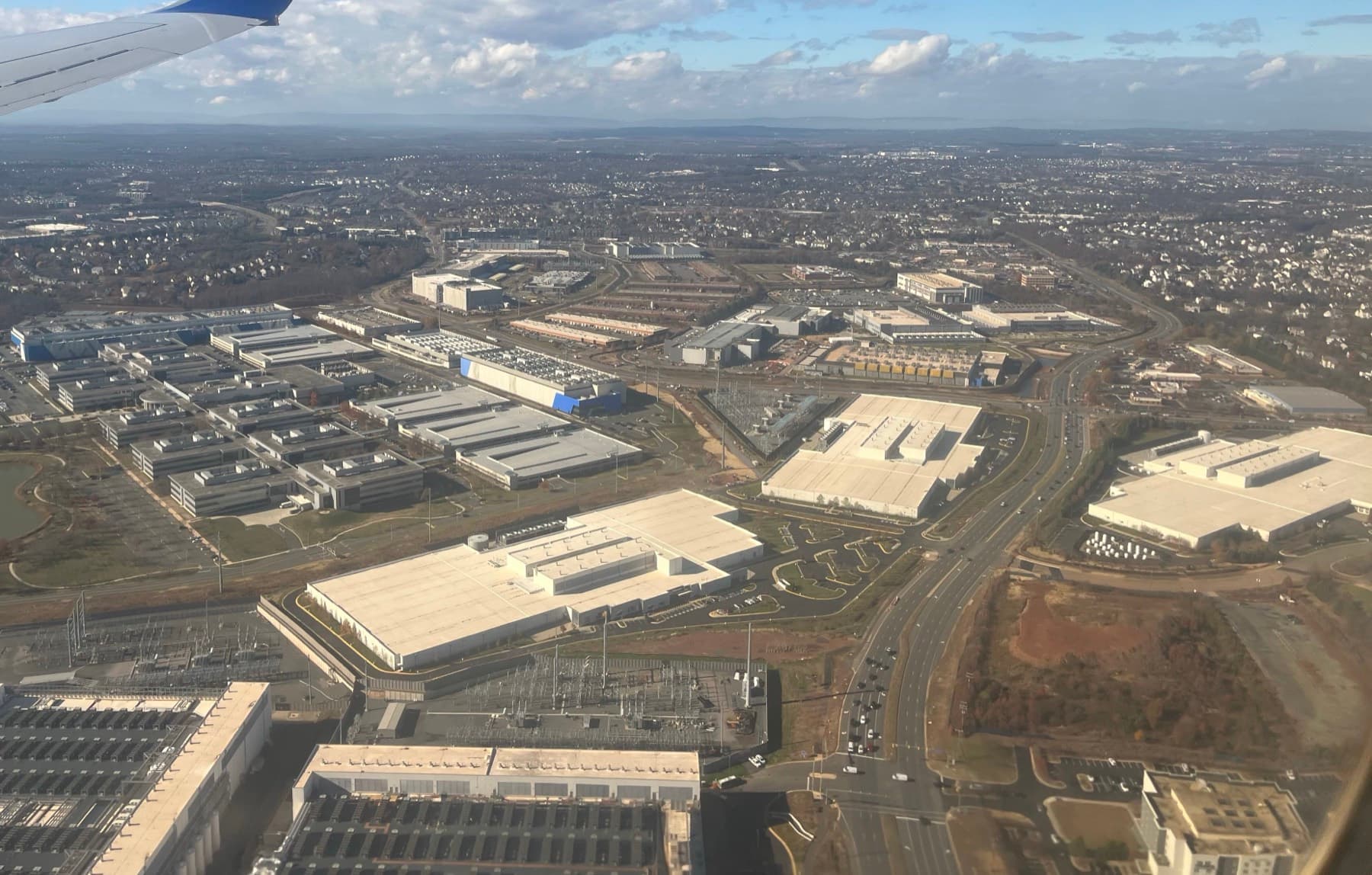
data center corridor in Ashburn, Virginia, photographed 2025-11-26. Loudoun County carries more data center capacity than any other county in the world, and the corridor around Ashburn is where the American fight over siting, power and property values began.
Theodore Christopher / Wikimedia Commons. Resized for web. (license) (original)
Key Takeaways
- Yes, you can sue a data center. Residents have active cases right now over noise, water damage, air pollution, and illegal approvals, including the first noise class action against a hyperscale AI facility.
- The six theories that actually get used: private nuisance, negligence and property damage, zoning and procedural challenges, open meetings violations, environmental citizen suits, and utility rate challenges.
- You do not pay hourly legal fees in most of these cases. Neighbor suits against operators are typically taken on contingency, and zoning appeals are often brought by groups of households splitting costs.
- Evidence decides these cases: dated noise logs, water tests, photos, appraisals, and copies of every complaint you filed with the county.
- Deadlines are short. Zoning appeals can expire in as little as 30 days (10 days for some Texas decisions), and nuisance and damage claims carry a statute of limitations that runs while you wait.
In this article
You can sue a data center, and in 2026 people are doing it in more states than ever: a noise class action against Microsoft's Fairwater campus in Wisconsin, a homeowner suit against Amazon in Louisa County, Virginia over brown well water and construction dust, an NAACP Clean Air Act case against xAI's turbines, and zoning challenges that have voided approvals for the largest data center project in the world. Whether you have a case depends on what the facility is doing to you, how well you can document it, and which of six legal doors fits your situation. This guide walks through each one in plain English.
Yes, people are suing data centers right now
For years, the standard advice was that neighbors of a data center had little recourse: the projects were permitted, the operators were the largest companies on earth, and the harms, a hum, a dusty well, a bigger power bill, felt too diffuse to litigate. That has changed. The build-out of AI campuses pushed facilities closer to homes, made them larger and louder, and multiplied the number of affected households, and the lawsuits followed.
A few markers of where things stand as of August 2026:
- In Wisconsin, residents near Microsoft's 1.2 million square foot Fairwater campus in Mount Pleasant filed a class action over noise, seeking to represent every household within a 1.5 mile radius, reported as the first of its kind against a hyperscale AI data center.
- In Virginia, a Louisa County homeowner sued Amazon over data center construction, alleging brown well water, dust, and constant noise.
- Also in Virginia, courts voided the rezoning for the Prince William Digital Gateway, the largest proposed data center project in the world, because the county botched its public notice. The developer withdrew its final appeal in July 2026 and terminated the project.
- In Mississippi, the NAACP filed a federal Clean Air Act suit against xAI over dozens of gas turbines it says were operated without permits at the Colossus 2 site.
- In Texas, Granbury residents are litigating private nuisance claims against a large computing facility over 24/7 fan noise, with a second federal suit filed in 2026.
Who actually has a case
Courts do not award money for generalized objections to development. They compensate specific, provable interference with your property or health. In practice, the people with the strongest claims share a few traits:
- Proximity. Most viable claims come from within roughly a mile of a campus, and the strongest from a few thousand feet. The Wisconsin class action drew its line at 1.5 miles; the Louisa plaintiff lives near the construction site itself.
- A concrete harm. Sleep loss from a constant hum, a well that failed after blasting, exhaust odors, cracks from construction vibration, a home appraisal that dropped, a documented spike in your electric rates.
- Documentation. Dated logs, decibel readings, water tests, photos, complaint records. Cases are built on what you can show, not what you can describe.
- Numbers. A street full of affected households is a class action or a coordinated mass tort, and operators settle with groups far faster than with individuals.
If the facility near you is still a proposal rather than a building, you may have an even stronger position, because approval fights have been the single most successful category of data center litigation. More on that below.
The six legal theories that work
1. Private nuisance. The workhorse. A private nuisance claim says the facility substantially and unreasonably interferes with the use and enjoyment of your home: the 24/7 cooling hum, generator tests at dawn, floodlights, vibration. Remedies include money damages and, in serious cases, an injunction ordering mitigation. The Granbury, Texas litigation and the Microsoft Fairwater class action are both nuisance cases at heart.
2. Negligence and property damage. When construction or operations physically harm your property, a failed or fouled well, foundation cracks from blasting, flooding from graded land, you can sue for the cost of repair and loss of value. The Louisa County suit against Amazon pairs this with nuisance.
3. Zoning and land use challenges. Data centers need rezonings, special use permits, or variances, and those approvals must follow strict procedures. When counties cut corners, courts void the approval entirely. That is how the Prince William Digital Gateway rezoning died, how Coweta County, Georgia residents are attacking the $17 billion Project Sail campus, and how Bessemer, Alabama homeowners forced a redo of a $14.5 billion project's rezoning.
4. Open meetings and sunshine law violations. If officials negotiated the deal behind closed doors or rushed the vote, state transparency laws can unwind it. Festus, Missouri residents filed a 12 count suit on exactly this theory in 2026, and Port Washington, Wisconsin faces a similar claim.
5. Environmental citizen suits. Federal statutes like the Clean Air Act let private citizens sue polluters directly. The NAACP's federal case against xAI over unpermitted gas turbines is the flagship example, seeking an injunction and daily penalties.
6. Utility rate challenges. When a data center's power demand pushes up residential rates, the fight happens at public utility commissions. Ohio's commission forced data centers onto a special tariff so residents stop subsidizing them; the rule is now before the Ohio Supreme Court. These are regulatory actions rather than damage suits, but organized residents and consumer advocates participate directly.
What suing costs, and what cases are worth
Most people never sue because they assume they cannot afford to. The economics are friendlier than they look:
- Damage and nuisance suits against operators are commonly taken on contingency: no upfront fees, the firm takes a percentage of any recovery, and typically nothing if you lose.
- Class actions cost individual members nothing out of pocket; counsel is paid from the recovery the court approves.
- Zoning and open meetings challenges are usually funded by groups of neighbors or a community association splitting a flat retainer, which is how the Warrenton, Fauquier County, and Festus plaintiffs organized.
What you can recover depends on the claim: repair and remediation costs (drilling a replacement well can cost thousands to tens of thousands of dollars), diminished property value, loss of use and enjoyment, and negotiated relief like sound barriers, equipment changes, buyouts, or community funds. Approval challenges do not pay damages, but they can kill or shrink a project, which for a homeowner is often worth more than any check. For a realistic breakdown, see our guide to what these cases are worth.
What to do first, in order
1. Start a dated log today. Time, date, what you heard, saw, or smelled, and how it affected sleep, work, and use of your home. Contemporaneous records are the backbone of every nuisance case.
2. Capture measurements. A phone decibel app is a start; a $30 sound meter at your property line is better. Test your well now so you have a baseline. Photograph everything with timestamps.
3. Complain in writing, every time. File noise and code complaints with the county and keep copies. Complaint histories prove the problem is ongoing and that the operator knew.
4. Pull the public file. The facility's rezoning conditions, permits, and noise studies are public records, and violations of them are leverage. Our evidence guide walks through exactly what to request.
5. Talk to your neighbors. Find out how many households are affected. Numbers change the legal options and the settlement math.
6. Talk to a lawyer before deadlines run. Zoning appeals can expire in 30 days. Nuisance and damage claims carry statutes of limitations, commonly two to six years depending on the state, and waiting weakens even timely cases. A consultation is free in nearly every firm handling these matters.
How SueDataCenters.org fits in
We are not a law firm. We publish researched reporting on data center litigation, and when you submit our intake form, we collect your information; where a participating attorney who handles data center matters in your state is available, we may share it with them with your consent. We cannot promise that anyone will contact you. Any attorney who does evaluates the case themselves, and any representation happens under the agreement you sign with them. You pay us nothing, and you are never obligated to hire anyone. The full details are in our advertising disclosure.
Frequently asked questions
Can I sue a data center for noise?
Yes. Constant mechanical noise that disrupts sleep and normal use of your home is the classic private nuisance claim, and it is the theory behind the Microsoft Fairwater class action in Wisconsin and the Granbury, Texas cases. Documented decibel readings and a complaint history make these claims much stronger.
Can I sue if a data center ruined my well water?
If construction or operations damaged or contaminated your well, you may have negligence, nuisance, and trespass claims for repair costs and lost property value. A Louisa County, Virginia homeowner filed exactly this kind of suit against Amazon in 2026. Test your water now to establish a record.
Can I stop a data center that has not been built yet?
Approval challenges are the most successful category of data center litigation. Courts have voided rezonings over defective public notice, procedural violations, and open meetings violations. These deadlines are very short, sometimes 30 days from approval, so act immediately.
How much does it cost to sue a data center?
Usually nothing upfront. Damage and nuisance cases are typically handled on contingency, class members pay nothing out of pocket, and zoning challenges are commonly funded by groups of neighbors sharing costs.
What compensation can neighbors of a data center get?
Depending on the claim: repair and remediation costs, diminished property value, loss of use and enjoyment of your home, and negotiated relief such as sound mitigation, well replacement, buyouts, or community benefit funds. Approval challenges can block or shrink the project itself.
Is there a deadline to sue a data center?
Yes, and it may be closer than you think. Zoning and permit appeals can run on 30 day clocks, and nuisance and property damage claims carry statutes of limitations that vary by state, commonly in the two to six year range. An attorney can confirm the exact deadline for your situation.
Article sources
Our editorial standards require primary sources: government publications, regulator data, company filings, and established industry research.
- 1.Wisconsin Examiner: Mount Pleasant residents file class action over Microsoft data center noise (2026)
- 2.Virginia Mercury: Louisa homeowner sues Amazon over data center construction (July 2026)
- 3.Technical.ly: Digital Gateway data center battle heads to Virginia Supreme Court (2026)
- 4.Earthjustice: NAACP asks court for emergency action on xAI data center power plant (2026)
- 5.Earthjustice: Granbury residents sue bitcoin mine over health-threatening noise (2024)
- 6.St. Louis Public Radio: Opposition group sues Festus and data center developer (April 2026)
- 7.Ohio Capital Journal: Challenge to AEP Ohio data center tariff (Nov 2025)
- 8.American Bar Association, Business Law Today: Emerging Data Center Litigation (July 2026)
Related reading
- Data Center Noise: Can You Sue Over the Hum?
Yes, you can sue over data center noise. The first noise class action against a hyperscale AI facility is pending in Wisconsin, and Texas residents are litigating 24/7 fan noise right now. Here is how noise claims work, how to measure the hum, and what relief looks like.
- The Evidence That Wins Data Center Cases: What to Document and How
Data center cases are won on records, not memories. The complete evidence manual: dated logs, decibel readings done right, baseline well tests, timestamped photos, the county complaint paper trail, public records requests, medical documentation, and appraisals.
- How Much Is a Data Center Lawsuit Worth? An Honest Breakdown
No honest source can promise you a number. What we can do is map every category of recovery these cases pursue: repair and remediation, diminished property value, loss of use and enjoyment, injunctions and engineering fixes, community funds, and negotiated buyouts, plus what makes a case worth more or less.
- How to Fight a Proposed Data Center Before It Breaks Ground
Approval fights are the most successful category of data center litigation. Here is the playbook: reading the rezoning file, spotting notice and open meetings defects, organizing neighbors, referendums and recalls, moratoriums, and the short appeal clocks that decide everything.
Is a data center disrupting your home?
Tell us what is happening. Where a participating attorney who handles data center cases in your state is available, we may share your information with them with your consent. It is free and carries no obligation, but we cannot promise that anyone will contact you.
- Tell us about your situation
- Independent attorneys
- No obligation
Attorney or law firm handling data center matters? Speak with us