State Guide
Data Centers in California: Lawsuits, Disputes, and Your Rights
California hosts one of the largest data center concentrations in the country across Silicon Valley, Los Angeles, and Sacramento, yet no resident lawsuit against a data center is documented there. What Californians near these facilities should know, and how to tell us about your situation.
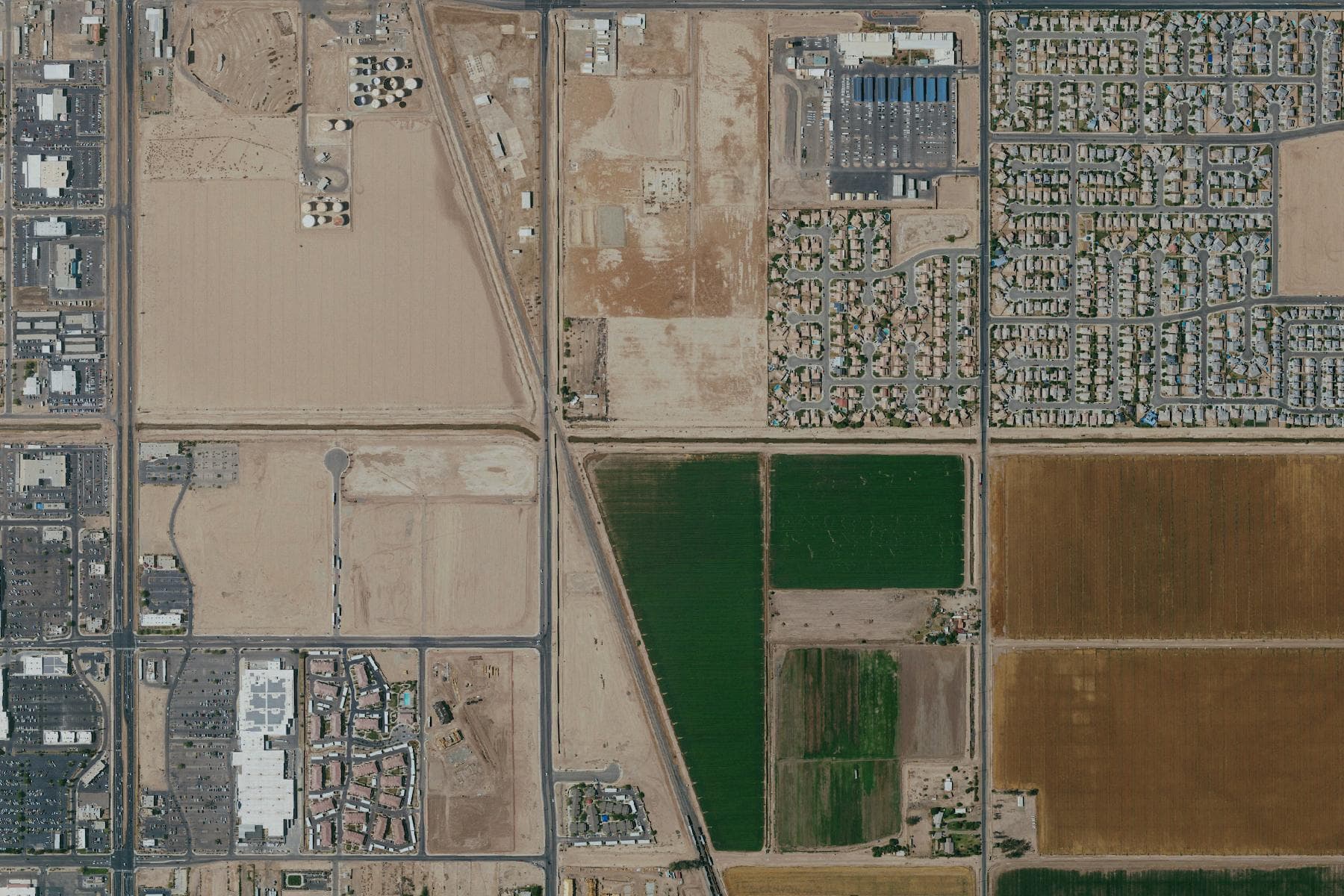
proposed data center site in Imperial, California, photographed 2022-05-30. Irrigated Imperial Valley farmland at Aten and Clark roads. The water at issue reaches these fields from the Colorado River, and the proposal turns on fallowing farmland to free some of it up.
USDA Farm Service Agency / USGS National Map, National Agriculture Imagery Program. Cropped from NAIP 0.6 m aerial imagery, scene m_3211512_ne_11_060_20220530. (original)
California at a glance
Major market
- Market size
- Large; one of the biggest data center concentrations in the country
- Hot spots
- Silicon Valley and Santa Clara, Los Angeles, Sacramento
- Key operators
- Major colocation and cloud operators cluster in Santa Clara, one of the densest data center cities in America
- Documented disputes
- Imperial Valley Computer Manufacturing v. Imperial Irrigation District, Imperial County Superior Court, filed June 2026: a developer suing for about 260 million gallons a year of Colorado River water for an AI data center after the district rejected its application; Imperial County and several cities answered with emergency pauses
- Statewide action
- Legislative activity on electricity rates and data center reporting; no enacted moratorium documented
Key Takeaways
- California has one of the largest data center footprints in America, centered on Santa Clara and Silicon Valley, yet no resident lawsuit against a data center is documented in the state as of August 2026.
- The quiet is partly structural: California's clusters grew up inside industrial and commercial zones, unlike the rural rezonings that drive litigation in Virginia and Georgia.
- Sacramento is active: legislators have pursued bills on data center electricity rates and usage reporting as the AI buildout accelerates.
- Californians affected by a facility have unusually strong legal tools, including nuisance claims and the state's demanding environmental review process for new approvals.
- The national record shows harms follow the buildout: as California campuses grow to AI scale, residents should document impacts early rather than wait for a problem to mature.
Data centers in California, from the registry
All 121 sites121 sites on the public record: 66 operating, 6 under construction, 11 permitted, 33 proposed, 5 cancelled. 14 carry documented opposition or litigation. 3.6 GW planned.
By county, alphabetically. Each profile carries capacity, land, utility, water, subsidies, jobs, a timeline, and every source.
Alameda County (8 sites)
- STACK SVY03A · Hayward · STACK InfrastructureUnder construction · 67.2 MW · Contested
- Behring 415 20th Street Data Center (former LBNL supercomputing building) · Oakland · Behring CompaniesProposed · 20 MW · Contested
- Valley Oak Partners Shinn Street Data Center · Fremont · Valley Oak PartnersProposed · 90 MW
- T5@Silicon Valley · Newark · T5 Data CentersOperating · 49.1 MW
- Hayward Exchange @92 Data Center · Hayward · HinesOperating · 49 MW
- Amazon Data Center SF011 (26415 Corporate Avenue) · Hayward · Amazon Web ServicesOperating · 35 MW
- Amazon Data Center SF09 (26464 Corporate Avenue) · Hayward · Amazon Web Services (A-100 LLC)Operating · 24 MW
- Digital Realty OAK10 · Oakland · Digital RealtyOperating · 2 MW
Amador County (1 site)
- Buena Vista AI Factory · Ione · NewYork GreenCloudProposed
Contra Costa County (2 sites)
- Bridgehead Industrial Project data center option (withdrawn) · Oakley · JB2 Partners / Oxfoot Oakley LLCCancelled · Opposed
- AVAIO Digital Perseus · Pittsburg · AVAIO Digital PartnersPermitted · 99 MW · Contested
Imperial County (2 sites)
- Imperial Valley Computer Manufacturing AI Data Center · Imperial · Imperial Valley Computer Manufacturing (IVCM)Proposed · 330 MW · In litigation
- CalEthos Lithium Valley Data Center Campus · El Centro · CalEthos, Inc.Proposed
Kern County (2 sites)
- Golden Valley Technology Hub · Elk Hills · Beacon Data Centers (w/ California Resources Corp)Proposed · 275 MW · Mixed reception
- RB Inyokern Data Center · Inyokern · R&L Capital, Inc.Proposed · 99 MW · Mixed reception
Kings County (2 sites)
- Kings County Fairgrounds Edge Data Center (Global Stack proposal) · Hanford · Global Stack LLCProposed · Opposed
- CyrusOne AI Data Center at NAS Lemoore · CyrusOneProposed · 100 MW · Contested
Los Angeles County (15 sites)
- Puente Hills Mall Redevelopment Data Center · City of Industry · Puente Hills Land Venture, LLCProposed · 10 MW · Opposed
- 750 North Nash Street Data Center (Hyatt Place site, withdrawn) · El Segundo · Eight Form (property owner Welcome Group Inc.)Cancelled · Opposed
- DigiCo LAX1 (1977 Saturn Street) · Monterey Park · DigiCo Infrastructure REITCancelled · Opposed
- Prime Data Centers LAX01 · Vernon · Prime Data CentersOperating · 33 MW
- Digital Realty Vernon Data Center · Vernon · Digital RealtyProposed · 32 MW
- Vernon LA Campus (with Goodman Group) · Vernon · DataBankUnder construction · 32 MW
- Serverfarm LAX1 · El Segundo · ServerfarmOperating · 17.3 MW
- CoreSite LA1 (One Wilshire) · Los Angeles · CoreSiteOperating
- CoreSite LA2 - Los Angeles, CA · Los Angeles · CoreSiteOperating
- Digital Realty 727 S. Grand Avenue (DTLA) · Los Angeles · Digital RealtyProposed
- Digital Realty LAX12 · El Segundo · Digital RealtyOperating
- Equinix LA3 · El Segundo · EquinixOperating
- Equinix LA4 · El Segundo · EquinixOperating
- Goodman Energy Park Data Center · Vernon · Goodman GroupProposed
- Grand Crossing South - Building 10 · City of Industry · RaedenProposed
Orange County (5 sites)
- Eagle Mountain Data OC1 (Anaheim Data Center) · Anaheim · Eagle Mountain Data IncOperating · 45 MW
- Centersquare LAX3 · Irvine · Centersquare (Cyxtera/Evoque)Operating · 24.9 MW
- Centersquare LAX5 · Irvine · Centersquare (Cyxtera/Evoque)Operating · 17.3 MW
- DataBank SNA2 · Irvine · DataBankOperating · 8 MW
- DataBank SNA1 · Irvine · DataBankOperating · 2.64 MW
Placer County (1 site)
- Quest Roseville HABC · Roseville · Quest Technology ManagementOperating
Riverside County (1 site)
- Coachella Valley Technology Campus · Coachella · Stronghold Power SystemsCancelled · 270 MW · Opposed
Sacramento County (6 sites)
- Prime Data Centers SMF02 · Sacramento · Prime Data CentersUnder construction · 18 MW
- NTT Sacramento CA1 Data Center · Sacramento · NTT Global Data CentersOperating · 12.6 MW
- QTS Sacramento · Sacramento · QTS Data CentersOperating · 4 MW
- EdgeConneX SAC01 · Rancho Cordova · EdgeConneXOperating
- NTT Sacramento CA2 Data Center · Sacramento · NTT Global Data CentersOperating
- NTT Sacramento CA3 Data Center · Sacramento · NTT Global Data CentersOperating
San Bernardino County (1 site)
- One Data Center America (Ontario Campus) · Ontario · One Data Center America, LLCOperating
San Diego County (5 sites)
- ScaleMatrix San Diego · San Diego · ScaleMatrixOperating · 20 MW
- DataBank San Diego SAN1 · San Diego · DataBankOperating · 3.2 MW
- EdgeConneX SDG01 · San Diego · EdgeConneXOperating
- MDC SDG1 · San Diego · MDC Data CentersOperating
- MDC SDG2 · San Diego · MDC Data CentersOperating
San Francisco County (5 sites)
- Novva San Francisco (400 Paul Avenue) · San Francisco · Novva Data CentersOperating · 36 MW
- 1215 Michigan Street Data Center (Nestory Park Capital proposal) · San Francisco · Nestory Park CapitalProposed
- Colocation America SFDC1 (200 Paul Avenue) · San Francisco · Colocation AmericaOperating
- Digital Realty SFO10 · San Francisco · Digital RealtyOperating
- Digital Realty SFO12 (365 Main Street) · San Francisco · Digital RealtyOperating
San Joaquin County (1 site)
- Nautilus Stockton 1 Data Center · Stockton · Nautilus Data TechnologiesOperating · 6.5 MW
San Mateo County (3 sites)
- Cow Palace Edge Data Center (Global Stack proposal) · Daly City · Global Stack LLCProposed · 10 MW
- AT&T Redwood City Data Center · Redwood City · AT&TOperating · 4 MW
- San Mateo County Event Center Data Center (Global Stack proposal, dropped) · San Mateo · Global Stack LLCCancelled
Santa Clara County (57 sites)
- Google 5079 to 5087 Disk Drive Compute Campus (North San José) · San Jose · Google LLCProposed · 250 MW · Contested
- Amazon AWS Gilroy Data Center · Gilroy · Amazon Web ServicesUnder construction · 98 MW · Contested
- CoreSite Bowers Data Center · Santa Clara · CoreSitePermitted · 72 MW · Mixed reception
- Prologis STEM Park · San Jose · PrologisProposed · 396 MW · Supported
- Prologis 5853 Rue Ferrari · San Jose · PrologisPermitted · 49 MW · Supported
- 5601 Great Oaks Parkway Data Center (Menlo Equities, Charlotte Drive) · San Jose · Menlo EquitiesProposed · 100 MW
- STACK SVY01 · San Jose · STACK InfrastructureOperating · 100 MW
- Prologis 326 Charcot Avenue Data Center (North San José) · San Jose · PrologisProposed · 99 MW
- Prologis Silver Creek Valley Road Data Center · San Jose · PrologisProposed · 99 MW
- Microsoft San Jose Data Center Campus (SJ04) · San Jose · MicrosoftProposed · 97.8 MW
- Goodman Innovation Centre San Jose (NorthTown Data Center) · San Jose · Goodman GroupProposed · 97.3 MW
- STACK Trade Zone Park (SVYDC 05 / SVYDC 06) · San Jose · STACK InfrastructurePermitted · 90 MW
- Vantage Santa Clara I (CA1) · Santa Clara · Vantage Data CentersOperating · 77 MW
- Vantage Santa Clara II (CA2) · Santa Clara · Vantage Data CentersOperating · 75 MW
- EdgeCore Silicon Valley Campus (Laurelwood Data Center) · Santa Clara · EdgeCore Digital InfrastructureOperating · 72 MW
- Digital Realty SJC36 (Lafayette Data Center, 2825 Lafayette Street) · Santa Clara · Digital RealtyPermitted · 66 MW
- Vantage Santa Clara III (CA3) · Santa Clara · Vantage Data CentersOperating · 64 MW
- Skybox Santa Clara (1200 Memorex Drive) · Santa Clara · Skybox DatacentersUnder construction · 60 MW
- Menlo Digital MD-SV1 (888 to 894 Ross Drive) · Sunnyvale · Menlo Equities / Menlo Digital (Sunnyvale Technology Partners LLC)Proposed · 49 MW
- Microsoft Alviso Data Center Campus · San Jose (Alviso) · MicrosoftUnder construction · 48 MW
- STACK SVY02 · Santa Clara · STACK InfrastructureOperating · 48 MW
- Csquare SFO2 · Santa Clara · CsquareOperating · 43.2 MW
- Csquare SFO4 · Santa Clara · CsquareOperating · 43.1 MW
- ECL CSC-1 FlexGrid AI Data Center · Santa Clara · ECLProposed · 35 MW
- Csquare SFO1 · Santa Clara · CsquareOperating · 34.5 MW
- 865 Embedded Way Data Center (Oppidan / Rockpoint) · San Jose · Oppidan (with Rockpoint Group)Proposed · 18 MW
- NTT Silicon Valley SV1 Data Center · Santa Clara · NTT Global Data CentersOperating · 16 MW
- Cologix SV1 · Santa Clara · CologixOperating · 9 MW
- Csquare SFO3 · Sunnyvale · CsquareOperating · 8.6 MW
- QTS Santa Clara 1 · Santa Clara · QTS Data CentersOperating · 7.5 MW
- Lumen Sunnyvale 1 · Sunnyvale · Lumen TechnologiesOperating · 6 MW
- 300 Holger Way Data Center (Menlo Equities conversion) · San Jose · Menlo Equities (Holger Technology Partners LLC)Permitted
- CoreSite SV1 - San Jose, CA · San Jose · CoreSiteOperating
- Digital Realty SC1 · Santa Clara · Digital RealtyOperating
- Digital Realty Silicon Valley SJC10 · Santa Clara · Digital RealtyOperating
- Digital Realty Silicon Valley SJC11 · Santa Clara · Digital RealtyOperating
- Digital Realty Silicon Valley SJC16 · Santa Clara · Digital RealtyOperating
- Digital Realty Silicon Valley SJC30 · Santa Clara · Digital RealtyOperating
- Digital Realty Silicon Valley SJC31 · Santa Clara · Digital RealtyOperating
- Digital Realty SJC34 · Santa Clara · Digital RealtyOperating
- Digital Realty SJC37 (641 Walsh Avenue) · Santa Clara · Digital RealtyOperating
- Equinix Great Oaks South Data Center (SV12, SV18, SV19) · San Jose · EquinixPermitted
- Equinix SV1 · San Jose · EquinixOperating
- Equinix SV15 · Santa Clara · EquinixOperating
- Equinix SV2 · Santa Clara · EquinixOperating
- Equinix SV4 · Sunnyvale · EquinixOperating
- Equinix SV8 · Palo Alto · EquinixOperating
- Lumen Santa Clara 1 · Santa Clara · Lumen TechnologiesOperating
- Martin Data Center · Santa Clara · Martin Avenue Properties, LLCPermitted
- Mission College Data Center · Santa Clara · OppidanPermitted
- Prime Data Centers 1231 Comstock Street · Santa Clara · Prime Data Centers (1231 Comstock Property LLC)Permitted
- Prime Santa Clara (Silicon Valley campus) · Santa Clara · Prime Data CentersOperating
- Sequoia Data Center (2600 De La Cruz Boulevard) · Santa Clara · Tishman Speyer (site acquired from CyrusOne, July 2026)Permitted
- Terra Data Center · San Jose · Terra VenturesProposed
- Westbank 180 Park Avenue Data Center (Park Habitat site, downtown San José) · San Jose · Westbank / Urban CommunityProposed
- Westbank 300 South First Street Data Center (downtown San José) · San Jose · WestbankProposed
- Westbank 323 Terraine Street Data Center (downtown San José) · San Jose · WestbankProposed
Solano County (3 sites)
- Solano County Fairgrounds Data Center (Global Stack proposal) · Vallejo · Global Stack LLCProposed · Contested
- NorthPoint Fairfield Data Center (Vanden Road Industrial Campus) · Fairfield · NorthPoint DevelopmentProposed · 150 MW
- California Department of Technology Vacaville Data Center (1020 Vaquero Circle) · Vacaville · California Department of TechnologyOperating
Tulare County (1 site)
- Tulare County Fairgrounds Edge Data Center (Global Stack proposal) · Tulare · Global Stack LLCProposed
In this article
California invented the internet economy and hosts one of the largest data center concentrations in the country, with Santa Clara among the densest data center cities anywhere, plus significant clusters in Los Angeles and Sacramento. And yet, as of August 2026, no resident lawsuit against a data center is documented in the state. The action so far has been legislative, with Sacramento weighing bills on electricity rates and data center reporting as the AI buildout accelerates. That gap between footprint and litigation will not necessarily last. Here is what the California market looks like, why it has been quieter than Virginia or Georgia, and what legal options Californians have if a facility starts affecting their home.
The data center footprint in California
California's data center industry is old by the standards of this business. Santa Clara built its cluster over decades, drawn by fiber routes and a municipal utility with historically competitive power, and the city is now one of the densest data center markets in the country. Los Angeles serves content and connectivity for the Pacific Rim, and Sacramento has grown as a lower-cost inland alternative.
The California pattern differs from the states generating lawsuits in one key way: most of its facilities sit inside established industrial and commercial zones rather than on rezoned farmland beside subdivisions. High land and power costs have also pushed the biggest new AI campuses to other states. The result is a huge market with comparatively little of the neighbor-versus-facility friction that fills court dockets in Virginia, Georgia, and Wisconsin.
What California residents are dealing with
No organized pattern of California data center complaints is documented, but the issues residents elsewhere report are worth knowing because the buildout is accelerating:
- Noise. Around-the-clock cooling equipment is the most common complaint nationally, from Virginia subdivisions to a Wisconsin class action. Residents near dense clusters like Santa Clara live closest to this risk. See our noise issue page.
- Electricity costs. The fight over who pays for grid upgrades serving data centers has reached regulators and courts in other states, and California legislators have taken up rate and reporting bills as the load grows.
- Water and air. Cooling water demand and backup generator emissions are the other recurring flashpoints nationally, and both intersect with California's existing drought and air quality regimes.
Lawsuits and disputes in California
No filed resident lawsuit against a data center is documented in California as of August 2026. No nuisance suit, no rezoning challenge, no open meetings case tied to a data center approval. The documented activity is legislative: Sacramento has seen bills addressing data center electricity rates and usage reporting as the AI boom drives new load onto the grid.
The national docket is still required reading for Californians, because it maps where the pressure points are. Rezoning approvals have been voided over procedural defects in Virginia. Noise has produced suits in Texas and Wisconsin. Well water damage is in court in Virginia and Georgia. If and when California generates its first case, it will likely follow one of those templates, and the residents who win are the ones with records that started early.
Your legal options in California
Californians affected by a data center, or facing a proposed one, have a strong toolkit:
- Private nuisance claims for noise, vibration, dust, and light that substantially interfere with your home, seeking damages or an injunction.
- Environmental and land use review. California subjects discretionary approvals to demanding environmental review, and challenges to defective review are a well-worn path for neighbors of industrial projects. Deadlines are short and technical, so counsel matters early.
- Zoning and permit challenges where an approval skipped required procedures, the theory that has won the biggest resident victories nationally.
- Ordinance enforcement through city noise and code complaints, which builds the record for any later claim.
- Rate proceedings. Consumers and consumer advocates can participate when regulators decide how data center grid costs are allocated.
A statute of limitations applies to damage claims, commonly two to six years depending on the state and claim type, and land use challenges can run on windows measured in weeks; a California attorney can confirm your deadlines.
If you live near a California data center
Start a record: a dated log of noise or other impacts, decibel readings at your property line, photos, and written complaints to your city each time. For proposed projects, engage the environmental review process while comments are open; objections not raised on the record can be lost.
Then get a legal read on it. Our free intake form lets you tell us what is happening; where a participating attorney who handles these matters in California is available, we may share your information with them with your consent, but we cannot promise that anyone will contact you.
California cases we are tracking
- The Imperial Valley Water Lawsuit: A Data Center Developer Sues for 260 Million Gallons of Colorado River Water
In June 2026, Imperial Valley Computer Manufacturing sued the Imperial Irrigation District in Imperial County Superior Court after the district rejected its application for about 260 million gallons a year of Colorado River water, roughly 750,000 gallons a day, to cool an AI data center near the city of Imperial. The developer's theory: lease 160 acres of farmland, fallow it, and divert the water. The county answered with an emergency pause. Why this case inverts the usual fight and what it means for every water-stressed region facing a campus.
Frequently asked questions
Can I sue a data center in California?
California residents can bring nuisance and property damage claims against a facility that substantially interferes with their home, and can challenge defective approvals through the state's environmental review and land use laws. No such data center suit is documented in California yet as of August 2026, but the legal tools are well established and an attorney can evaluate your facts.
Why are there no data center lawsuits in California?
Mostly siting. California's clusters, led by Santa Clara, grew inside established industrial and commercial zones over decades, while the lawsuits in Virginia, Georgia, and Wisconsin come from huge new campuses placed near homes through contested rezonings. High costs have also pushed the largest new AI projects to other states.
Is California doing anything about data center electricity costs?
Legislative activity on data center electricity rates and reporting is underway in Sacramento as AI load grows. In other states this fight has produced dedicated data center rate classes and appeals to state supreme courts, and California consumers can participate when regulators take up cost allocation.
What should I do if a data center is proposed near me in California?
Engage early and on the record. Submit written comments during environmental review, press for enforceable noise, water, and traffic conditions, and keep copies of everything. Challenges to a defective approval run on short deadlines after the decision, so talk to an attorney promptly if the process looks flawed.
Is a data center disrupting your home in California?
Tell us what is happening. Where a participating attorney who handles data center cases in your state is available, we may share your information with them with your consent. It is free and carries no obligation, but we cannot promise that anyone will contact you.
- Tell us about your situation
- Independent attorneys
- No obligation
Attorney or law firm handling data center matters? Speak with us