Lawsuit Tracker
The Imperial Valley Water Lawsuit: A Data Center Developer Sues for 260 Million Gallons of Colorado River Water
In June 2026, Imperial Valley Computer Manufacturing sued the Imperial Irrigation District in Imperial County Superior Court after the district rejected its application for about 260 million gallons a year of Colorado River water, roughly 750,000 gallons a day, to cool an AI data center near the city of Imperial. The developer's theory: lease 160 acres of farmland, fallow it, and divert the water. The county answered with an emergency pause. Why this case inverts the usual fight and what it means for every water-stressed region facing a campus.
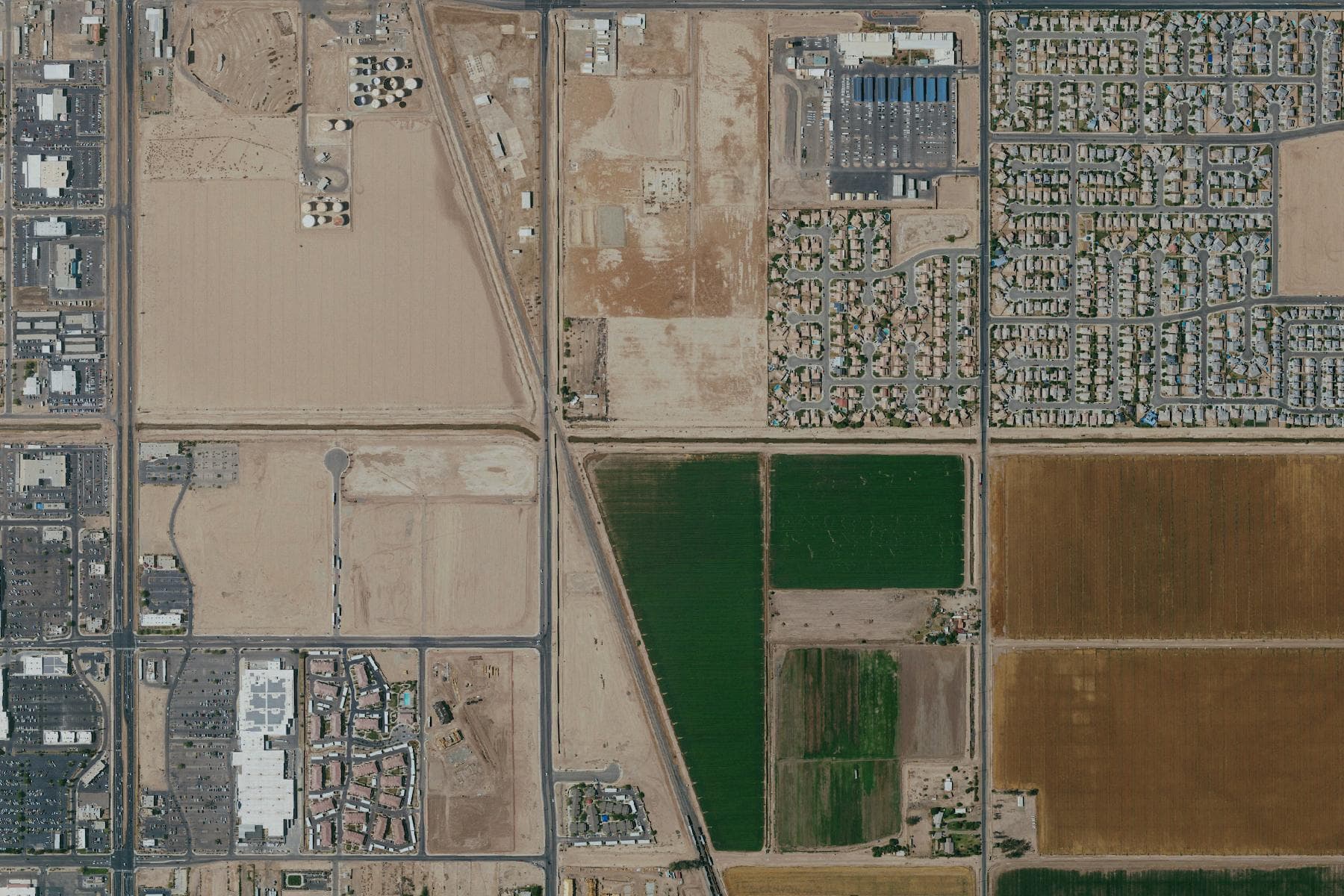
proposed data center site in Imperial, California, photographed 2022-05-30. Irrigated Imperial Valley farmland at Aten and Clark roads. The water at issue reaches these fields from the Colorado River, and the proposal turns on fallowing farmland to free some of it up.
USDA Farm Service Agency / USGS National Map, National Agriculture Imagery Program. Cropped from NAIP 0.6 m aerial imagery, scene m_3211512_ne_11_060_20220530. (original)
Case facts
Active litigation
- Status
- Pending, Imperial County Superior Court (filed June 2026); developer is the plaintiff
- Case
- Imperial Valley Computer Manufacturing LLC v. Imperial Irrigation District
- Court
- Imperial County Superior Court, California
- Filed
- Early June 2026
- Plaintiff
- Imperial Valley Computer Manufacturing (IVCM), led by Huntington Beach attorney and developer Sebastian Rucci
- Project
- Proposed AI data center complex near the city of Imperial, Imperial County
- Water sought
- About 260 million gallons a year (roughly 880 acre-feet), about 750,000 gallons a day for cooling; described as the annual use of about 7,300 county residents
- Developer's theory
- Lease 160 acres of active farmland and fallow it, creating a right to divert the water the crops would have used
- District's action
- Rejected the water application in May 2026; the district's chair published an editorial opposing the project and the board is weighing new pricing for large energy users
Key Takeaways
- Imperial Valley Computer Manufacturing sued the Imperial Irrigation District in June 2026 after the district rejected its application for about 260 million gallons a year of Colorado River water to cool a proposed AI data center near the city of Imperial.
- The volume is roughly 750,000 gallons a day, which local reporting compared to the annual water use of about 7,300 Imperial County residents, in a valley that already fights over every acre-foot of its Colorado River allocation.
- The developer's legal theory is a farmland swap: lease 160 acres, stop farming it, and claim the right to send the water to the servers instead. Recycled water deals with the cities of Imperial and El Centro fell through before the suit.
- The community response was immediate: Imperial County scheduled an emergency pause on data center development in June 2026, several cities adopted moratoriums, and the district's own chair publicly opposed the project.
- It is one of two cases on the tracker where the developer is the plaintiff, and the first to put a data center's water demand in front of a court as a claimed right rather than a permit condition.
In this article
Most data center water fights are neighbors suing over what a campus took. The Imperial Valley case is the reverse: a developer suing a public water district for what it will not give. In early June 2026, Imperial Valley Computer Manufacturing, an LLC led by Huntington Beach attorney and developer Sebastian Rucci, filed suit in Imperial County Superior Court against the Imperial Irrigation District after the district rejected its application for about 260 million gallons a year of Colorado River water, roughly 750,000 gallons a day, to cool a proposed AI data center near the city of Imperial. The company calls the suit a last resort. Its theory is that by leasing 160 acres of active farmland and fallowing it, it earns the right to divert the water those fields would have consumed. The valley, which lives on a contested share of a shrinking river, answered with an emergency county pause, city moratoriums, and an editorial from the district's own chair opposing the project.
What the developer wants, and how it says it is entitled to it
The Imperial Valley is one of the most water-dependent places in the country: a desert made into farmland by the largest single allocation of Colorado River water of any user in the basin, held and delivered by the Imperial Irrigation District. Every proposal to use that water for anything other than crops is a political event, and the district has spent two decades in litigation and negotiation over how much it must give up as the river shrinks.
Into that, IVCM proposed an AI data center complex that would need about 260 million gallons a year, roughly 880 acre-feet, for cooling, which works out to about 750,000 gallons a day. Local reporting framed the number as the annual water use of about 7,300 county residents. The company applied to the district for the water; the district rejected the application in May 2026.
The lawsuit, filed in early June, argues that the district's rejection left the company no choice and that it has a right to the water anyway. The theory is a farmland swap. IVCM has leased 160 acres of active farmland near the site. Fallow those fields, the argument runs, and the water they would have consumed under the district's allocation is freed for the facility, a use no less legitimate than growing alfalfa. The company also says it had negotiated recycled water agreements with the cities of Imperial and El Centro before both cities withdrew.
What the district and the county did
The district's general counsel declined to comment on pending litigation, but the district's position is not a mystery. Its board chair, Karin Eugenio, published an editorial opposing the project, and the board began considering a new pricing structure for large-scale energy consumers, a signal that if data centers come to the valley, the district intends to set the terms rather than defend a lawsuit each time.
The county moved faster. In June 2026, the Imperial County Board of Supervisors scheduled an emergency pause on data center development, and the cities of Coachella, Indio, and Imperial, along with Imperial and Tulare counties, adopted 45 day urgency moratoriums that were later extended, according to the national tracker summarized in our moratorium tracker. Reporting described a groundswell of opposition from residents and from local and state officials. Whatever the court decides about the farmland theory, the political question of whether the valley wants this use of its water has already been answered.
How this compares to the other water cases
The tracker's other water entries are about consequences: Amazon's $20.5 million Oregon nitrate settlement over what left its facilities, the Newton County families' suit against Meta and the Louisa County suit against Amazon over what construction did to wells, and the Dalles records case over whether the public could even learn how much Google used. Imperial Valley is about supply, in advance, in the one region where supply is the entire economy.
It is also the second developer-as-plaintiff case on the tracker after Related Digital v. Saline Township, where a developer sued a township that denied its rezoning and won a consent judgment. The Michigan case was about land. This one is about water. Both ask the same underlying question: when a community says no, can a developer make a court say yes?
What this case means for you
If a data center is proposed in a region with a contested water supply, the Imperial Valley fight shows where the decisions get made:
- The water district, not the zoning board, may be the real gate. A campus that cannot get water cannot run. Find out who allocates yours and what its rules say about new industrial users.
- Watch the farmland. Leasing and fallowing fields to free up water is a strategy, and it shows up in land records before it shows up in a hearing.
- Numbers move officials. Reporting that put 260 million gallons next to 7,300 residents did more than any hearing. Convert the request into terms your neighbors understand.
- Moratoriums buy time, not outcomes. The county's pause stops new applications; it does not decide the lawsuit. Our guide to fighting a proposed data center covers the rest of the toolkit.
If a project near you is already in a legal fight, or you believe your own water has been affected by one, our free case review connects you with an independent attorney in our network who handles data center cases in your state, at no cost and with no obligation. Our water claims guide covers what residents can do when the harm has already happened.
Frequently asked questions
Why is a data center developer suing the Imperial Irrigation District?
Imperial Valley Computer Manufacturing sued the district in Imperial County Superior Court in June 2026 after the district rejected its May 2026 application for about 260 million gallons a year of Colorado River water to cool a proposed AI data center near the city of Imperial. The company argues that by leasing and fallowing 160 acres of farmland it is entitled to divert the water those fields would have used.
How much water does the Imperial Valley data center want?
About 260 million gallons a year, roughly 880 acre-feet, or about 750,000 gallons a day for cooling. Local reporting compared that to the annual water use of about 7,300 Imperial County residents.
What has Imperial County done about the data center proposal?
In June 2026 the county Board of Supervisors scheduled an emergency pause on data center development, and several cities in the region adopted 45 day urgency moratoriums that were later extended. The Imperial Irrigation District's board chair published an editorial opposing the project, and the district is considering new pricing for large energy users.
Can a data center get water rights by fallowing farmland?
That is the legal question the Imperial Valley case puts before the court. The developer argues that leasing and fallowing 160 acres frees the water for its facility; the district rejected the application. No ruling has been issued as of September 2026, and water law varies significantly by state and by district.
Article sources
Our editorial standards require primary sources: government publications, regulator data, company filings, and established industry research.
- 1.KPBS: Imperial Valley data center developer files lawsuit seeking access to Colorado River water (June 15, 2026)
- 2.Tom's Hardware: California's largest AI data center project suing for access to Colorado River water
- 3.Programs.com: Data center moratoriums by state, tracker and statistics (as of August 26, 2026)
Related cases
- The Dalles v. The Oregonian: The Case That Made Google's Water Use Public
In 2021 the City of The Dalles, Oregon sued its own newspaper to keep Google's water use secret as a trade secret. The December 2022 settlement released ten years of records showing Google used about 29 percent of the city's water, paid the paper's legal fees, and ended Google's site-level water secrecy nationwide. Why this settled case still matters to every data center neighbor.
- Amazon's $20.5 Million Nitrate Settlement: The First Big Tech Data Center Water Payout
Amazon Data Services agreed in March 2026 to pay $20.5 million to settle a class action alleging that wastewater from its 13 eastern Oregon data centers contributed to nitrate contamination in the Lower Umatilla Basin, where tens of thousands of residents rely on groundwater. Amazon denies wrongdoing. What the case alleged, how the money will be used, and why it is the benchmark for every data center water claim that follows.
- Saline Township v. the $7 Billion Data Center: When the Developer Is the One Who Sues
Saline Township, Michigan denied rezoning for a $7 billion, 1.4 gigawatt OpenAI/Oracle data center campus in September 2025. Developer Related Digital and landowners sued the township for exclusionary zoning under the Michigan Constitution, and the township settled for roughly $14 million in community benefits. A resident's Open Meetings Act challenge to the settlement was denied in February 2026. The case is the clearest warning that developers sue too.
- Georgia Families Sue Meta Over Their Wells: The Newton County Data Center Water Lawsuit
After more than a year of muddy wells, petitions, and a congressional visit, four Newton County families sued Meta and the local development authority in late August 2026, alleging that clearing, blasting, and excavation for the Stanton Springs data center disturbed the aquifer and filled their well water with silt. What the suit says, what Meta says, and what it means for every homeowner on a well near a data center site.
Is a data center disrupting your home?
Tell us what is happening. We will connect you with an independent attorney who handles data center cases in your state, free and with no obligation. These cases are commonly taken on contingency, so there are typically no upfront fees.
- Free case review
- Independent attorneys
- No obligation
Attorney or law firm handling data center matters? Speak with us