Lawsuit Tracker
Saline Township v. the $7 Billion Data Center: When the Developer Is the One Who Sues
Saline Township, Michigan denied rezoning for a $7 billion, 1.4 gigawatt OpenAI/Oracle data center campus in September 2025. Developer Related Digital and landowners sued the township for exclusionary zoning under the Michigan Constitution, and the township settled for roughly $14 million in community benefits. A resident's Open Meetings Act challenge to the settlement was denied in February 2026. The case is the clearest warning that developers sue too.
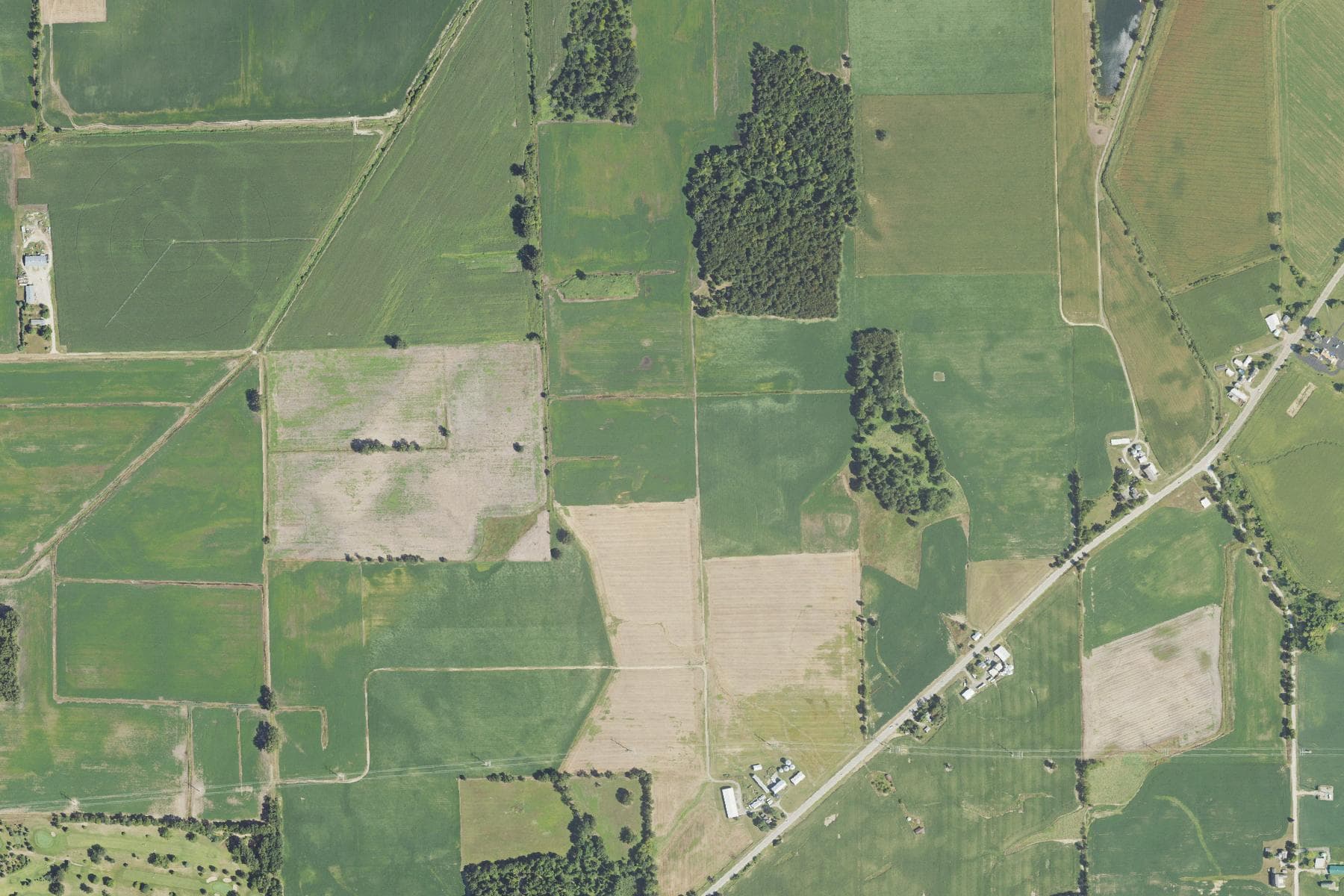
farmland now under construction as a data center campus in Saline Township, Michigan, photographed 2022-08-16. Farmland in Saline Township in 2022, before construction. The campus now rising on these fields is the one the settlement's community benefits package was negotiated around.
USDA Farm Service Agency / USGS National Map, National Agriculture Imagery Program. Cropped from NAIP 0.6 m aerial imagery, scene m_4208357_ne_17_060_20220816. (original)
Case facts
Settled
- Status
- Settled; project proceeding with community benefits package
- Case
- Related Digital and landowners v. Saline Township
- Court
- Washtenaw County Circuit Court, Michigan
- Trigger
- September 10, 2025 township denial of rezoning for 575 acres of farmland
- Project
- $7 billion, 1.4 gigawatt OpenAI/Oracle data center campus
- Theory
- Unconstitutional exclusionary zoning under the Michigan Constitution
- Outcome
- Settled: project allowed, roughly $14 million in community benefits, about 10 times the township's annual budget
- Related motion
- Resident Kathryn Haushalter's Open Meetings Act intervention denied February 2026
Key Takeaways
- On September 10, 2025, the Saline Township board denied rezoning of 575 acres of farmland for a $7 billion, 1.4 gigawatt OpenAI/Oracle data center campus.
- Developer Related Digital and the landowners sued the township in Washtenaw County Circuit Court, arguing the denial was unconstitutional exclusionary zoning under the Michigan Constitution.
- Facing litigation costs that dwarfed its budget, the township settled: the project went forward in exchange for roughly $14 million in community benefits, about 10 times the township's annual budget.
- Resident Kathryn Haushalter moved to intervene, alleging the settlement was reached in violation of the Open Meetings Act. The court denied intervention in February 2026 and construction proceeded.
- The case is the national poster child for developer-side litigation: saying no to a data center can put a small government on the receiving end of a lawsuit it cannot afford to fight.
In this article
Most data center lawsuits are filed by neighbors. The Saline Township case is the other kind. When this small Michigan township voted on September 10, 2025 to deny rezoning of 575 acres of farmland for a $7 billion, 1.4 gigawatt data center campus serving OpenAI and Oracle, the developer, Related Digital, and the landowners sued the township in Washtenaw County Circuit Court, claiming the denial amounted to unconstitutional exclusionary zoning under the Michigan Constitution. Within months, the township settled. The project moved forward, and Saline Township received a community benefits package worth roughly $14 million, about 10 times its annual budget. A resident's attempt to challenge the settlement under the Open Meetings Act was denied in February 2026. For every small community weighing a data center vote, this case is the one that shows what can happen after you say no.
The denial and the developer's lawsuit
Saline Township sits in Washtenaw County, Michigan, southwest of Ann Arbor, and the land at issue was 575 acres of farmland. The proposal on the table was enormous for any jurisdiction, let alone a rural township: a $7 billion campus drawing 1.4 gigawatts of power, built by Related Digital to serve OpenAI and Oracle workloads.
On September 10, 2025, the township board said no and denied the rezoning. What followed was not an appeal by disappointed residents but a lawsuit by the developer. Related Digital, joined by the landowners who stood to sell, sued the township in Washtenaw County Circuit Court. Their theory: the denial was unconstitutional exclusionary zoning under the Michigan Constitution, effectively walling a lawful use out of the township.
Exclusionary zoning doctrine was built decades ago in fights over housing, where courts held that communities cannot zone entire categories of legitimate development out of existence. Turning that doctrine into a sword for a hyperscale data center was a novel and aggressive move, and it put a township with a modest budget up against a litigant with billions behind it.
The settlement: 10 times the township's annual budget
The township settled rather than litigate to judgment. Under the settlement, the project was allowed to proceed, and Saline Township received a community benefits package worth roughly $14 million, a figure reported at about 10 times the township's entire annual budget.
Read one way, that is a small government extracting real money from a project it could not ultimately stop. Read another way, it is the asymmetry of the fight laid bare: the township's realistic choices were a negotiated yes with compensation, or years of litigation against a far better resourced opponent with an uncertain constitutional question at the center. Small governments rarely take that second path, and developers know it.
The math is worth sitting with. A township whose annual budget is a fraction of what one side spends on legal fees cannot bank on winning a novel constitutional case, and losing could have meant the project anyway, with nothing in return and a legal bill on top. Settlement was the rational move for the board even if it felt like defeat to the residents who packed the meetings that produced the original no vote. That gap, between what a board can rationally do and what its residents voted for, is exactly where the community's trust fractured, and it is why the deal itself became the next thing challenged in court.
The resident who tried to intervene
Not everyone in Saline Township accepted the settlement. Resident Kathryn Haushalter moved to intervene in the case, alleging the township reached the deal in violation of Michigan's Open Meetings Act, the state's law requiring public bodies to deliberate in public. In February 2026, the court denied her intervention, and construction proceeded.
The Saline fight has also echoed in Lansing. Michigan lawmakers introduced House Resolution 240 urging a pause on data center incentives, a sign that what happened to one township of a few thousand people is now shaping the statewide debate over how much leverage communities should have before the next $7 billion proposal arrives.
The intervention attempt matters even in defeat. It shows the last lever residents hold when their own government settles over their objections: open meetings and transparency laws aimed at how the deal was made. That lever has worked elsewhere, and it is the live theory in the pending Festus, Missouri Sunshine Law case and the Port Washington open meetings suit. In Saline it failed at the intervention stage, a reminder that timing and procedural posture can decide these fights before the merits are ever reached.
What Saline Township means for residents facing a proposed data center
The hard lesson of Saline Township is asymmetry. A $7 billion project can spend more on lawyers than a rural township spends on everything, and a denial vote your board casts on principle can be converted, through litigation pressure, into an approval with a price tag. But the case also maps what residents can still do:
- Show up before the vote, not after. The strongest resident influence is on the front end: the zoning record, the conditions attached to any approval, and the terms of any development agreement. Our guide to fighting a proposed data center walks through that window.
- Push for enforceable terms. If a settlement or approval is coming, residents can press for binding noise limits, water protections, setbacks, and monitoring in the agreement itself, terms that create enforcement hooks later.
- Watch the process. Open meetings and public records laws still apply to settlement negotiations by public bodies. Documented process violations are the most litigable thing a resident can hold, even if Saline shows intervention is not guaranteed.
- Preserve your individual claims. A township settlement does not waive your personal rights. If construction or operations later damage your well, your foundation, or your sleep, claims like private nuisance remain yours to bring.
If a data center is being negotiated over your objections, or one already approved is causing harm to your property, an independent attorney can tell you which of these levers is still available in your state. Start with a free intake form and tell us what is happening; where a participating attorney who handles these matters is available, we may share your information with them with your consent, but we cannot promise that anyone will contact you.
Frequently asked questions
What happened with the OpenAI data center in Saline Township, Michigan?
Saline Township denied rezoning of 575 acres of farmland for a $7 billion, 1.4 gigawatt OpenAI/Oracle data center campus on September 10, 2025. The developer, Related Digital, and the landowners sued the township for unconstitutional exclusionary zoning, and the township settled, allowing the project in exchange for roughly $14 million in community benefits. Construction proceeded.
Can a data center developer sue a town for denying rezoning?
Yes. In Saline Township, the developer sued in Washtenaw County Circuit Court arguing the rezoning denial was unconstitutional exclusionary zoning under the Michigan Constitution, and the litigation pressure produced a settlement that let the project proceed. Developer-side suits also appear elsewhere, such as an Arkansas crypto operator winning judgment against a county over its noise ordinance.
What did Saline Township get in the settlement?
The reported settlement allowed the project to move forward in exchange for a community benefits package worth roughly $14 million, described as about 10 times the township's annual budget.
Did residents challenge the Saline Township settlement?
Yes. Resident Kathryn Haushalter moved to intervene, alleging the settlement was reached in violation of Michigan's Open Meetings Act. The court denied the intervention in February 2026 and construction proceeded.
Article sources
Our editorial standards require primary sources: government publications, regulator data, company filings, and established industry research.
- 1.Planet Detroit: Saline data center settlement challenge (December 2025)
- 2.Planet Detroit: Judge denies data center intervention (February 2026)
- 3.Fortune: AI data center politics and farmland in Saline, Michigan (May 2026)
- 4.Government Technology: Michigan township defends decision on OpenAI data center
Related cases
- Project Blue in Pima County: The Open Meetings Suit Over a Data Center Tucson Rejected
After the Tucson City Council rejected the $3.6 billion Project Blue data center campus in August 2025, the Pima County Board of Supervisors approved a roughly 300 acre land sale for $20.875 million plus rezoning. Opponents sued the county in January 2026 alleging open meeting law violations, including an undisclosed rezoning purpose and land sale negotiations kept secret from 2023 to 2025. The Superior Court dismissed the case in April 2026; plaintiffs say they will appeal.
- Festus, Missouri: The Sunshine Law Lawsuit Over a $6 Billion Data Center
Wake Up JeffCo and four property owners filed a 12-count, 54-page lawsuit against the City of Festus and developer CRG over a $6 billion data center, alleging Missouri Sunshine Law violations including serial private briefings and a development agreement released the Friday before a Monday vote. The suit seeks to void the rezoning and the development contract.
- Bessemer's Project Marvel Lawsuit: How a Dismissed Case Still Forced a Do-Over
Homeowners near Rock Mountain Lake Road sued Bessemer, Alabama in April 2025 over the rezoning for Project Marvel, a $14.5 billion, 18-building data center campus. A TRO blocked the council vote, the city restarted the process, and the case was dismissed by joint stipulation on June 22, 2026. What the case won even in losing.
Is a data center disrupting your home?
Tell us what is happening. Where a participating attorney who handles data center cases in your state is available, we may share your information with them with your consent. It is free and carries no obligation, but we cannot promise that anyone will contact you.
- Tell us about your situation
- Independent attorneys
- No obligation
Attorney or law firm handling data center matters? Speak with us