State Guide
Data Centers in New York: Lawsuits, Disputes, and Your Rights
New York is a growing data center state with a first-in-the-nation twist: in June 2026 the legislature passed a one-year moratorium on state permits for large new data centers, and on July 14, 2026 Governor Hochul signed Executive Order 62, a separate pause of up to one year on state environmental permits for new hyperscale data centers. Add the long Greenidge permit war on Seneca Lake, and New York neighbors have more leverage than most. Here is how to use it, and how to tell us about your situation.
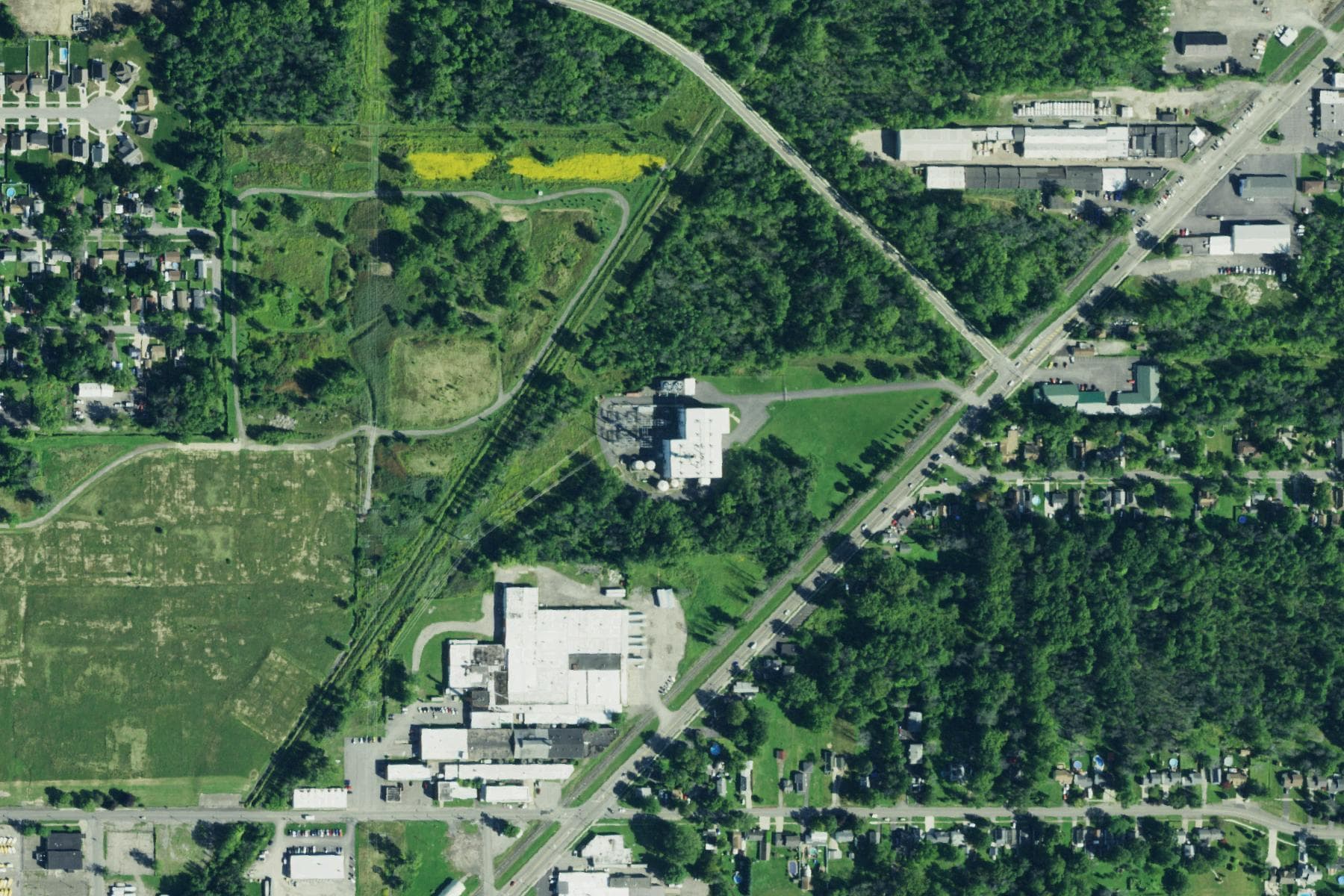
former Fortistar power plant in North Tonawanda, New York, photographed 2019-10-05. The former Fortistar plant off River Road, a small gas-fired station with houses on three sides. This 2019 imagery predates the mining hardware; the proximity it shows is the case.
USDA Farm Service Agency / USGS National Map, National Agriculture Imagery Program. Cropped from NAIP 0.6 m aerial imagery, scene m_4307858_sw_17_060_20191005. (original)
New York at a glance
Fast growth
- Market size
- Growing; NYC metro facilities plus upstate crypto-to-AI conversions
- Hot spots
- New York City metro; upstate power plant conversions including Greenidge on Seneca Lake
- Key operators
- Colocation providers in the NYC metro; Greenidge Generation upstate
- Documented disputes
- Demers v. Digi Power X, W.D.N.Y., filed April 2026: a proposed class action by North Tonawanda residents within three miles of a crypto mining site converting to AI use, over round-the-clock cooling fan noise, seeking damages and a medical monitoring program; Greenidge Title V air permit saga: DEC denial 2022, court reversal Nov 2024, new permit granted Nov 2025 over Sierra Club and Earthjustice objections
- Statewide action
- Executive Order 62, signed July 14, 2026: DEC pause of up to one year on discretionary environmental permits for new hyperscale data centers (reported threshold 50 MW and up) while the state writes a generic environmental impact statement. The legislature's Responsible Data Center Development Act (20 MW and up; passed June 4, 2026, Senate 44-16, Assembly 102-39) remains unsigned
Key Takeaways
- On June 4, 2026 the New York legislature passed the Responsible Data Center Development Act, a one-year moratorium on state permits for new data centers of 20 megawatts or more. It remains unsigned, but on July 14, 2026 Governor Hochul signed Executive Order 62, the first statewide data center moratorium in the country: a pause of up to one year on state environmental permits for new hyperscale facilities while the state writes uniform standards.
- New York already fought the longest permit war in the sector: the Greenidge bitcoin mining plant on Seneca Lake had its air permit renewal denied in 2022 under the state's climate law, saw that denial upheld through administrative appeals in 2024, then overturned by a state Supreme Court judge in November 2024, with a new permit granted in November 2025 over environmental groups' objections.
- The Greenidge lesson cuts both ways: New York's climate law gave regulators a tool no other state had, and the courts then showed its limits. The plant operated the entire time.
- No homeowner nuisance or damage suit against a New York data center is documented as of August 2026.
- New Yorkers near proposed projects have unusual leverage right now: a possible statewide pause, strong environmental review requirements, and a documented history of permit challenges.
Data centers in New York, from the registry
All 63 sites63 sites on the public record: 44 operating, 1 under construction, 0 permitted, 18 proposed. 17 carry documented opposition or litigation. 7.0 GW planned.
By county, alphabetically. Each profile carries capacity, land, utility, water, subsidies, jobs, a timeline, and every source.
Albany County (2 sites)
- Kenwood Commons Technology Campus · Albany · Guild VenturesProposed · 100 MW · Contested
- Lumen Albany 4 · Albany · Lumen TechnologiesOperating
Chautauqua County (1 site)
- Sugar Hill Data Center (proposed, former Sugar Hill Golf Course) · Portland · Four Winds of Lake Erie LLCProposed · Contested
Clinton County (2 sites)
- Coinmint Plattsburgh (Skyway Plaza) · Plattsburgh · CoinmintOperating · 10 MW
- Zafra Plattsburgh crypto-mining hosting facility · Plattsburgh · Zafra, LLCOperating · 8 MW
Dutchess County (4 sites)
- Treetop East Fishkill Data Center (proposed, no application filed) · East Fishkill · Treetop DevelopmentProposed · 1 GW · Opposed
- iPark 84 Data Center (745 East Drive, former IBM East Fishkill fab building) · Hopewell Junction · iPark East Fishkill LLC (iPark 84; campus marketed by Lincoln Property Company and Saber-Hightower)Proposed · 150 MW
- CyrusOne NYM7 (Wappingers Falls) · Wappingers Falls · CyrusOneOperating · 3 MW
- IBM Quantum Data Center, Poughkeepsie · Poughkeepsie · IBMOperating
Erie County (7 sites)
- Riverview Innovation & Technology Campus · Tonawanda · Riverview Innovation & Technology CampusProposed · 300 MW · Contested
- Digihost, Erie County (Buffalo) · Buffalo · Digihost (Digi Power X)Operating · 42 MW
- ColoCrossing BUF1, Buffalo · Buffalo · ColoCrossingOperating · 1.44 MW
- BlackRock Data Center, Amherst (CrossPoint Business Park) · Amherst · BlackRock, Inc.Operating
- Empire AI Beta · Buffalo · Empire AI consortium (hosted by the University at Buffalo, SUNY)Operating
- Empire AI Gamma · Buffalo · Empire AI consortium (hosted by the University at Buffalo, SUNY)Under construction
- H5 Data Centers Buffalo III (350 Main Street / Main Place Tower) · Buffalo · H5 Data Centers (joint venture with Novacap)Operating
Genesee County (1 site)
- STREAM U.S. Data Centers at STAMP · Alabama · Stream U.S. Data Centers LLCProposed · 500 MW · Opposed
Herkimer County (1 site)
- Turin Hoefler Avenue AI Data Center (former Remington Arms plant, Site C) · Ilion · Turin Hoefler Avenue LLCProposed · 200 MW
Kings County (1 site)
- DataVerge Brooklyn (Industry City) · Brooklyn · DataVergeOperating · 140 MW
Monroe County (2 sites)
- Centrilogic Rochester Data Center · Rochester · CentrilogicOperating
- Rochester Colo · Pittsford · Rochester Colo (James Salviski)Operating
Nassau County (2 sites)
- Long Island Interconnect (formerly 1025Connect) · Westbury · Long Island Interconnect, LLC (formerly 1025Connect)Operating
- Opti9 NY1 (formerly Webair NY-1), Garden City · Garden City · Opti9 Technologies (formerly Webair)Operating
New York County (9 sites)
- SDC Manhattan (Intergate.Manhattan), 375 Pearl Street · New York · Sabey Data CentersOperating · 18 MW
- 60 Hudson Street · New York · Multi-tenant carrier hotel (Hudson Interxchange, Digital Realty, DataBank, Equinix, and 100+ telecom tenants)Operating · 15 MW
- 75 Broad Street (Broad Street Connect carrier hotel) · New York · Multi-tenant carrier hotel, NYI / JEMB Realty 'Broad Street Connect'; tenants include HorizonIQ (Internap NYMEXT1), Evocative, Epsilon and VerizonOperating · 12.5 MW
- 32 Avenue of the Americas · New York · Multi-tenant carrier hotel (Digital Realty, CoreSite, and other carrier/telecom tenants)Operating
- 325 Hudson Street · New York · Netrality Properties (JV with Jamestown, LP); H5 Data Centers operates colocation space in the buildingOperating
- 365 Data Centers NY10 (65 Broadway) · New York · 365 Data CentersOperating
- Digital Realty JFK10 (111 Eighth Avenue) · New York · Digital RealtyOperating
- Equinix NY9 · New York · EquinixOperating
- Telehouse New York Chelsea (85 10th Avenue) · New York · Telehouse America (KDDI)Operating
Niagara County (8 sites)
- Digihost / Digi Power X, Fortistar North Tonawanda · North Tonawanda · Digihost (Digi Power X)Operating · 120 MW · In litigation
- American Bitcoin, Niagara Falls ("Alpha Site") · Niagara Falls · American Bitcoin (Hut 8)Operating · 50 MW · In litigation
- Blockfusion Niagara Falls Facility (North East Data) · Niagara Falls · BlockfusionOperating · 100 MW · Contested
- Niagara Digital Campus · Niagara Falls · Urbacon Data Centre SolutionsProposed · 135 MW · Mixed reception
- 9LDG Niagara AI Data Center · Niagara Falls · 9 Lives Digital Group (9LDG)Proposed · Supported
- TeraWulf Lake Mariner · Barker · TeraWulfOperating · 750 MW
- H5 Data Centers Buffalo I (formerly Yahoo Lockport) · Lockport · H5 Data CentersOperating · 15 MW
- H5 Data Centers Buffalo II · Lockport · H5 Data CentersOperating · 7.2 MW
Onondaga County (1 site)
- Ranalli Lysander Data Center · Lysander · RanalliProposed · 300 MW · Opposed
Orange County (1 site)
- Sterling Forest Business Resiliency Services Center (former IBM/Kyndryl Sterling Forest data center) · Sterling Forest (Town of Warwick) · Watchtower Bible and Tract Society of New York (acquired from Kyndryl, June 2026)Operating · 8.75 MW
Otsego County (1 site)
- Eco-Yotta Data Center (proposed, County Route 9) · Oneonta · Eco-Yotta Inc.Proposed · Contested
Rensselaer County (2 sites)
- MetLife Information Systems Computer Center, North Greenbush · North Greenbush · MetLife Services and Solutions, LLCOperating
- Rensselaer Center for Computational Innovations (CCI), Rensselaer Technology Park · Troy · Rensselaer Polytechnic InstituteOperating
Richmond County (1 site)
- Telehouse New York (Staten Island Teleport) · Staten Island · Telehouse America (KDDI)Operating
Rockland County (4 sites)
- DataBank LGA3 (Orangeburg Data Center Campus) · Orangeburg · DataBankOperating · 40 MW · Contested
- JPMorgan Chase Data Center, Orangeburg · Orangeburg · JPMorgan ChaseOperating · Contested
- Bloomberg LP Data Center · Orangeburg · Bloomberg LPOperating · 50 MW
- fifteenfortyseven ORNY1 (1 Ramland Road, Orangeburg) · Orangeburg · fifteenfortyseven Critical Systems Realty (1547), in a joint venture with Harrison StreetOperating · 18 MW
St. Lawrence County (5 sites)
- North Country Collocation Services Massena Data Center (former Reynolds site) · Massena · North Country Collocation Services (NCCS)Proposed · 635 MW · Contested
- Arsenal Data Site (Arconic Massena Operations) · Massena · Arconic Corporation (Apollo-owned)Proposed · 933 MW
- Coinmint (Massena East / former Alcoa Smelter) · Massena · CoinmintOperating · 435 MW
- Pontoon Bridge Road Data Center (proposed) · Massena · American Data Center Partners LLCProposed · 250 MW
- ZeroC / Petawatt Holdings Data Center Site (417 County Route 42) · Massena · ZeroC Data Centers LLC (majority-owned by Petawatt Holdings, Inc.)Proposed · 200 MW
Suffolk County (3 sites)
- Brookhaven Digital Infrastructure Facility (WF Industrial / Wildflower, Yaphank) · Yaphank · WF Industrial (Wildflower)Proposed · 176.6 MW · Contested
- Brookhaven National Laboratory Scientific Data and Computing Center (Building 725) · Upton · Brookhaven National Laboratory (U.S. Department of Energy)Operating · 9.6 MW
- 365 Data Centers Long Island (Commack) · Commack · 365 Data CentersOperating · 6 MW
Tompkins County (1 site)
- TeraWulf AI Data Center Campus, Lansing · Lansing · TeraWulfProposed · 400 MW · Opposed
Westchester County (3 sites)
- Holtec HI-CLOUD Indian Point data center campus (proposed) · Buchanan · Holtec International (Holtec Decommissioning International)Proposed · 200 MW · Opposed
- Evocative JFK2 (NY2) Chappaqua · Chappaqua · Evocative (formerly VPLS)Operating
- TierPoint Hawthorne (11 & 17 Skyline Drive) · Hawthorne · TierPointOperating
Yates County (1 site)
- Greenidge Generation · Dresden · Greenidge GenerationOperating · 106 MW · In litigation
In this article
New York's data center story is defined by two fights, one finished in the legislature and one that ran through the courts for years. In June 2026 lawmakers passed the Responsible Data Center Development Act, a one-year moratorium on state permits for new data centers of 20 megawatts or more; it passed the Senate 44 to 16 and the Assembly 102 to 39 and sits on Governor Hochul's desk as of August 2026. If signed, it would be the first statewide data center moratorium in the country. Upstate, the Greenidge Generation plant on Seneca Lake spent half a decade fighting for its air permit after regulators denied renewal under the state's climate law, a war that ended with the plant permitted and running. Between those two poles, a hard pause and a hard-fought permit, sits the practical reality for New York residents. Here is what it means for you.
The data center footprint in New York
New York's market is moderate but growing, and it splits into two very different geographies. The New York City metro hosts colocation and enterprise facilities serving the finance and media industries, dense, established, and rarely controversial. Upstate is where the friction lives: old power plants and industrial sites have been converted to computing loads, most famously the Greenidge Generation plant on Seneca Lake in the Finger Lakes, which converted from a retired coal plant to a gas-fired plant powering bitcoin mining.
The upstate conversions matter because they collide with New York's climate law, the Climate Leadership and Community Protection Act (CLCPA), which requires the state to weigh greenhouse gas commitments in permitting decisions. That collision produced the Greenidge saga, and the broader wave of AI-era proposals produced the 2026 moratorium bill.
What residents are dealing with
Documented New York concerns cluster around the upstate conversions and the statewide policy fight:
- Air emissions and climate compliance. Greenidge's gas turbines emit at power plant scale to serve computing load. Finger Lakes residents and environmental groups including the Sierra Club and Earthjustice fought its permit renewal for years, arguing the operation is incompatible with the CLCPA.
- Lake and community impacts. The Seneca Lake fight drew in wineries, tourism businesses, and lakeside homeowners concerned about the plant's footprint on the region, a template for how upstate communities respond when heavy computing loads arrive.
- What a moratorium would and would not do. The Governor's Executive Order 62 pauses state environmental permits for new hyperscale facilities for up to one year; permits already deemed complete proceed, existing facilities are untouched, and smaller projects are outside it. The legislature's broader bill, reaching 20 megawatt and larger facilities, would go further but is not law until signed.
No homeowner nuisance, noise, or property damage suit against a New York data center operator is documented as of August 2026.
Lawsuits and disputes in New York
The Greenidge permit saga. This is the longest-running air permit fight in the sector, and every stage is instructive. In 2022 the Department of Environmental Conservation denied renewal of Greenidge's Title V air permit, finding the bitcoin mining operation inconsistent with the CLCPA, the first denial of its kind in the country. Administrative appeals upheld the denial in 2024. Then, in November 2024, a state Supreme Court judge overturned the denial, and in November 2025 DEC approved a new permit over objections from the Sierra Club and Earthjustice. Through the entire fight, the plant kept operating.
What Greenidge teaches. Two things at once. First, New York's climate law is a real permitting weapon: it produced a denial no other state's regulator could have issued, and it remains on the books for future projects. Second, litigation cuts both ways, because operators appeal too, and they can win. Communities that rely on a single regulatory decision without building a broader record are exposed when a court reverses it.
The Responsible Data Center Development Act. Passed June 4, 2026 by wide margins in both chambers, the act would impose a one-year moratorium on state permits for new data centers of 20 megawatts or more. As of September 2026 it remains unsigned. In the meantime, on July 14, 2026, Governor Hochul signed Executive Order 62, a pause of up to one year on state Department of Environmental Conservation permits for new hyperscale data centers while the state prepares a generic environmental impact statement, making New York the first state with a statewide data center moratorium and a template other legislatures are already studying.
Your legal options in New York
New York gives residents a deeper toolkit than most states:
- Environmental review and permit challenges. Large projects face state environmental review, and the CLCPA adds a climate compliance test that the Greenidge denial proved has teeth. Permit proceedings accept public comments, and final decisions can be challenged in court, in both directions, as Greenidge showed.
- Private nuisance and property damage claims. If an operating facility's noise, emissions, or construction impacts harm your home, New York law supports claims for damages and mitigation, commonly handled on a contingency fee basis. No such suit is documented against a New York data center yet, but the theories are the same ones homeowners are litigating in Virginia, Texas, and Wisconsin.
- Zoning and land use participation. Local boards control siting, and approvals obtained with defective notice or process are vulnerable on appeal. Deadlines to challenge land use decisions are short, often 30 days.
- Legislative and agency advocacy. The moratorium bill exists because organized residents made it exist. Whatever happens on the Governor's desk, DEC proceedings and local hearings remain the working channels.
A statute of limitations applies to damage claims and varies by claim type; a New York attorney can confirm the deadlines for your situation.
If you live near a New York data center
If a facility is operating or proposed near you, build the record now: a dated log of noise and other impacts, photos, written complaints to your town or village every time, and copies of the project's permits and any conditions attached to them. For proposed projects, participate in every comment period; the Greenidge fight shows how much of the battle happens inside the permitting file.
Then get a legal read on your situation. Our free intake form lets you tell us what is happening; where a participating attorney who handles these matters in New York is available, we may share your information with them with your consent, but we cannot promise that anyone will contact you.
New York cases we are tracking
- Demers v. Digi Power X: The Three Mile Noise Class Action Against a Crypto Mine Turning Into an AI Data Center
In April 2026, three North Tonawanda, New York residents filed a federal class action against Digi Power X over nearly four years of round-the-clock cooling fan noise from a bitcoin mining operation in a former gas peaker plant at 1070 Erie Avenue, on behalf of everyone within three miles. The suit seeks damages, punitive damages, an injunction, and a medical monitoring program, and the company is converting the site into an AI data center. What the case alleges and why the three mile radius and the medical monitoring demand are new.
Frequently asked questions
Can I sue a data center in New York?
Yes, New York law allows nuisance, negligence, and property damage claims against a facility that harms your home, and permit and land use decisions can be challenged in court. As of September 2026 no homeowner damage suit against a New York data center is documented; the state's major fight has been the Greenidge air permit war on Seneca Lake, waged through regulators and the courts.
Is there a data center moratorium in New York?
Yes, by executive order. On July 14, 2026 Governor Hochul signed Executive Order 62, which pauses state Department of Environmental Conservation permits for new hyperscale data centers for up to one year while the state prepares a generic environmental impact statement; permits already deemed complete are not affected. The broader Responsible Data Center Development Act, which passed both chambers on June 4, 2026 and would cover facilities of 20 megawatts or more, remains unsigned as of September 2026.
What happened with the Greenidge plant on Seneca Lake?
New York regulators denied renewal of Greenidge's air permit in 2022 under the state climate law, and administrative appeals upheld the denial in 2024. A state Supreme Court judge overturned the denial in November 2024, and DEC granted a new permit in November 2025 over objections from the Sierra Club and Earthjustice. The plant operated throughout the fight.
Can New York residents stop a proposed data center?
New York offers more levers than most states: environmental review with a climate compliance test, permit comment periods, local zoning control, and, if the 2026 bill is signed, a statewide pause on large new permits. The Greenidge case shows regulators can say no, and also that court challenges can reverse outcomes in either direction, so residents should engage early and get counsel involved before deadlines pass.
What can I do about data center noise in New York?
Document it with dated logs and decibel readings, file written complaints with your local government, and check your town or village noise ordinance. A documented record can win mitigation without litigation and supports a nuisance claim if one becomes necessary. An attorney can assess whether your facts support a suit.
Article sources
Our editorial standards require primary sources: government publications, regulator data, company filings, and established industry research.
- 1.DLA Piper: New York legislature passes first-in-the-nation data center moratorium (July 2026)
- 2.Governor Kathy Hochul: First statewide moratorium on new hyperscale data centers (Executive Order 62, July 14, 2026)
- 3.Axios: N.Y. Gov. Kathy Hochul signs data center moratorium executive order (July 2026)
- 4.WHEC: Judge overturns air permit denial for bitcoin mining facility on Seneca Lake (Nov 2024)
- 5.Sierra Club Atlantic Chapter: DEC approves Seneca Lake bitcoin mining permit (Nov 2025)
- 6.Earthjustice: Decision upholds denial of Greenidge Generation's air permit (2024)
Is a data center disrupting your home in New York?
Tell us what is happening. Where a participating attorney who handles data center cases in your state is available, we may share your information with them with your consent. It is free and carries no obligation, but we cannot promise that anyone will contact you.
- Tell us about your situation
- Independent attorneys
- No obligation
Attorney or law firm handling data center matters? Speak with us