Lawsuit Tracker
Demers v. Digi Power X: The Three Mile Noise Class Action Against a Crypto Mine Turning Into an AI Data Center
In April 2026, three North Tonawanda, New York residents filed a federal class action against Digi Power X over nearly four years of round-the-clock cooling fan noise from a bitcoin mining operation in a former gas peaker plant at 1070 Erie Avenue, on behalf of everyone within three miles. The suit seeks damages, punitive damages, an injunction, and a medical monitoring program, and the company is converting the site into an AI data center. What the case alleges and why the three mile radius and the medical monitoring demand are new.
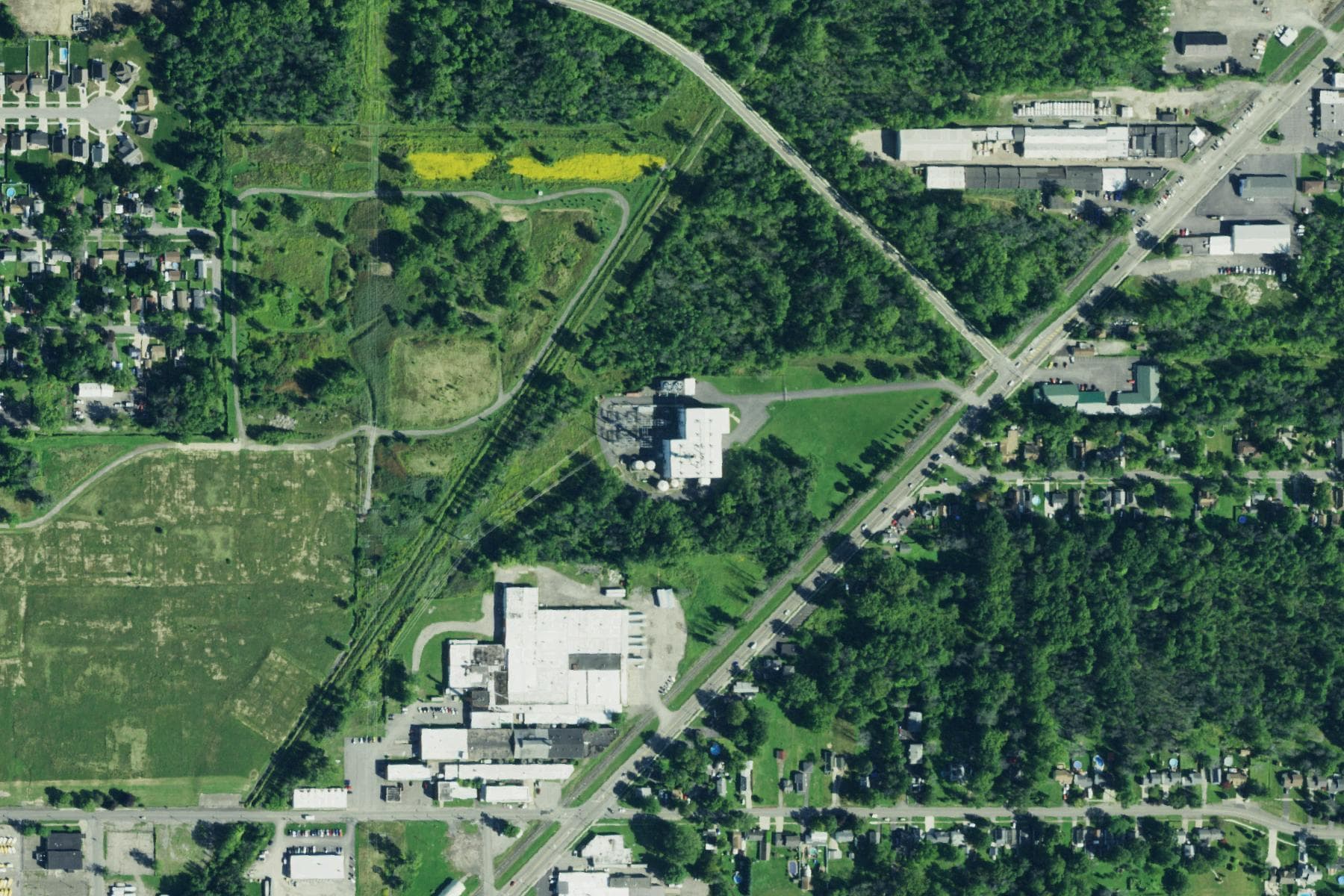
former Fortistar power plant in North Tonawanda, New York, photographed 2019-10-05. The former Fortistar plant off River Road, a small gas-fired station with houses on three sides. This 2019 imagery predates the mining hardware; the proximity it shows is the case.
USDA Farm Service Agency / USGS National Map, National Agriculture Imagery Program. Cropped from NAIP 0.6 m aerial imagery, scene m_4307858_sw_17_060_20191005. (original)
Case facts
Active litigation
- Status
- Pending, U.S. District Court, W.D. New York (filed April 2026)
- Case
- Demers v. Digi Power X Inc. (proposed class action)
- Court
- U.S. District Court for the Western District of New York
- Filed
- April 2026
- Named plaintiffs
- Sharon Demers, Karen Hance, and Mark Polito, North Tonawanda residents
- Facility
- 1070 Erie Avenue, North Tonawanda: a former Fortistar gas-fired peaker plant purchased in early 2021 and run as a bitcoin mining site since 2022, now being converted to AI data center use
- Proposed class
- Property owners and residents within three miles of the site since 2021, estimated in the thousands
- Core allegation
- Loud, droning, persistent cooling fan noise and low-frequency vibration nearly 24 hours a day, seven days a week, since September 2022
- Relief sought
- Compensatory and punitive damages, an injunction requiring abatement as determined by an expert, and a medical monitoring program for class members
- Plaintiffs' counsel
- Weitz & Luxenberg
Key Takeaways
- Three North Tonawanda residents filed a proposed federal class action against Digi Power X in April 2026 in the Western District of New York over nearly four years of continuous cooling fan noise from a bitcoin mining operation at 1070 Erie Avenue.
- The proposed class is the widest on the tracker: every property owner and resident within three miles of the site since 2021, estimated in the thousands. The 2026 AI data center noise classes use one to 1.5 mile radii.
- The complaint describes loud, droning noise with low-frequency vibration nearly 24 hours a day since September 2022, and pleads private and public nuisance, negligence, and negligent infliction of emotional distress.
- It asks for something no other data center noise case has: a court-supervised medical monitoring program for residents exposed to chronic noise, alongside punitive damages and an expert-designed abatement order.
- Digi Power X, formerly Digihost, bought the defunct gas plant in 2021 and is now marketing the site for AI computing, which makes this case a preview of what happens when a crypto mine's neighbors become an AI campus's neighbors.
In this article
The neighbors of a bitcoin mine in North Tonawanda, New York waited nearly four years, then sued for the whole neighborhood. In April 2026, residents Sharon Demers, Karen Hance, and Mark Polito filed a proposed class action in the U.S. District Court for the Western District of New York against Digi Power X, the Miami-based company that bought the defunct Fortistar gas peaker plant at 1070 Erie Avenue in early 2021 and filled it with thousands of mining computers. The complaint describes loud, droning, persistent noise from industrial cooling fans, with low-frequency sound that residents feel as vibration, running nearly 24 hours a day, seven days a week since September 2022. The proposed class covers everyone who has owned property or lived within three miles of the site since 2021, a group the plaintiffs estimate in the thousands. And the relief requested goes further than any other data center noise case on our tracker: damages, punitive damages, an expert-designed abatement order, and a medical monitoring program for residents exposed to chronic noise. The company, meanwhile, is converting the site to AI data center use.
What the complaint alleges
The building at 1070 Erie Avenue was a gas-fired peaker plant, the kind of facility that runs a few hundred hours a year when the grid is stressed. Digi Power X, then operating as Digihost, bought it in early 2021 and turned it into something that runs every hour of every day: a bitcoin mining operation powered by the plant's own generation, with thousands of computers and the industrial cooling fans they require. According to the complaint, the noise began in September 2022 and has not stopped.
Residents describe it as loud, droning, and persistent, with a low-frequency component that manifests like vibration inside their homes. They report roughly four years of complaints to the company and the city before filing. The suit pleads private nuisance, public nuisance, negligence, and negligent infliction of emotional distress, and alleges that the noise has caused substantial annoyance, emotional distress, loss of comfort and enjoyment, diminished property values, and an increased risk of adverse health effects.
The plaintiffs are represented by Weitz & Luxenberg, the New York mass tort firm that also filed the Southaven, Mississippi turbine noise class action against xAI two months later. Digi Power X did not comment on the filing in initial reporting.
Three miles, and a medical monitoring program
Two features of the North Tonawanda complaint separate it from the wave of data center noise classes that followed it in May, June, and July 2026.
The radius. The Vineland, Dowagiac, and Fairwater cases define their classes at one to 1.5 miles. North Tonawanda claims three, and it claims it retroactively, covering everyone who has owned or lived within that distance since 2021. That is a bet that low-frequency noise from a site of this kind carries much farther than the A-weighted decibel readings most ordinances use would suggest, and that a court will let the class be defined by exposure rather than by the number on a meter. If certified at that scale, the class would dwarf the others.
Medical monitoring. The suit asks the court to establish a medical monitoring protocol for class members: a program, funded by the defendant, to screen residents for health effects of chronic noise exposure over time. Medical monitoring is a remedy borrowed from toxic exposure litigation, where courts have ordered it for people exposed to chemicals before disease appears. Asking for it in a noise case treats years of sleep disruption and stress as an exposure with latent health consequences, not just an annoyance. Whether New York law allows it on these facts will be one of the case's central fights, and a ruling either way will be cited in every noise case that follows.
The AI conversion, and New York's moratorium
Digi Power X describes itself today as a developer of energy and digital infrastructure, including bitcoin mining and AI-ready data centers, and it has been public about converting the North Tonawanda site to AI computing. For the neighbors, that is not a resolution. AI workloads require the same cooling, often more of it, and the noise complaints that defined the site as a crypto mine follow it into its next life. The case is, in effect, the first suit against an AI data center that was filed before the facility became one.
It also lands in the first state to pause data centers. Governor Hochul's Executive Order 62, signed July 14, 2026, halts state environmental permits for new hyperscale facilities for up to a year, and the legislature's broader Responsible Data Center Development Act awaits her signature. Neither reaches an existing site like this one, which is exactly the gap the North Tonawanda plaintiffs are asking a federal court to fill. Our New York page covers the state's moratorium and the Greenidge fight on Seneca Lake, the state's other long-running crypto power plant dispute.
What this case means for you
If you live near a computing facility, crypto or AI, that runs its cooling around the clock, the North Tonawanda case adds two ideas to the checklist:
- Measure low frequency, not just dBA. The complaint's vibration claims are about sound below what a standard A-weighted reading captures. A meter that reports C-weighted or octave-band levels documents what your ordinance may ignore.
- Keep a health log. Sleep, blood pressure, anxiety, medical visits. The medical monitoring demand exists because the plaintiffs could describe health effects over years, not weeks.
- Think in miles, not blocks. If neighbors two miles away hear what you hear, the class is bigger than the street, and so is the leverage.
- Do not wait four years. The residents here complained for nearly four years before filing; nuisance claims carry statutes of limitations, and older harm can fall outside the recovery window. Our deadlines guide explains why.
Our noise lawsuit guide covers how these claims are built, and our free case review connects you with an independent attorney in our network who handles data center cases in your state, at no cost and with no obligation.
Frequently asked questions
What is the Digi Power X lawsuit in North Tonawanda?
It is a proposed federal class action filed in April 2026 in the U.S. District Court for the Western District of New York by residents Sharon Demers, Karen Hance, and Mark Polito against Digi Power X over continuous cooling fan noise from its bitcoin mining operation at 1070 Erie Avenue, a former gas peaker plant. The proposed class includes property owners and residents within three miles of the site since 2021.
What does the North Tonawanda noise lawsuit ask for?
Compensatory and punitive damages, an injunction requiring the company to abate the nuisance as determined by an expert, and a court-supervised medical monitoring program for class members exposed to chronic noise. It pleads private and public nuisance, negligence, and negligent infliction of emotional distress.
Is the North Tonawanda site a data center?
It began as a bitcoin mining operation in 2022 inside a former Fortistar gas-fired peaker plant, and Digi Power X, formerly Digihost, has said it is converting the site to AI data center use. The noise complaints stem from the industrial cooling fans the computers require, which AI workloads also need.
Can I sue over noise from a crypto mining or data center facility in New York?
New York law allows private and public nuisance and negligence claims over industrial noise, and the North Tonawanda case shows a federal class action approach. Documented noise readings, including low-frequency measurements, a dated log of effects on sleep and health, and neighbors with the same experience are what an attorney will look for.
Article sources
Our editorial standards require primary sources: government publications, regulator data, company filings, and established industry research.
- 1.The Daily Record (Rochester): Digital mining operation sued by North Tonawanda neighbors (April 16, 2026)
- 2.WKBW: Class action lawsuit filed against Digi Power X in North Tonawanda
- 3.Data Center Dynamics: Digi Power X sued over noise from New York crypto mining site
- 4.WilmerHale: Data centers in court, the emerging wave of nuisance, environmental, and land-use litigation (July 13, 2026)
Related cases
- The Granbury Noise Lawsuits: The Texas Cases Writing the Playbook for AI Data Center Noise Claims
Granbury, Texas residents, represented by Earthjustice, sued Marathon Digital Holdings in October 2024 over 24/7 fan noise from the bitcoin mine at the Wolf Hollow power plant, documenting migraines, tinnitus, and sleep loss. A separate federal complaint by nine Hood County property owners followed in May 2026, seeking more than $1 million. Both cases are pending, and together they are the precedent engine for AI data center noise litigation.
- Haley v. xAI: 10,000 Southaven Neighbors Sue Over the Roar of 57 Gas Turbines
On June 8, 2026, Southaven, Mississippi residents filed a federal class action against xAI, its subsidiary MZX Tech, and SpaceX over near-constant noise and vibration from the gas turbine fleet powering the Colossus 2 data center, a fleet the complaint says grew from 3 to 57 turbines in under a year. More than 10,000 people are in the proposed class. What the suit alleges, how it differs from the NAACP's Clean Air Act case, and what it means for anyone living near on-site power.
- Valenzuela v. Alliance Cloud Services: The Dowagiac, Michigan Data Center Noise Class Action
Two Dowagiac, Michigan residents filed a federal class action on May 26, 2026 against Alliance Cloud Services over round-the-clock noise from a 30 megawatt AI and crypto computing facility that has run since March 2022. The proposed class covers about 1,300 properties within a mile. Constant readings of 50 to 62 decibels, a city ordinance capping residential noise at 65 by day and 55 at night, and an operator planning to grow to 340 megawatts: what the case alleges and why it matters.
- The Microsoft Fairwater Noise Class Action: 1,000 Households Take On a Hyperscale AI Campus
Three Sturtevant, Wisconsin residents filed a 2026 class action over noise from Microsoft's 1.2 million square foot Fairwater data center in Mount Pleasant, seeking to represent everyone within 1.5 miles, more than 1,000 households. Per reporting, it is the first noise class action against a hyperscale AI data center. What the case claims, why it matters, and what class membership means for residents.
Is a data center disrupting your home?
Tell us what is happening. We will connect you with an independent attorney who handles data center cases in your state, free and with no obligation. These cases are commonly taken on contingency, so there are typically no upfront fees.
- Free case review
- Independent attorneys
- No obligation
Attorney or law firm handling data center matters? Speak with us