Lawsuit Tracker
Haley v. xAI: 10,000 Southaven Neighbors Sue Over the Roar of 57 Gas Turbines
On June 8, 2026, Southaven, Mississippi residents filed a federal class action against xAI, its subsidiary MZX Tech, and SpaceX over near-constant noise and vibration from the gas turbine fleet powering the Colossus 2 data center, a fleet the complaint says grew from 3 to 57 turbines in under a year. More than 10,000 people are in the proposed class. What the suit alleges, how it differs from the NAACP's Clean Air Act case, and what it means for anyone living near on-site power.
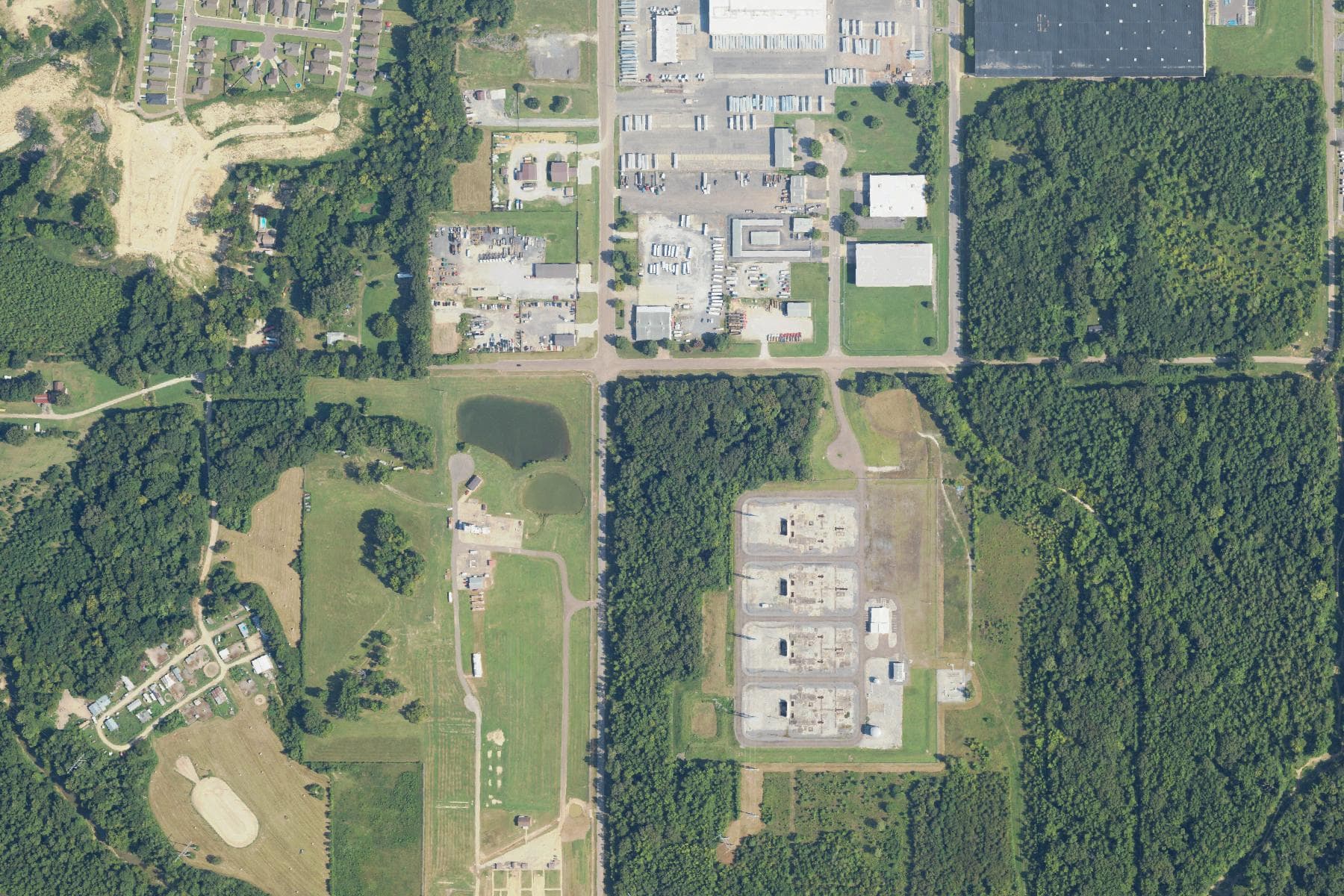
power plant site serving the Colossus data center in Southaven, Mississippi, photographed 2023-08-20. The plant stands on the pad of a demolished power station off Stanton Road, with houses a few hundred yards northwest through the trees. This 2023 imagery shows the foundations before the gas turbines were installed on them.
USDA Farm Service Agency / USGS National Map, National Agriculture Imagery Program. Cropped from NAIP 0.6 m aerial imagery, scene m_3409008_ne_15_060_20230820. (original)
Case facts
Active litigation
- Status
- Pending, U.S. District Court, N.D. Mississippi (filed June 8, 2026)
- Case
- Haley v. X.AI Corp., MZX Tech, and SpaceX (proposed class action)
- Court
- U.S. District Court for the Northern District of Mississippi, Oxford
- Filed
- June 8, 2026
- Project
- Gas turbine power plant serving xAI's Colossus 2 data center, Southaven, Mississippi
- Proposed class
- More than 10,000 residents near the turbine site
- Core allegation
- Near-constant roaring, rumbling, humming, whining, and low-frequency vibration, 24 hours a day; residents report readings above 70 dBA at their property lines
- Turbine count
- From 3 to 57 turbines in less than a year, per the complaint; a permit allows 41 permanent turbines
- Relief sought
- Compensation for nuisance harms and diminished property values
Key Takeaways
- Southaven residents filed a federal class action on June 8, 2026 against xAI, MZX Tech, and SpaceX over noise and vibration from the gas turbines powering the Colossus 2 data center. The proposed class exceeds 10,000 people.
- The complaint describes a turbine fleet that grew from 3 to 57 units in under a year after operations began around August 2025, producing roaring, rumbling, and low-frequency vibration residents say they can hear and feel around the clock.
- Residents report measuring more than 70 A-weighted decibels at their property lines, which the complaint says violates Southaven's noise ordinance; that is why the case pleads negligence per se alongside nuisance.
- This is a separate case from the NAACP's Clean Air Act suit against xAI over the same turbines: that case is about permits and emissions, this one is about what the neighbors hear and what their homes are now worth.
- It is the largest data center noise class on the tracker by proposed membership, and the first aimed at on-site power generation rather than cooling equipment.
In this article
The turbines that power xAI's Colossus 2 data center in Southaven, Mississippi have now drawn a second federal lawsuit, and this one is about the noise. On June 8, 2026, Southaven residents filed a proposed class action in the Northern District of Mississippi against xAI, its subsidiary MZX Tech, and SpaceX, alleging that the gas turbine fleet next to their neighborhoods subjects them to near-constant roaring, rumbling, humming, whining, and low-frequency vibration, 24 hours a day, seven days a week. The proposed class is more than 10,000 people. According to the complaint, the turbines began running around August 2025 and grew from 3 to 57 in less than a year, and residents have measured more than 70 A-weighted decibels at their property lines, above what Southaven's ordinance allows. It is the largest data center noise class filed to date, and the first aimed at a power plant rather than a cooling system.
What the complaint alleges
xAI's Colossus 2 campus sits in Southaven, just across the Tennessee line from Memphis, and the company has powered it in large part with on-site methane gas turbines rather than waiting for grid capacity. The turbines are operated through a subsidiary, MZX Tech, and the complaint also names SpaceX, which reporting ties to the ownership structure of the site.
The plaintiffs, led by a resident named Haley, describe a soundscape that never stops: roaring, rumbling, humming, whining, and low-frequency vibrations that can be heard and felt in homes near the site day and night. According to the complaint, the turbines began operating in or around August 2025 with three units and grew to 57 in less than a year. MZX holds a permit for 41 permanent turbines. Residents say their own readings at their property lines exceed 70 dBA, a level the complaint says violates Southaven's noise ordinance.
The legal theories track the pattern the plaintiffs' bar has used in every 2026 data center noise case: private nuisance, public nuisance, and negligence. Two additions make this complaint sharper. Negligence per se treats the alleged ordinance violation itself as proof of unreasonable conduct, and negligent infliction of emotional distress puts the sleep loss and anxiety residents describe directly in front of the jury. The relief sought is compensation for the nuisance harms and for diminished property values.
How this differs from NAACP v. xAI
The same turbines are already the subject of the NAACP's Clean Air Act suit, filed in April 2026 in the same district. The two cases could not be more different in what they ask for. The NAACP case is a federal citizen suit about permits and emissions: whether xAI may lawfully run the turbines at all without Clean Air Act authorization, with a preliminary injunction motion pending and the Department of Justice intervening on xAI's side. Its plaintiffs are civil rights organizations, and its remedy is regulatory.
Haley v. xAI is a private damages case. It does not care whether the turbines have the right permit; it says that whatever their legal status, the noise they make is an unreasonable interference with thousands of homes, and the people living in them are owed money. If the NAACP wins, the turbines could be shut down or controlled. If the Southaven residents win, they get paid for what they have already lived through, and the operator faces a price on every additional day of noise.
Two cases on the same facts in the same courthouse is not a coincidence. It is what happens when a facility's fastest path to power runs through a residential area and the neighbors find both a regulatory hook and a common-law one.
The 2026 noise class action wave
This case is one of a cluster filed within weeks of each other in 2026, and legal observers on both sides describe them as a coordinated plaintiffs' bar campaign modeled on earlier mass tort playbooks. Federal class actions were filed on May 26, 2026 over facilities in Vineland, New Jersey and Dowagiac, Michigan, each on behalf of households within roughly one mile. The Microsoft Fairwater class action in Wisconsin followed in July with a 1.5 mile radius. All plead the same core trio of nuisance and negligence claims, and the doctrinal groundwork comes from the Granbury, Texas crypto mining cases.
Southaven stands out on size and on target. A proposed class of more than 10,000 dwarfs the roughly 1,000 to 1,300 household classes in the other cases, and the noise source is a power plant, not an HVAC system. If the court certifies a class anywhere near that size, the damages exposure becomes the largest in any data center noise case in the country. Our guide to how data center class actions work explains why certification is the fight that matters.
What this means for you if you live near on-site generation
If a data center near you runs turbines or a large generator fleet, the Southaven complaint shows what a winning record looks like:
- Measure at your property line. The residents' readings above 70 dBA are the spine of the case. A calibrated decibel meter and a dated log turn a complaint into evidence.
- Find the ordinance. Southaven's noise limits gave the plaintiffs a negligence per se theory. Your city or county almost certainly has one; the number in it is your benchmark.
- Track the count. Three turbines becoming 57 is a fact about growth, not just noise. Permit filings show how many units are authorized and how many are running.
- Count your neighbors. A class of 10,000 exists because residents organized. One household with a meter is a complaint; a neighborhood with matching logs is a case.
Then talk to a lawyer before the operator's expansion outruns your deadlines. Our free case review connects you with an independent attorney in our network who handles data center cases in your state, at no cost and with no obligation. Whether your situation resembles Southaven's is their judgment; the log and the readings are yours to start today.
Frequently asked questions
Who is suing xAI over noise in Southaven, Mississippi?
Southaven residents filed a proposed federal class action on June 8, 2026 in the U.S. District Court for the Northern District of Mississippi against xAI, its subsidiary MZX Tech, and SpaceX. The proposed class includes more than 10,000 people living near the gas turbines that power the Colossus 2 data center.
What does the Southaven xAI noise lawsuit claim?
The complaint alleges near-constant roaring, rumbling, humming, whining, and low-frequency vibration from a turbine fleet that grew from 3 to 57 units in under a year, with residents measuring more than 70 dBA at their property lines in violation of Southaven's noise ordinance. It pleads public and private nuisance, negligence, negligence per se, and negligent infliction of emotional distress, and seeks compensation and damages for lost property value.
Is this the same as the NAACP lawsuit against xAI?
No. The NAACP's case, filed in April 2026, is a Clean Air Act citizen suit over whether the turbines can lawfully operate without permits. Haley v. xAI is a private class action seeking money damages for the noise and vibration the turbines produce. They involve the same turbines and the same federal district but different plaintiffs, claims, and remedies.
Can I sue a data center over turbine or generator noise?
Residents have. Noise from on-site power generation can support nuisance and negligence claims like any other industrial noise, and a violation of a local noise ordinance can strengthen the case. Documented decibel readings at your property line, a dated log, and neighbors with the same experience are what an attorney will look for.
Article sources
Our editorial standards require primary sources: government publications, regulator data, company filings, and established industry research.
- 1.Mississippi Free Press: Southaven residents sue xAI, citing near-constant noise from gas turbines (June 2026)
- 2.The Hill: SpaceX, xAI face data center noise class-action lawsuit
- 3.ClassAction.org: xAI, SpaceX hit with class action lawsuit over data center power plant noise in Southaven, Mississippi
- 4.Crowell & Moring: Data center noise litigation 2026, plaintiffs' bar targets AI infrastructure with nuisance and negligence claims (July 28, 2026)
- 5.WilmerHale: Data centers in court, the emerging wave of nuisance, environmental, and land-use litigation (July 13, 2026)
Related cases
- NAACP v. xAI: The Clean Air Act Fight Over Colossus's Gas Turbines
The NAACP, represented by SELC and Earthjustice, is suing xAI in federal court over 27 allegedly unpermitted gas turbines powering the Colossus 2 data center in Southaven, Mississippi, after a parallel permit fight in Memphis. Status, stakes, and what it means for data center neighbors everywhere.
- The Microsoft Fairwater Noise Class Action: 1,000 Households Take On a Hyperscale AI Campus
Three Sturtevant, Wisconsin residents filed a 2026 class action over noise from Microsoft's 1.2 million square foot Fairwater data center in Mount Pleasant, seeking to represent everyone within 1.5 miles, more than 1,000 households. Per reporting, it is the first noise class action against a hyperscale AI data center. What the case claims, why it matters, and what class membership means for residents.
- Valenzuela v. Alliance Cloud Services: The Dowagiac, Michigan Data Center Noise Class Action
Two Dowagiac, Michigan residents filed a federal class action on May 26, 2026 against Alliance Cloud Services over round-the-clock noise from a 30 megawatt AI and crypto computing facility that has run since March 2022. The proposed class covers about 1,300 properties within a mile. Constant readings of 50 to 62 decibels, a city ordinance capping residential noise at 65 by day and 55 at night, and an operator planning to grow to 340 megawatts: what the case alleges and why it matters.
- The Granbury Noise Lawsuits: The Texas Cases Writing the Playbook for AI Data Center Noise Claims
Granbury, Texas residents, represented by Earthjustice, sued Marathon Digital Holdings in October 2024 over 24/7 fan noise from the bitcoin mine at the Wolf Hollow power plant, documenting migraines, tinnitus, and sleep loss. A separate federal complaint by nine Hood County property owners followed in May 2026, seeking more than $1 million. Both cases are pending, and together they are the precedent engine for AI data center noise litigation.
Is a data center disrupting your home?
Tell us what is happening. We will connect you with an independent attorney who handles data center cases in your state, free and with no obligation. These cases are commonly taken on contingency, so there are typically no upfront fees.
- Free case review
- Independent attorneys
- No obligation
Attorney or law firm handling data center matters? Speak with us