Lawsuit Tracker
Montgomery v. DataOne USA: The Vineland, New Jersey Noise Class Action Filed and Withdrawn in 24 Days
On May 26, 2026, two Vineland, New Jersey residents filed a federal class action over a constant industrial hum from a 2.6 million square foot AI data center run by Nebius, on behalf of about 1,013 households within a mile. On June 19, the plaintiffs voluntarily dismissed it without prejudice. What the complaint alleged, why a withdrawal is not a loss, and what New Jersey did next.
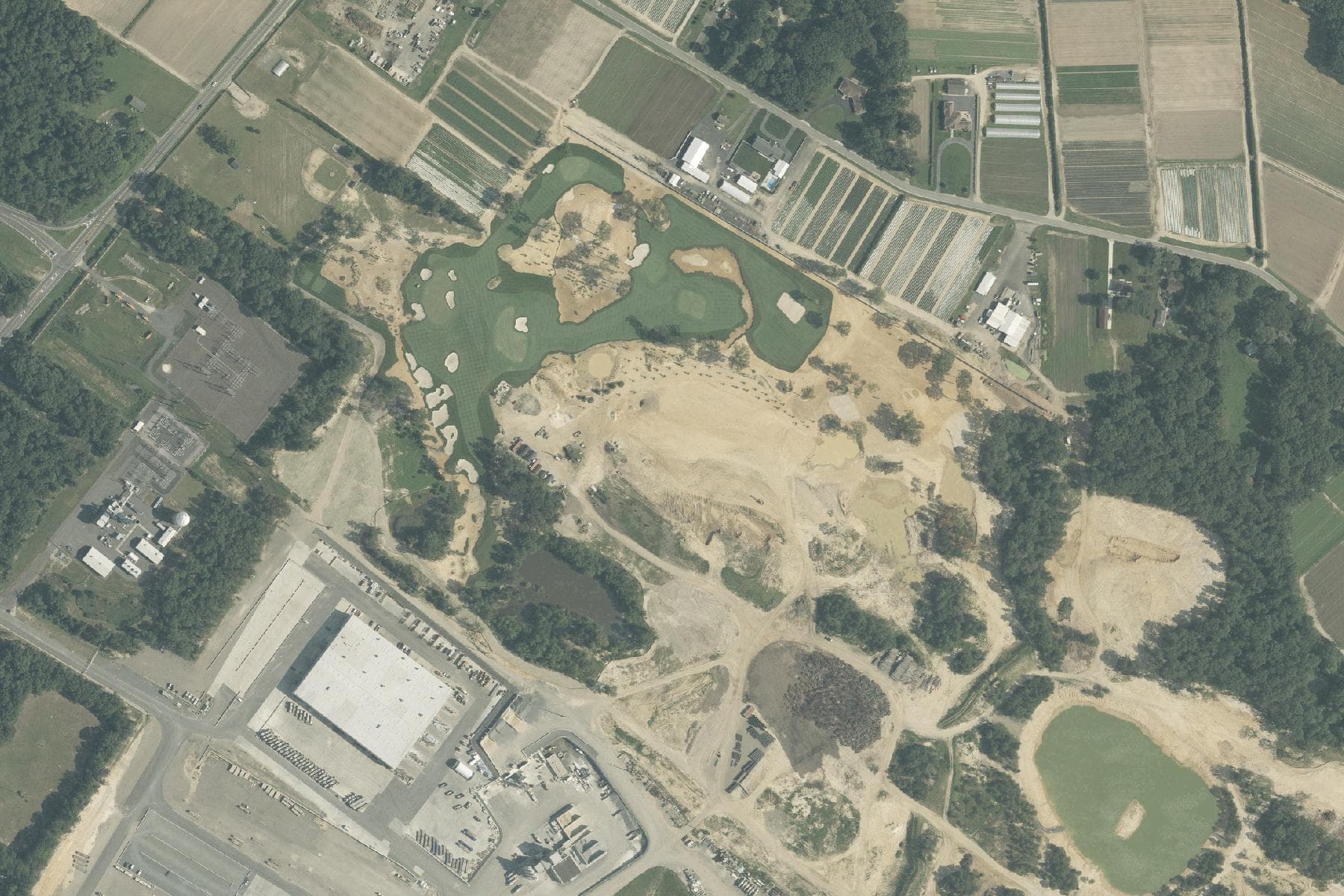
DataOne data center in Vineland, New Jersey, photographed 2023-08-20. The DataOne facility off South Lincoln Avenue, with houses along the road. The complaint put 48 to 60 dBA at homes on the record against a 50 decibel overnight limit.
USDA Farm Service Agency / USGS National Map, National Agriculture Imagery Program. Cropped from NAIP 0.3 m aerial imagery, scene m_3907540_se_18_030_20230820. (original)
Case facts
Dismissed
- Status
- Voluntarily dismissed without prejudice, June 19, 2026 (filed May 26, 2026)
- Case
- Montgomery v. DataOne USA LLC (proposed class action)
- Court
- U.S. District Court for the District of New Jersey
- Filed
- May 26, 2026; voluntarily dismissed without prejudice June 19, 2026
- Named plaintiffs
- Scott Montgomery and Michael Gentile
- Facility
- AI data center off South Lincoln Avenue, Vineland, Cumberland County, operated by Nebius Group; 2.6 million square feet at completion, 300 megawatts, three data rooms already online
- Proposed class
- About 1,013 residential households within one mile
- Core allegation
- Constant industrial humming from diesel generators and cooling equipment, 48 to 60 dBA without adequate mitigation, exceeding 50 decibels overnight in violation of county standards
- Outcome
- Dismissed by the plaintiffs without prejudice; claims can be refiled
Key Takeaways
- Scott Montgomery and Michael Gentile filed a proposed federal class action on May 26, 2026 against DataOne USA over noise from the Nebius AI data center in Vineland, New Jersey, on behalf of roughly 1,013 households within one mile.
- The complaint described a constant industrial hum from diesel generators and cooling equipment measured at 48 to 60 dBA, exceeding the 50 decibel overnight limit under county standards, and a county health department had issued a violation notice.
- On June 19, 2026, 24 days after filing, the plaintiffs voluntarily dismissed the case without prejudice. That is not a ruling on the merits, and the claims can be brought again.
- The facility is a 2.6 million square foot, 300 megawatt campus tied to a reported $17 billion Microsoft computing contract, with three data rooms online and construction continuing.
- The case pushed the issue to the statehouse: Governor Mikie Sherrill announced a four-part data center plan that includes statewide noise standards, and New Jersey has since enacted a Data Center Fair Share Act.
In this article
The first AI data center noise class action in New Jersey lasted 24 days. On May 26, 2026, Vineland residents Scott Montgomery and Michael Gentile sued DataOne USA in federal court over what Montgomery described as a sound like a helicopter hovering and airport-grade fans, coming day and night from a 2.6 million square foot AI campus operated by Nebius Group off South Lincoln Avenue. They sought to represent about 1,013 households within a mile. On June 19, they voluntarily dismissed the case without prejudice. A withdrawal like that is not a loss and not a win; it is a reset, and the reasons a plaintiffs' firm resets a case in its first month usually have more to do with strategy than with the noise. What the complaint alleged, what the county had already found, and what New Jersey's governor did next are the parts of this story that still matter.
What the complaint alleged
The facility at the center of the case is one of the largest AI builds in the Northeast: a Nebius Group campus in Vineland, Cumberland County, planned at 2.6 million square feet and 300 megawatts, with three data rooms already running while the rest is under construction, projected to use about 20 million gallons of water a year, and connected in reporting to a $17 billion deal to supply Microsoft with AI computing capacity. DataOne USA is the named defendant; Nebius, based in the Netherlands, is the operator.
The plaintiffs alleged a constant industrial hum from diesel generators and cooling equipment with inadequate sound barriers, at levels of 48 to 60 A-weighted decibels, exceeding 50 decibels between 10 p.m. and 7 a.m. in violation of county standards. They described sleep disruption, anxiety, and falling property values, and pleaded private nuisance, public nuisance, and negligence on behalf of everyone within roughly one mile.
The complaint had one asset most nuisance cases lack: regulatory backup. According to legal analysis of the case, the county health department had issued a violation notice over the noise. An operator already cited by the local health authority is starting a nuisance case from behind.
Why plaintiffs withdraw a case in 24 days
On June 19, 2026, the plaintiffs filed a voluntary dismissal without prejudice. In plain English: they ended the case on their own motion, before the defendant answered, and preserved the right to file it again. No judge ruled on anything.
Early voluntary dismissals in class actions are common, and the usual reasons are procedural. A firm may decide it filed in the wrong forum, that state court offers better nuisance law than federal court, that the class definition needs work, or that a different lead plaintiff or a different named defendant makes a stronger case. Sometimes the parties are talking. The public record does not say which applied here, and we will not guess. What the record does say is that the underlying facts, the hum, the measurements, and the health department notice, did not go anywhere.
What New Jersey did next
The Vineland case landed in a state where data center policy was already moving. Governor Mikie Sherrill announced a four-part regulatory plan for data center development that includes statewide noise standards, the first such state-level standard proposed in response to the 2026 noise cases. New Jersey has also enacted a Data Center Fair Share Act addressing who pays for the power large facilities demand, and municipalities across the state have been adopting local bans at a pace no other state matches.
That is the second life of a withdrawn lawsuit. The complaint put numbers on the record, 48 to 60 dBA against a 50 decibel overnight limit, a 1,013 household radius, a health department violation, and those numbers moved into the policy debate whether or not the case itself returns. For residents near the other large AI campuses in the state, the Vineland filing is the template: measure, document the ordinance violation, get the health department on record, and organize the radius.
What this case means for you
If a data center hum is reaching your home, the Vineland complaint shows the record that gets a case filed, and its withdrawal shows why the record matters more than any single filing:
- Measure against the local standard. The case turned on 50 decibels overnight. Find your county's or city's limit and log readings at your property line at night.
- Involve the health department. A violation notice from a public agency is evidence no operator can dismiss as subjective.
- Define the neighborhood. A one-mile radius with a thousand households is a class; document who else is affected.
- Do not read a withdrawal as the end. Claims dismissed without prejudice can return, and the deadlines in our deadlines guide keep running in the meantime.
Then talk to a lawyer. Our free case review connects you with an independent attorney in our network who handles data center cases in your state, at no cost and with no obligation. The Dowagiac, Michigan case, filed the same day by the same firm, is still pending and shows where a case like Vineland's can go.
Frequently asked questions
What happened to the Vineland, New Jersey data center noise lawsuit?
Scott Montgomery and Michael Gentile filed a proposed class action against DataOne USA in the U.S. District Court for the District of New Jersey on May 26, 2026 over noise from the Nebius AI data center in Vineland. On June 19, 2026 the plaintiffs voluntarily dismissed the case without prejudice, which means no court ruled on it and the claims can be refiled.
How loud was the Vineland data center according to the lawsuit?
The complaint alleged a constant industrial hum from diesel generators and cooling equipment at 48 to 60 A-weighted decibels, exceeding 50 decibels between 10 p.m. and 7 a.m. in violation of county standards. Legal analysis of the case notes the county health department had issued a violation notice.
Who operates the Vineland data center?
The facility off South Lincoln Avenue in Vineland is operated by Nebius Group, a Netherlands-based company; DataOne USA was the named defendant. The campus is planned at 2.6 million square feet and 300 megawatts, with three data rooms already online, and is connected in reporting to a $17 billion Microsoft AI computing contract.
Can I sue a data center in New Jersey over noise?
New Jersey law allows private and public nuisance and negligence claims over industrial noise, and the Vineland filing shows the approach: documented decibel readings against local limits, a health department violation, and a defined class of affected households. An attorney can evaluate whether your facts and timeline support a claim.
Article sources
Our editorial standards require primary sources: government publications, regulator data, company filings, and established industry research.
- 1.Government Technology: New Jersey neighbors sue over humming noise from data center (May 2026)
- 2.Crowell & Moring: Data center noise litigation 2026, plaintiffs' bar targets AI infrastructure (July 28, 2026)
- 3.WilmerHale: Data centers in court, the emerging wave of nuisance, environmental, and land-use litigation (July 13, 2026)
- 4.Programs.com: Data center moratoriums by state, tracker and statistics (as of August 26, 2026)
Related cases
- Valenzuela v. Alliance Cloud Services: The Dowagiac, Michigan Data Center Noise Class Action
Two Dowagiac, Michigan residents filed a federal class action on May 26, 2026 against Alliance Cloud Services over round-the-clock noise from a 30 megawatt AI and crypto computing facility that has run since March 2022. The proposed class covers about 1,300 properties within a mile. Constant readings of 50 to 62 decibels, a city ordinance capping residential noise at 65 by day and 55 at night, and an operator planning to grow to 340 megawatts: what the case alleges and why it matters.
- Haley v. xAI: 10,000 Southaven Neighbors Sue Over the Roar of 57 Gas Turbines
On June 8, 2026, Southaven, Mississippi residents filed a federal class action against xAI, its subsidiary MZX Tech, and SpaceX over near-constant noise and vibration from the gas turbine fleet powering the Colossus 2 data center, a fleet the complaint says grew from 3 to 57 turbines in under a year. More than 10,000 people are in the proposed class. What the suit alleges, how it differs from the NAACP's Clean Air Act case, and what it means for anyone living near on-site power.
- The Microsoft Fairwater Noise Class Action: 1,000 Households Take On a Hyperscale AI Campus
Three Sturtevant, Wisconsin residents filed a 2026 class action over noise from Microsoft's 1.2 million square foot Fairwater data center in Mount Pleasant, seeking to represent everyone within 1.5 miles, more than 1,000 households. Per reporting, it is the first noise class action against a hyperscale AI data center. What the case claims, why it matters, and what class membership means for residents.
- Great Oak v. the Hum: How Manassas Neighbors Beat Amazon Data Center Noise Without Filing a Lawsuit
Roughly 300 homes in the Great Oak neighborhood of Manassas, Virginia sit about 600 feet from AWS data centers that began generating constant mechanical noise in 2022. Residents documented likely exceedances of the county's 60 dB daytime ordinance, and sustained pressure plus county-backed noise studies produced Amazon engineering fixes that cut roughly 10 dB. No lawsuit was ever filed. What ordinance pressure can win, and when a lawsuit becomes the next step.
Is a data center disrupting your home?
Tell us what is happening. We will connect you with an independent attorney who handles data center cases in your state, free and with no obligation. These cases are commonly taken on contingency, so there are typically no upfront fees.
- Free case review
- Independent attorneys
- No obligation
Attorney or law firm handling data center matters? Speak with us