The Legal Process
How Data Center Class Actions Work: The Fairwater Suit and What Comes Next
The first noise class action against a hyperscale AI data center is underway in Wisconsin, drawn around a 1.5 mile radius. How class actions differ from mass torts, how certification works, what members do and pay (nothing out of pocket), opt-outs, timelines, and the crypto-noise precedents behind it all.
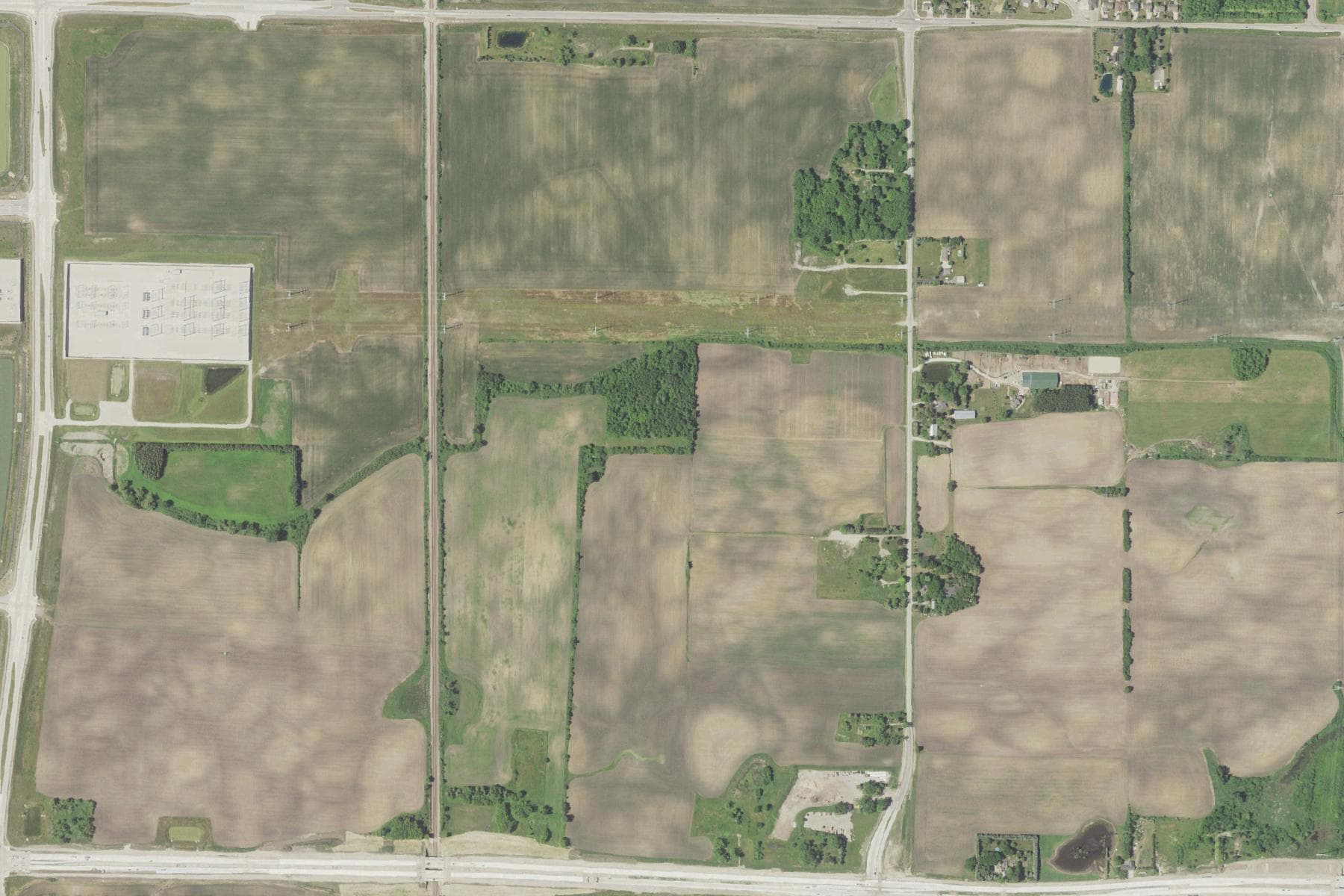
land now occupied by the Fairwater data center in Mount Pleasant, Wisconsin, photographed 2022-06-23. This is the ground in 2022, graded years earlier for the Foxconn project and still farmland. By 2026 a 1.2 million square foot campus stood on it and more than 1,000 households were suing over the sound.
USDA Farm Service Agency / USGS National Map, National Agriculture Imagery Program. Cropped from NAIP 0.6 m aerial imagery, scene m_4208717_se_16_060_20220623. (original)
Key Takeaways
- The first noise class action against a hyperscale AI data center is pending now: three Sturtevant, Wisconsin residents sued Microsoft over its Fairwater campus, seeking to represent every household within a 1.5 mile radius, more than 1,000 homes.
- Class members pay nothing out of pocket. Lawyers are paid from any court approved recovery, and most members never set foot in a courtroom.
- A class action is one case for everyone with a shared harm; a mass tort is many individual cases coordinated together. Which fits depends on how similar the harms are.
- You can opt out of a certified class to keep your own claim, which matters if your damages are much worse than your neighbors'.
- These cases run on multi-year timelines, and the crypto-mine noise suits in Texas and Arkansas are the doctrinal test bed the AI era suits are built on.
In this article
When a data center's noise or pollution reaches hundreds of households at once, the law has a tool built for exactly that: the class action. In 2026, three residents of Sturtevant, Wisconsin filed the first noise class action against a hyperscale AI data center, asking a court to let them represent everyone living within 1.5 miles of Microsoft's 1.2 million square foot Fairwater campus in Mount Pleasant, more than 1,000 households. This guide explains how these cases actually work: class actions versus mass torts, how a court decides who is in the class, what being a member costs you (nothing out of pocket), when opting out makes sense, how long it all takes, and why the crypto-mining noise suits of the last few years matter so much for what happens next.
Class action versus mass tort: two ways to sue together
Both tools let neighbors take on an operator together, but they work differently.
A class action is a single lawsuit in which a few named plaintiffs represent everyone in a defined group. The Fairwater suit is the model: three residents filed, but the case is brought on behalf of every household within the proposed radius. One trial or settlement resolves everyone's claim at once. Class actions fit when the harm is broadly similar across the group, such as a constant mechanical hum reaching an entire neighborhood.
A mass tort is many individual lawsuits, coordinated for efficiency but resolved person by person. Each plaintiff proves their own damages: one family's failed well, another's foundation cracks, a third's medical bills. The Granbury, Texas litigation shows the shape: Earthjustice filed a nuisance suit for a group of residents in 2024, and in 2026 a separate group of nine Hood County property owners filed their own federal complaint seeking more than $1 million. Coordinated, but individual.
Which fits you is a lawyer's call, and it turns on one question: is your harm basically the same as your neighbors', or meaningfully worse? Shared hum, class action. A destroyed well plus health damage, possibly your own suit. Many disputes use both tracks at once.
Certification and the radius: who is in the class
Filing a complaint does not create a class. The named plaintiffs must persuade the judge to certify it: to rule that the group is well defined, that the members' claims share common questions, that the named plaintiffs' situations are typical, and that they and their lawyers will represent everyone fairly. Certification is usually the biggest battle in the case, because operators know that a certified class of a thousand households changes the settlement math completely.
In environmental and nuisance cases, the class is typically drawn as a geographic boundary, and distance is the proxy for harm. The Fairwater plaintiffs drew their line at 1.5 miles from the campus, sweeping in more than 1,000 households. Expect the operator to attack the line from both directions: arguing the radius is too big (people at the edge are not really harmed) or that harm varies too much within it (noise depends on terrain, trees, and which way your bedroom faces) for one case to resolve fairly.
Practically, this means two things for you. First, if a class is proposed near you, your address relative to the boundary matters enormously. Second, the evidence that supports certification is the same evidence that supports everything else: widespread complaint records, consistent noise readings across the neighborhood, and documentation from many households, which is why our evidence guide keeps saying to get your neighbors logging too.
What class members actually do, and what they pay
Here is the part most people find hard to believe: being a class member costs you nothing out of pocket and usually requires almost nothing from you.
- No fees, ever, out of pocket. Class counsel works on contingency, advancing all costs. If the case recovers money, the court approves the lawyers' fees out of the recovery before distribution. If the case loses, members owe nothing.
- You do not file anything to be included. If you live inside a certified class boundary, you are in unless you opt out. When a case resolves, you receive notice, by mail, publication, or a claims website, telling you what to do, which is usually submitting a simple claim form.
- Most members are never deposed and never testify. The named plaintiffs carry that load. At most, some members may be asked for records or short statements.
- You give up your individual claim for the covered harm. That is the trade: a class settlement or judgment binds every member who did not opt out. You share in the recovery, and you cannot separately sue over the same conduct later.
Because you risk nothing, staying in a class is the sensible default for most households with typical, neighborhood-level harm.
Opting out: when to keep your own claim
After certification or at settlement, class members get a window to opt out. Opting out removes you from the class: you get nothing from its recovery, and you keep the right to bring your own suit. It is the right move in a narrow set of situations:
- Your damages dwarf the average. If the class remedy is calibrated to a shared nuisance but your well failed, your foundation cracked, or your documented health effects are severe, an individual claim may be worth far more than a per-household class share.
- You have claims the class does not cover. Class definitions and releases are specific. A noise class settlement may not touch a water contamination claim, but read the release carefully, because whatever it covers is gone.
- An attorney has actually evaluated your file. Opting out on principle, without counsel ready to bring your case before the statute of limitations runs, is how people end up with nothing.
The deadlines in opt-out notices are strict. If you receive a class notice about a data center near you, treat it as a decision point and get advice before the window closes.
How long it takes, and how these cases end
Plan in years, not months. A contested class action moves through motions to dismiss, discovery, the certification fight, and often appeals of the certification ruling before trial is even scheduled. The Granbury nuisance litigation, filed in October 2024, spent much of 2025 in discovery fights, and both Granbury cases remain pending in 2026. Nothing about that is unusual.
Most cases that survive the early motions end in settlement rather than verdict, and in nuisance cases the relief can include more than money: operators facing an organized, certified neighborhood have engineering fixes, sound barriers, operating limits, and community funds to offer, the same menu covered in our guide to what these cases are worth. A court must approve any class settlement as fair to the members, with notice and an opportunity to object, which is a real protection individual settlements do not have.
The honest takeaway for a frustrated household: the class action is a pressure engine, not a quick fix. The filing itself often changes operator behavior long before judgment, because certification risk is a number their lawyers can calculate.
The crypto precedents feeding the AI era suits
The legal theories now aimed at AI campuses were road tested against crypto mines, which brought the same 24/7 fan noise to rural neighborhoods years earlier:
- Granbury, Texas. Earthjustice's 2024 state court nuisance suit against Marathon over the Wolf Hollow site documented migraines, tinnitus, and sleep loss among more than two dozen residents and seeks a permanent injunction. The 2026 federal suit by nine property owners added negligence and intentional infliction of emotional distress claims. Both are pending.
- Bono, Arkansas. Twenty three residents sued a crypto operator over constant whining noise on nuisance and negligence theories. The saga cut both ways: the operator separately sued Faulkner County over its noise ordinance and won in 2024, after a state law shielded mines from targeted local regulation, and the backlash produced reform legislation.
- Cherokee County, North Carolina. Severe 24/7 noise with no county zoning to enforce meant no lawsuit at all; residents got relief through a moratorium and new ordinances instead.
The lesson the Fairwater plaintiffs drew: constant industrial noise in residential areas is a provable, litigable nuisance, groups move operators in ways individuals cannot, and the class action is the natural next step when the affected population is a thousand households instead of two dozen.
If you live near a large data center and your whole street is dealing with the same noise, dust, or water problems, you may already be inside the footprint of a future class, or the person whose records help start one. Our free intake form lets you tell us what is happening; where a participating attorney who handles these matters is available, we may share your information with them with your consent, but we cannot promise that anyone will contact you.
Frequently asked questions
Is there a class action lawsuit against data centers?
Yes. In 2026, three Sturtevant, Wisconsin residents filed a class action against Microsoft over noise from its Fairwater data center in Mount Pleasant, seeking to represent every household within a 1.5 mile radius, more than 1,000 homes. Per reporting it is the first noise class action against a hyperscale AI data center, and it is pending. Related nuisance suits over computing facility noise are also pending in Texas.
How do I join a data center class action?
Usually you do not need to do anything to join. If a court certifies a class and you live within its defined boundary, you are automatically included unless you opt out, and you will receive notice explaining your rights and any claim form. If you think you fall inside a proposed class area, an attorney can confirm your status and whether staying in or opting out is better for your situation.
Do I have to pay to be in a class action?
No. Class members pay nothing out of pocket. The lawyers advance all costs and are paid only from a court approved recovery if the case succeeds. If the case loses, members owe nothing.
How long does a data center class action take?
Expect years. These cases move through dismissal motions, discovery, and a contested class certification fight before any trial or settlement, and the Granbury, Texas noise litigation filed in 2024 was still pending in 2026. Filings can prompt operator changes much earlier, but final recoveries take time.
Should I opt out of a class action lawsuit?
Most households with typical neighborhood-level harm are better off staying in, since membership costs nothing. Opting out mainly makes sense if your damages are far worse than average, such as a failed well or serious documented health effects, and an attorney is prepared to bring your individual case before the deadline. Opt-out windows are strict, so get advice as soon as a class notice arrives.
What is the difference between a class action and a mass tort?
A class action is one lawsuit where named plaintiffs represent everyone with a similar harm, resolved for the whole group at once. A mass tort is many individual lawsuits coordinated together, with each plaintiff proving their own damages. Shared harms like neighborhood-wide noise fit class treatment; individualized harms like a destroyed well often warrant an individual or mass tort claim.
Article sources
Our editorial standards require primary sources: government publications, regulator data, company filings, and established industry research.
- 1.Wisconsin Examiner: Mount Pleasant residents file class action over Microsoft data center noise (2026)
- 2.Wisconsin Watch: Latest Wisconsin data center news you might have missed (2026)
- 3.Earthjustice: Granbury residents sue bitcoin mine over health-threatening noise (2024)
- 4.Earthjustice: Granbury residents demand answers as noise nuisance lawsuit continues (2025)
- 5.UA Little Rock Public Radio: Sound complaint lawsuit against Arkansas crypto mine company continues
- 6.American Bar Association, Business Law Today: Emerging Data Center Litigation (July 2026)
- 7.ClassAction.org: Data center noise and water pollution lawsuit investigations
Related reading
- Can You Sue a Data Center? What Neighbors Can Actually Do in 2026
Yes, neighbors are suing data centers and winning real concessions: noise class actions, well water claims, voided rezonings, and Clean Air Act suits. Here is who has a case, the six legal theories that work, and what to do first.
- Data Center Noise: Can You Sue Over the Hum?
Yes, you can sue over data center noise. The first noise class action against a hyperscale AI facility is pending in Wisconsin, and Texas residents are litigating 24/7 fan noise right now. Here is how noise claims work, how to measure the hum, and what relief looks like.
- How Much Is a Data Center Lawsuit Worth? An Honest Breakdown
No honest source can promise you a number. What we can do is map every category of recovery these cases pursue: repair and remediation, diminished property value, loss of use and enjoyment, injunctions and engineering fixes, community funds, and negotiated buyouts, plus what makes a case worth more or less.
- Finding a Lawyer for a Data Center Case: Who to Hire and What to Ask
Three kinds of lawyers handle data center cases: land use attorneys, environmental litigators, and plaintiff firms. How the fees actually work, the questions to ask in a first consult, what to bring, the red flags to avoid, and what our free intake form does and does not do.
Is a data center disrupting your home?
Tell us what is happening. Where a participating attorney who handles data center cases in your state is available, we may share your information with them with your consent. It is free and carries no obligation, but we cannot promise that anyone will contact you.
- Tell us about your situation
- Independent attorneys
- No obligation
Attorney or law firm handling data center matters? Speak with us