Lawsuit Tracker
NAACP v. xAI: The Clean Air Act Fight Over Colossus's Gas Turbines
The NAACP, represented by SELC and Earthjustice, is suing xAI in federal court over 27 allegedly unpermitted gas turbines powering the Colossus 2 data center in Southaven, Mississippi, after a parallel permit fight in Memphis. Status, stakes, and what it means for data center neighbors everywhere.
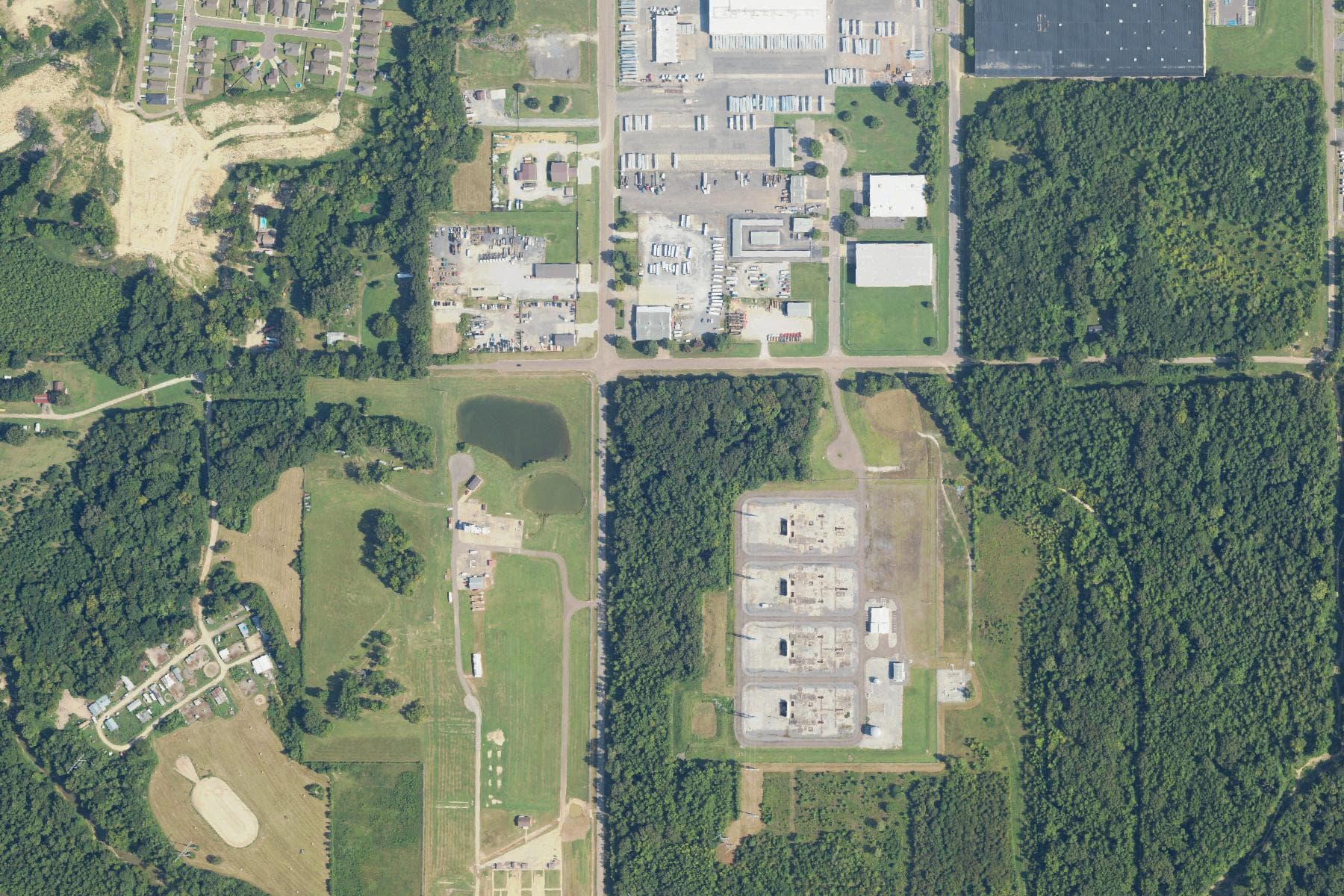
power plant site serving the Colossus data center in Southaven, Mississippi, photographed 2023-08-20. The plant stands on the pad of a demolished power station off Stanton Road, with houses a few hundred yards northwest through the trees. This 2023 imagery shows the foundations before the gas turbines were installed on them.
USDA Farm Service Agency / USGS National Map, National Agriculture Imagery Program. Cropped from NAIP 0.6 m aerial imagery, scene m_3409008_ne_15_060_20230820. (original)
Case facts
Active litigation
- Status
- Pending, U.S. District Court, N.D. Mississippi; motions to dismiss denied October 2026
- Case
- NAACP v. X.AI Corp. and MZX Tech LLC, No. 3:26-cv-00074
- Court
- U.S. District Court, Northern District of Mississippi, Oxford Division (Judge Debra M. Brown)
- Filed
- April 14-15, 2026
- Facilities
- Colossus 2, Southaven, MS; related permit fight over Colossus 1, South Memphis, TN
- Counsel
- Southern Environmental Law Center, Earthjustice
- Relief sought
- Preliminary injunction, best available control technology, daily penalties
- Key rulings
- Justice Department's dismissal bid denied October 19, 2026; xAI's motion to dismiss denied October 30, 2026; preliminary injunction motion still pending
Key Takeaways
- The NAACP filed a federal Clean Air Act citizen suit against xAI in April 2026 over 27 gas turbines it says were operated without permits at the Colossus 2 data center in Southaven, Mississippi.
- A parallel fight over roughly 35 turbines at the original Memphis Colossus site ran through the Shelby County permit system in 2025; the county granted a 15 turbine permit and the appeals board dismissed challenges as moot.
- On May 6, 2026 the plaintiffs asked the court for a preliminary injunction to halt unpermitted operation, require pollution controls, and impose daily penalties. We found no ruling on that motion as of November 24, 2026.
- In October 2026 the court kept the case alive twice: on October 19 it denied the Justice Department's bid to dismiss the suit, which the department had joined on xAI's side, and on October 30 Judge Debra M. Brown denied xAI's own motion to dismiss, rejecting its argument that the turbines were exempt from permitting.
- The case is the clearest test yet of whether communities can use federal environmental law against the gas turbines increasingly used to power AI data centers ahead of grid connections.
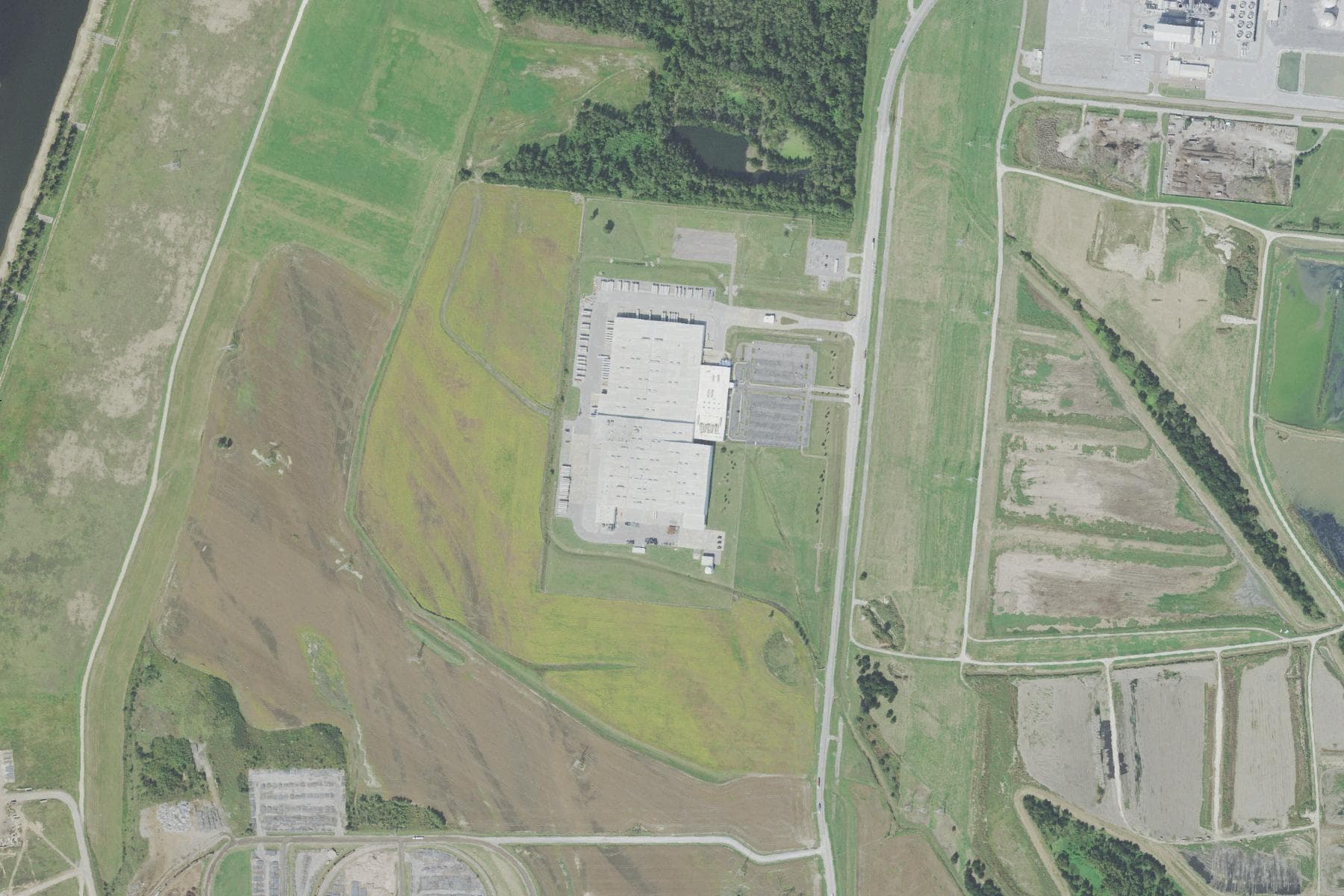
former Electrolux plant now operating as the Colossus data center in Memphis, Tennessee, photographed 2021-10-08. Colossus occupies a former Electrolux plant in southwest Memphis, with the Boxtown neighbourhood to the south. This 2021 imagery predates the conversion, so it shows the building and its neighbours as they stood before the machines arrived.
USDA Farm Service Agency / USGS National Map, National Agriculture Imagery Program. Cropped from NAIP 0.6 m aerial imagery, scene m_3509063_se_15_060_20211008. (original)
In this article
The most closely watched data center lawsuit in the country is not about noise or property values. It is about air. In NAACP v. xAI, filed in April 2026 in the Northern District of Mississippi, the nation's oldest civil rights organization says Elon Musk's xAI ran 27 methane gas turbines at its Colossus 2 supercomputer campus in Southaven without the Clean Air Act permits that any major pollution source needs, in an area already burdened by industrial emissions. The suit, brought by the Southern Environmental Law Center and Earthjustice, asks a federal judge to stop the unpermitted operation and fine it, daily. For every community watching turbines go up next to an AI campus, this case is the template.
How the fight started in Memphis
xAI stood up its original Colossus supercomputer in South Memphis at extraordinary speed in 2024 and 2025, and powered much of it with mobile methane gas turbines while grid capacity caught up. Community groups and the NAACP said roughly 35 turbines were operating around the site without air permits, in a majority-Black part of the city with a long history of industrial pollution burdens.
In June 2025, the NAACP and the Southern Environmental Law Center issued a 60 day notice of intent to sue under the Clean Air Act, the required first step in a citizen suit. Before that clock ran, the Shelby County Health Department issued xAI a permit on July 2, 2025 covering 15 turbines. SELC, on behalf of the NAACP and Young, Gifted and Green, appealed to the Memphis and Shelby County Air Pollution Control Board, arguing the department had ignored the months of unpermitted operation that came first. After a marathon hearing, the board dismissed the appeals as moot in late 2025.
The federal lawsuit over Colossus 2
The fight then moved a few miles south, across the Mississippi line. On April 14 and 15, 2026, the NAACP, represented by SELC and Earthjustice, filed a Clean Air Act citizen suit in the U.S. District Court for the Northern District of Mississippi against xAI and its subsidiary MZX Tech. The complaint alleges the company has been running 27 unpermitted gas turbines at the Colossus 2 site in Southaven, in DeSoto County.
On May 6, 2026, the plaintiffs moved for a preliminary injunction asking the court to halt unpermitted turbine operation, require best available control technology on any turbines that continue running, and impose daily civil penalties. We found no ruling on that motion as of November 24, 2026; an SELC attorney told the Mississippi Free Press in early November that the court will hold a hearing on it.
The Justice Department steps in, and the court keeps the case alive
In June 2026 the U.S. Department of Justice sided with xAI in the case. It asked the court to dismiss the suit, arguing, as WLOX reported, that dismissal "accords with federal policy, national security, and the public interest." According to the Southern Environmental Law Center, the department argued it could unilaterally block the citizen suit. On October 19, 2026, the court denied that bid. It allowed the department to intervene, but said what it can and cannot do after intervention is another matter. The Fifth Circuit had earlier declined to pause the district court proceedings, SELC reported, because the district court had not yet ruled.
On October 30, 2026, Judge Debra M. Brown denied xAI and MZX Tech's own motion to dismiss. According to Earthjustice and the Mississippi Free Press, the court held that the NAACP has standing to sue, rejected the companies' argument that citizen suits are unconstitutional, and rejected their argument that the turbines were exempt from permitting as mobile sources, writing that "the Plant was not (and is not) exempted from permitting requirements under the Clean Air Act." The ruling lets the case proceed; it is not a finding that xAI violated the law. The preliminary injunction motion is still waiting.
The turbine count has also grown since the complaint. Per the Mississippi Free Press, Mississippi has allowed the complex to run up to 69 gas-fired combustion turbines without permits since August 2025, and a March 2026 state permit allows 41 permanent turbines to replace them, which the company says will be retired by July 2027. The same turbines are the subject of two private noise class actions: the Southaven case in Mississippi and the Carter case filed in Memphis federal court in September 2026.
Why this case matters far beyond Memphis
AI data centers need power faster than utilities can deliver it, and on-site gas turbines have become the industry's bridge. That means the exact pattern alleged here, turbines first, permits later, is likely to repeat wherever grid connections lag. A ruling that unpermitted turbine operation draws injunctions and daily penalties would change the math for every operator considering it, and would hand neighbors a proven playbook: document the equipment, check the permit file, send the 60 day notice.
The case also carries an environmental justice frame the industry cannot ignore: the communities absorbing the exhaust are disproportionately the ones with the least political leverage, and the NAACP's involvement signals that data center siting is becoming a civil rights issue, not just a land use one.
What to do if turbines or generators are running near you
If a data center near you is running turbines or banks of diesel generators, three steps preserve your options:
- Photograph and date the equipment. Count units, note run times, and log smells, haze, and health effects in a dated journal.
- Pull the permit file. Air permits are public records held by your state or county air agency. What is actually running versus what is permitted is the core of any claim.
- Talk to a lawyer early. Citizen suits require a 60 day notice before filing, and permit appeals run on short administrative clocks. An attorney can also evaluate parallel nuisance and negligence claims for odors, noise, and health impacts.
Frequently asked questions
What is the NAACP lawsuit against xAI about?
The NAACP alleges xAI operated 27 methane gas turbines at its Colossus 2 data center in Southaven, Mississippi without required Clean Air Act permits. Filed in April 2026 in the Northern District of Mississippi, the suit seeks an injunction, pollution controls, and daily penalties. On October 30, 2026 the court denied xAI's motion to dismiss, so the case is moving forward.
Is the xAI Clean Air Act case still active?
Yes. In October 2026 the court denied both the Justice Department's bid to dismiss the case and xAI's own motion to dismiss, so the case is proceeding. As of November 24, 2026 we found no ruling on the NAACP's preliminary injunction motion, filed in May 2026.
Can residents near other data centers bring a similar lawsuit?
Potentially. The Clean Air Act lets citizens sue sources operating without required permits after giving 60 days notice. Whether it applies depends on the equipment, its size, and your state's permitting rules, which is exactly what an environmental attorney evaluates.
Do I need to prove the pollution made me sick to sue under the Clean Air Act?
No. A citizen suit turns on whether the source violated permitting and emissions requirements, not on proving individual illness. Personal injury claims are separate and would proceed under different theories.
Article sources
Our editorial standards require primary sources: government publications, regulator data, company filings, and established industry research.
- 1.SELC: Civil rights group sues xAI for illegal pollution from data center power plant (April 2026)
- 2.Earthjustice: NAACP asks court for emergency action to stop illegal air pollution from xAI's data center power plant (May 2026)
- 3.N.D. Miss. scheduling order, NAACP v. X.AI Corp., No. 3:26-cv-74 (May 20, 2026), noting the May 6, 2026 preliminary injunction motion
- 4.Route Fifty: Department of Justice sides with Elon Musk's xAI in Southaven lawsuit (June 2026)
- 5.WLOX: Judge allows lawsuit against SpaceXAI to continue (October 20, 2026)
- 6.SELC: Judge throws out U.S. DOJ attempt to deny communities' day in court against Musk's company, xAI (October 20, 2026)
- 7.Earthjustice: Court denies xAI's motion to dismiss air pollution lawsuit against Elon Musk's company (October 30, 2026)
- 8.TechCrunch: Judge allows NAACP lawsuit over xAI data center pollution to move forward (October 31, 2026)
- 9.Mississippi Free Press: Mississippi court rejects SpaceX's bid to throw out suit alleging Clean Air Act violations in Southaven (November 3, 2026)
- 10.Mississippi Today: Data center turbines in Southaven (April 15, 2026)
- 11.SELC: Memphis health leaders grant air permit for xAI data center (July 2025)
- 12.SELC: Groups appeal permit for xAI's South Memphis data center (2025)
Related cases
- Great Oak v. the Hum: How Manassas Neighbors Beat Amazon Data Center Noise Without Filing a Lawsuit
Roughly 300 homes in the Great Oak neighborhood of Manassas, Virginia sit about 600 feet from AWS data centers that began generating constant mechanical noise in 2022. Residents documented likely exceedances of the county's 60 dB daytime ordinance, and sustained pressure plus county-backed noise studies produced Amazon engineering fixes that cut roughly 10 dB. No lawsuit was ever filed. What ordinance pressure can win, and when a lawsuit becomes the next step.
- Haley v. xAI: 10,000 Southaven Neighbors Sue Over the Roar of 57 Gas Turbines
On June 8, 2026, Southaven, Mississippi residents filed a federal class action against xAI, its subsidiary MZX Tech, and SpaceX over near-constant noise and vibration from the gas turbine fleet powering the Colossus 2 data center, a fleet the complaint says grew from 3 to 57 turbines in under a year. More than 10,000 people are in the proposed class. What the suit alleges, how it differs from the NAACP's Clean Air Act case, and what it means for anyone living near on-site power.
- Carter v. xAI: South Memphis Residents Sue Over the Turbine Noise Crossing the State Line
On September 23, 2026, two South Memphis residents filed a federal class action in Tennessee against xAI and MZX Tech over noise from the gas turbine plant just across the Mississippi line in Southaven. The complaint alleges the turbine count grew from 3 to 69 and estimates more than 10,000 class members in a defined area including Whitehaven. What it alleges, how it differs from the Mississippi case, and what it means for neighbors.
- The Granbury Noise Lawsuits: The Texas Cases Writing the Playbook for AI Data Center Noise Claims
Granbury, Texas residents, represented by Earthjustice, sued Marathon Digital Holdings in October 2024 over 24/7 fan noise from the bitcoin mine at the Wolf Hollow power plant, documenting migraines, tinnitus, and sleep loss. A separate federal complaint by nine Hood County property owners followed in May 2026, seeking more than $1 million. Both cases are pending, and together they are the precedent engine for AI data center noise litigation.
- Coweta County's Project Sail Lawsuit: Residents Sue to Void a $17 Billion Data Center Rezoning
Seventeen Coweta County residents, farmers, and landowners are suing the county and Atlas Development LLC to void the rezoning of rural conservation land for a $17 billion hyperscale data center campus near Sargent Road. The suit says the county broke its own rules and Georgia rezoning law. Status, claims, and what it means for neighbors.
Is a data center disrupting your home?
Tell us what is happening. Where a participating attorney who handles data center cases in your state is available, we may share your information with them with your consent. It is free and carries no obligation, but we cannot promise that anyone will contact you.
- Tell us about your situation
- Independent attorneys
- No obligation
Attorney or law firm handling data center matters? Speak with us