State Guide
Data Centers in Arizona: Lawsuits, Disputes, and Your Rights
Arizona is a major data center market with a first-in-the-nation noise ordinance in Chandler and an open meetings lawsuit over Tucson's Project Blue. What Phoenix-area and Tucson residents are dealing with, where the litigation stands, and how to tell us about your situation.
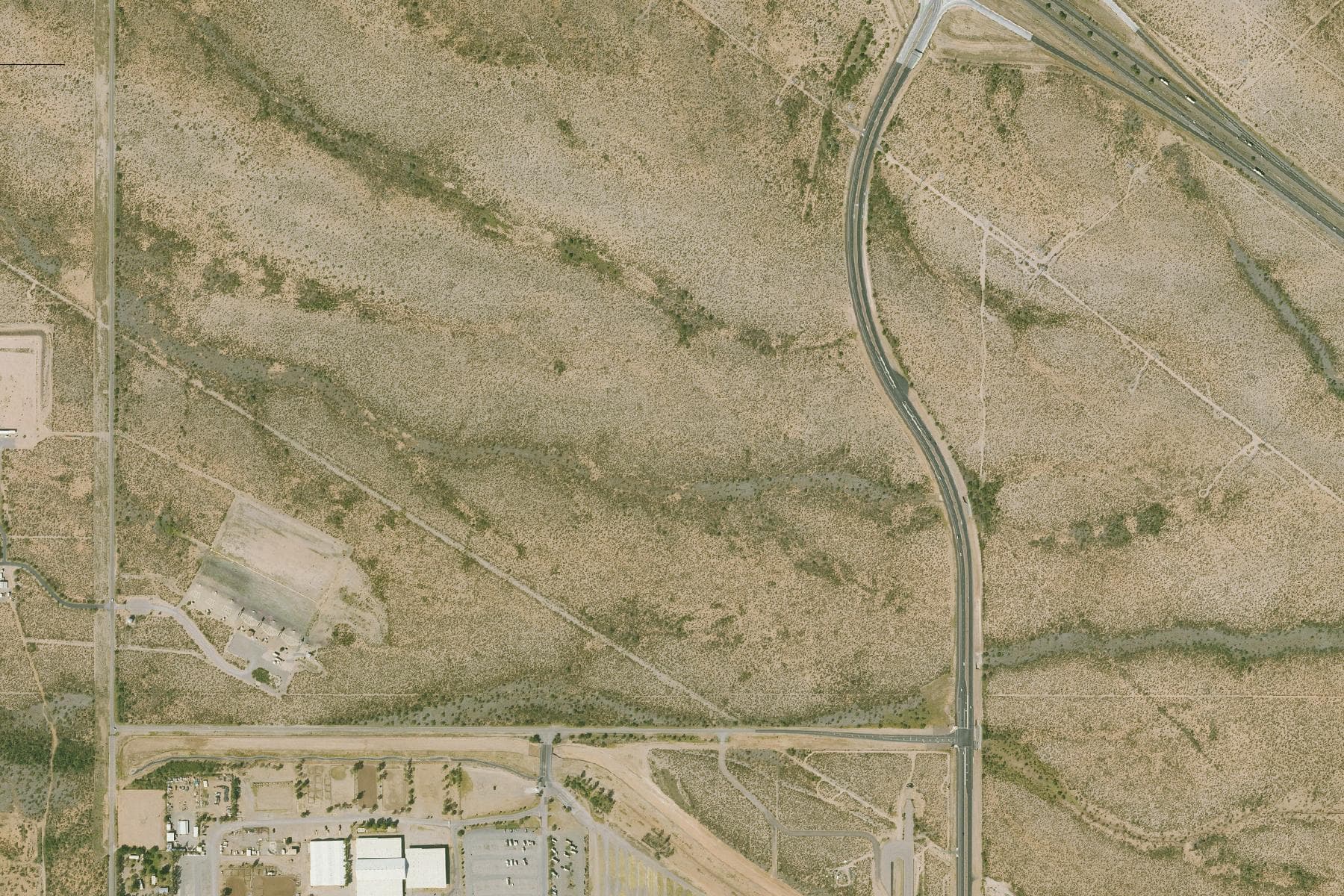
proposed data center site in Tucson, Arizona, photographed 2023-10-15. The 290 acres north of the Pima County Fairgrounds, west of Houghton Road, as the desert stood before grading began. In a county arguing about water, what the land was is part of the argument.
USDA Farm Service Agency / USGS National Map, National Agriculture Imagery Program. Cropped from NAIP 0.3 m aerial imagery, scene m_3211058_se_12_030_20231015. (original)
Arizona at a glance
Major market
- Market size
- Major; the Phoenix metro is one of the largest data center markets in the country, with Tucson emerging
- Hot spots
- Phoenix, Chandler, Mesa, Goodyear; Tucson and Pima County for the contested Project Blue campus
- Key operators
- CyrusOne, Microsoft, Meta, Google, QTS
- Documented disputes
- Pima County Project Blue open meetings suit, dismissed April 2026 with an appeal expected; the Chandler CyrusOne noise saga that produced the 2022 ordinance
- Statewide action
- None documented as of August 2026; the landmark action is local, Chandler's data center noise ordinance effective January 2023
Key Takeaways
- Chandler residents endured years of constant hum from a CyrusOne campus starting in 2014, never filed suit, and still won: city pressure produced mitigation in 2018 and then the first data center noise ordinance in the nation, effective January 2023.
- Chandler's ordinance requires pre-construction community meetings, a paid noise liaison officer, baseline acoustic studies, and a rule that operations must not raise neighborhood sound above baseline, and the city rejected a subsequent data center proposal in 2025.
- Tucson's city council rejected the $3.6 billion Project Blue campus in August 2025, but Pima County approved a roughly 300 acre land sale and rezoning anyway, and opponents sued in January 2026 alleging open meetings violations.
- The Project Blue suit was dismissed in April 2026, but plaintiffs stated they intend to appeal, and a separate referendum effort died when Marana refused to process the signatures.
- Water is the desert-specific issue: Arizona data center fights increasingly turn on groundwater and municipal supply, and residents should press water questions while projects are still in the approval stage.
Data centers in Arizona, from the registry
All 55 sites55 sites on the public record: 25 operating, 9 under construction, 6 permitted, 14 proposed, 1 cancelled. 9 carry documented opposition or litigation. 11.2 GW planned.
By county, alphabetically. Each profile carries capacity, land, utility, water, subsidies, jobs, a timeline, and every source.
Maricopa County (45 sites)
- Hassayampa Ranch Data Center · Tonopah · Arizona Land ConsultingProposed · 1.5 GW · Contested
- Project Baccara · Takanock, LLCPermitted · 700 MW · Contested
- NTT Global Data Centers Mesa, Pacific Proving Technology Park · Mesa · NTT Global Data CentersProposed · 360 MW · Contested
- Project Range · Buckeye · TractProposed · Contested
- Buckeye Tech Corridor · Buckeye · TractPermitted · 1.8 GW · Supported
- EdgeCore Mesa Data Center Campus · Mesa · EdgeCore Digital InfrastructureOperating · 450 MW · Supported
- Google Redhawk Mesa Data Center Campus · Mesa · GoogleOperating · 400 MW · Supported
- Avondale Campus · Avondale · Prime Data CentersUnder construction · 240 MW · Supported
- Aligned PHX-13 · Glendale · Aligned Data CentersUnder construction · 72 MW · Supported
- Microsoft El Mirage Data Center Campus · El Mirage · MicrosoftOperating · Supported
- Compass Datacenters Goodyear Campus · Goodyear · Compass DatacentersOperating · 350 MW
- Novva Mesa Data Center Campus · Mesa · Novva Data CentersUnder construction · 300 MW
- Stream Data Centers PHXA (Phoenix I-VII, Goodyear Campus) · Goodyear · Stream Data CentersOperating · 280 MW
- STACK Infrastructure PHX02 Campus · Phoenix · STACK InfrastructureUnder construction · 250 MW
- STACK Infrastructure PHX01 Campus · Avondale · STACK InfrastructureOperating · 225 MW
- QTS Phoenix 2 · Phoenix · QTS Data CentersOperating · 210 MW
- CyrusOne Mesa Campus (Mesa Elliot Technology Park) · Mesa · CyrusOneProposed · 198 MW
- Vantage Phoenix Campus (Goodyear, AZ) · Goodyear · Vantage Data CentersOperating · 176 MW
- CyrusOne Chandler Campus (PHX1-PHX8) · Chandler · CyrusOneOperating · 169 MW
- Meta Mesa Data Center · Mesa · MetaOperating · 50 MW
- phoenixNAP PHX02 · Phoenix · phoenixNAPUnder construction · 50 MW
- Edged Mesa Data Center · Mesa · Edged USOperating · 36 MW
- Iron Mountain AZP-3 · Phoenix · Iron MountainOperating · 36 MW
- NTT Phoenix PH1 Data Center · Mesa · NTT Global Data CentersOperating · 36 MW
- Digital Realty PHX (Tempe) · Tempe · Digital RealtyOperating · 33.8 MW
- H5 Data Centers Phoenix (Chandler) · Chandler · H5 Data CentersOperating · 26 MW
- 5C Data Centers PHX01 · Phoenix · 5C Data CentersUnder construction · 20 MW
- Centersquare PHX3 · Mesa · Centersquare (Cyxtera/Evoque)Operating · 17.3 MW
- Iron Mountain AZS-1 · Scottsdale · Iron MountainOperating · 5.8 MW
- Flexential Phoenix - Deer Valley · Phoenix · FlexentialOperating · 5.02 MW
- 491st Avenue and Thomas Road Data Center / Solar Site · Tonopah · Grandilla (Arizona) Inc. and Foot Creek CorporationPermitted
- Aligned Data Centers Peoria Campus · Peoria · Aligned Data CentersProposed
- Aligned PHX-01/02/03 · Phoenix · Aligned Data CentersOperating
- Apple Mesa Data Center (Global Command Center) · Mesa · AppleOperating
- AWS Laveen Data Center Campus · Laveen · Amazon Web ServicesProposed
- Balterra · Tonopah · Arizona Land ConsultingPermitted
- Camelback Creek · Tonopah · Arizona Land ConsultingProposed
- Digital Realty PHX15 · Chandler · Digital RealtyOperating
- EdgeConneX Mesa Campus (PHX11 / 3302 S Hawes Rd) · Mesa · EdgeConneXUnder construction
- Iron Mountain AZP-1 · Phoenix · Iron MountainOperating
- Iron Mountain AZP-2 · Phoenix · Iron MountainOperating
- Lumen Phoenix 1 · Phoenix · Lumen TechnologiesOperating
- Microsoft Goodyear Data Center Campus · Goodyear · MicrosoftOperating
- QTS Phoenix 4 · Tolleson · QTS Data CentersUnder construction
- Wintersburg 313 · Tonopah · 313 Wintersburg LLC and Wintersburg Four LLCProposed
Pima County (3 sites)
- Project Blue · Beale InfrastructureUnder construction · 600 MW · Opposed
- Luckett Road Data Centers (Fremont Peak Properties) · Marana · Fremont Peak Properties LLC (Beale Infrastructure)Proposed · 1.5 GW · Contested
- Project Gravel · Sahuarita Holdings, LLCProposed
Pinal County (7 sites)
- Energy Generation and Technology Campus · Maricopa · W HoldingsProposed · Opposed
- La Osa Data Center Park · Eloy · Vermaland LLCCancelled · Opposed
- Project Midway Data Center · Casa Grande · LPI GroupProposed · 400 MW · Contested
- Dobson Farms East · Florence · EdgeCore Digital InfrastructurePermitted · 720 MW
- Southwest Crossing Data Park · Eloy · Ryan Companies US, Inc.Proposed · 400 MW
- Arizona Independent Technology Campus · Zinke Investments LLCProposed
- Florence Tech Park · Florence · Ryan Companies US, Inc.Permitted
In this article
Arizona is one of the biggest data center markets in America, and it has produced two of the country's most instructive fights. In Chandler, a decade of complaints about the constant hum from a CyrusOne campus never became a lawsuit, but it became something arguably more useful: the first data center noise ordinance in the nation. In Tucson, the fight over the $3.6 billion Project Blue campus moved from a city council rejection to a county approval to an open meetings lawsuit that is now headed for appeal. Phoenix, Mesa, and Goodyear keep adding campuses from Microsoft, Meta, Google, and QTS. Here is what Arizona residents are dealing with, where the legal fights stand, and what you can do if a facility is near your home.
The data center footprint in Arizona
The Phoenix metro is a top-tier national data center market. Cheap land, tax incentives, and low disaster risk drew CyrusOne to Chandler, where its campus grew to roughly one million square feet, and brought Microsoft, Meta, Google, and QTS to sites across Phoenix, Mesa, and Goodyear. Tucson is the emerging second front, where developers pitched Project Blue, a $3.6 billion campus, on land in Pima County.
The desert setting shapes the conflict. Cooling a hyperscale campus takes water, and Arizona communities are already fighting over groundwater. It also takes around-the-clock mechanical equipment, which is how Chandler became the national test case for data center noise years before the AI boom made the issue famous.
What Arizona residents are dealing with
Arizona's complaints cluster into three categories:
- Noise. Chandler neighbors of the CyrusOne campus began complaining in 2014 about a constant hum from cooling equipment. The complaints ran for years before mitigation came in 2018 under city pressure, and they are the reason Chandler now regulates data center sound directly. Our noise lawsuit guide covers how these cases work when pressure is not enough.
- Water. In a state managing long-term drought, residents and officials increasingly demand to know how much groundwater and municipal supply a campus will draw before it is approved. Water questions were central to the opposition to Project Blue in Pima County.
- Process and transparency. The Project Blue fight turned on how the county approved the land sale and rezoning, with opponents alleging key decisions were shaped out of public view.
Lawsuits and disputes in Arizona
The Project Blue open meetings suit. Tucson's city council rejected the $3.6 billion campus in August 2025, but the Pima County Board approved a land sale of roughly 300 acres for $20.875 million along with a rezoning. In January 2026, opponents sued the county and its Planning and Zoning Commission alleging violations of Arizona's open meetings law: an undisclosed rezoning purpose and land sale negotiations conducted in secret from 2023 to 2025. The Pima County Superior Court dismissed the case in April 2026, and the plaintiffs stated they intend to appeal. A parallel referendum route died when Marana refused to process the signatures. Full coverage is in our Project Blue case page.
The Chandler noise saga. No lawsuit was ever filed over the CyrusOne hum, and that is the point. Years of documented complaints produced mitigation in 2018, and then the city went further: on December 5, 2022, Chandler unanimously passed the first data center noise ordinance in the country, effective January 5, 2023. It requires pre-construction community meetings, a paid noise liaison officer, baseline acoustic studies before construction, a standard that operations must not raise neighborhood sound above that baseline, five years of annual noise studies, and generator testing protocols. Chandler rejected a subsequent data center proposal in 2025.
Your legal options in Arizona
Arizona residents are using, or positioned to use, four main paths:
- Open meetings and procedural challenges to approvals, as in Project Blue. These turn on the public record of how a decision was made, and they run on short deadlines after the vote.
- Private nuisance claims for noise, dust, and light from operating facilities, seeking damages and mitigation. Texas crypto-mine neighbors and Wisconsin data center neighbors have active suits on exactly this theory.
- Ordinance enforcement. In Chandler, the noise ordinance gives neighbors concrete standards to invoke: baseline studies, annual monitoring, and a liaison officer. Elsewhere in Arizona, standard county noise and code complaints build the record.
- Water and supply advocacy during the approval process, pressing for disclosed usage numbers and enforceable conditions before a project is entitled.
A statute of limitations applies to damage claims, commonly two to six years depending on the state and claim type; an Arizona attorney can confirm your deadlines. Zoning and open meetings challenges can have far shorter windows.
If you live near an Arizona data center
Build the record: a dated log of noise and impacts, decibel readings at your property line, photos of dust and lighting, and written complaints to your city or county every time. If you are in Chandler, invoke the ordinance specifically: request the baseline study, the annual noise studies, and the liaison officer. Near a proposed project, get everything about water use and approval procedure into the public record before the vote.
Then get a professional read. Our free intake form lets you tell us what is happening; where a participating attorney who handles these matters in Arizona is available, we may share your information with them with your consent, but we cannot promise that anyone will contact you.
Arizona cases we are tracking
- Project Blue in Pima County: The Open Meetings Suit Over a Data Center Tucson Rejected
After the Tucson City Council rejected the $3.6 billion Project Blue data center campus in August 2025, the Pima County Board of Supervisors approved a roughly 300 acre land sale for $20.875 million plus rezoning. Opponents sued the county in January 2026 alleging open meeting law violations, including an undisclosed rezoning purpose and land sale negotiations kept secret from 2023 to 2025. The Superior Court dismissed the case in April 2026; plaintiffs say they will appeal.
Frequently asked questions
Can I sue a data center in Arizona?
Yes, and Arizonans have already sued over one: opponents of the Project Blue campus sued Pima County in January 2026 alleging open meetings violations in the land sale and rezoning. The case was dismissed in April 2026 with an appeal expected. Residents harmed by an operating facility can also bring nuisance and property damage claims.
What is the Chandler data center noise ordinance?
Chandler passed the first data center noise ordinance in the nation in December 2022, effective January 5, 2023, after years of resident complaints about the CyrusOne campus. It requires pre-construction community meetings, a paid noise liaison officer, baseline acoustic studies, a rule that operations must not raise neighborhood sound above baseline, five years of annual noise studies, and generator testing protocols.
What happened with Project Blue in Tucson?
Tucson's city council rejected the $3.6 billion campus in August 2025, but the Pima County Board approved a roughly 300 acre land sale for $20.875 million and a rezoning. Opponents sued in January 2026 alleging open meetings violations; the court dismissed the case in April 2026 and the plaintiffs said they intend to appeal. Marana separately refused to process referendum signatures, closing that route.
What can I do about data center noise in Arizona?
Document it with dated logs and decibel readings, file written complaints with your city, and invoke any local noise standards. In Chandler, the data center ordinance gives you specific tools, including baseline comparisons and a liaison officer. A documented record won mitigation from CyrusOne without a lawsuit and supports a nuisance claim if one becomes necessary.
Do Arizona data centers threaten water supplies?
Water is a central concern in Arizona data center fights, and usage varies enormously by facility and cooling design. Residents have the most leverage before approval, pressing for disclosed water numbers and enforceable conditions in the public record. Groundwater questions were a major theme of the opposition to Project Blue in Pima County.
Article sources
Our editorial standards require primary sources: government publications, regulator data, company filings, and established industry research.
Is a data center disrupting your home in Arizona?
Tell us what is happening. Where a participating attorney who handles data center cases in your state is available, we may share your information with them with your consent. It is free and carries no obligation, but we cannot promise that anyone will contact you.
- Tell us about your situation
- Independent attorneys
- No obligation
Attorney or law firm handling data center matters? Speak with us