State Guide
Data Centers in Michigan: Lawsuits, Disputes, and Your Rights
Michigan's data center boom arrived with a lawsuit attached: a developer sued Saline Township after it rejected a $7 billion OpenAI and Oracle campus, and won a settlement that let the project proceed. What the case means for Michigan neighbors, what options residents have, and how to tell us about your situation.
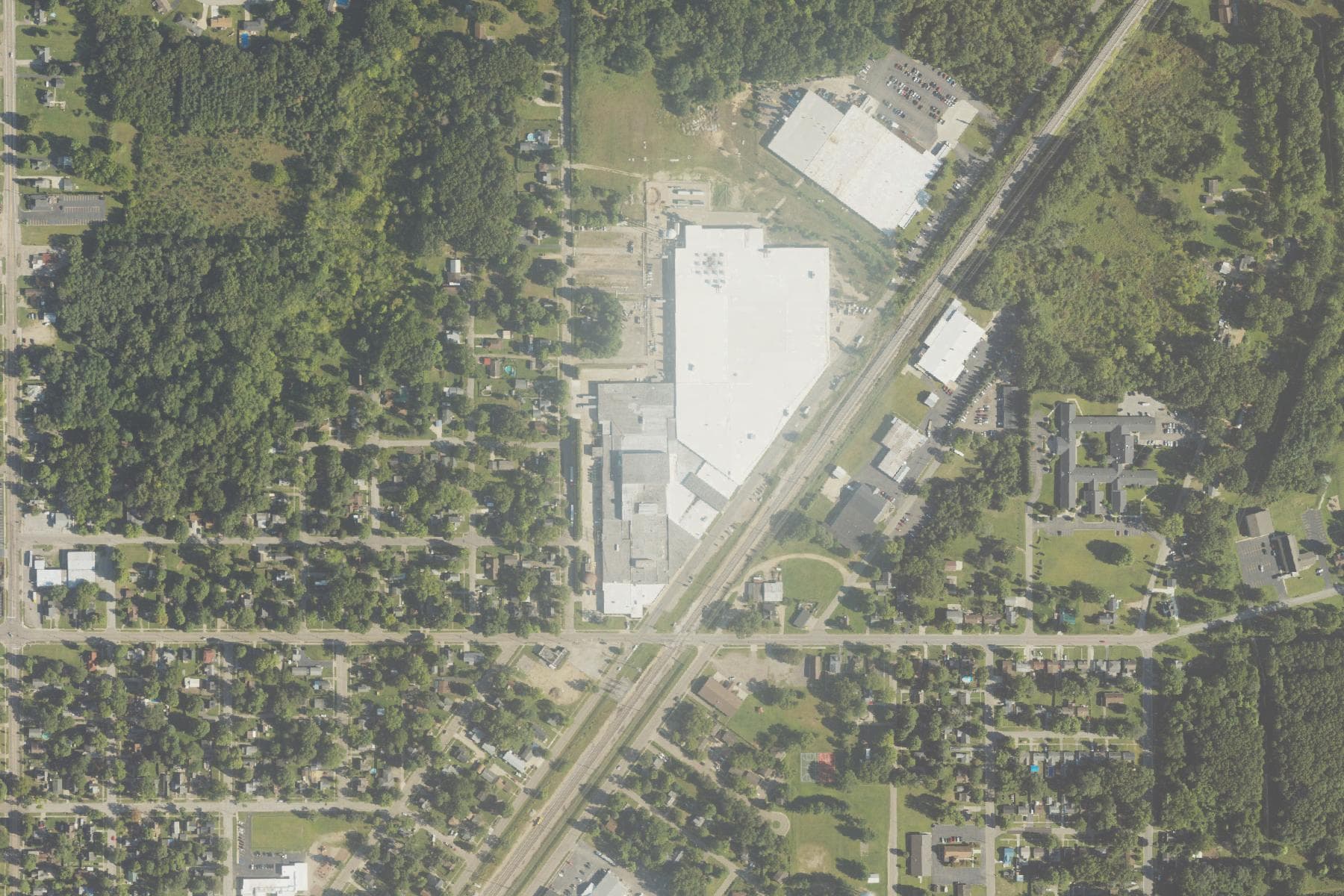
data center in a converted industrial plant in Dowagiac, Michigan, photographed 2022-09-01. A converted industrial plant in the middle of Dowagiac, with houses on the next street in every direction. The noise class action is about what runs inside it now.
USDA Farm Service Agency / USGS National Map, National Agriculture Imagery Program. Cropped from NAIP 0.6 m aerial imagery, scene m_4108608_nw_16_060_20220901. (original)
Michigan at a glance
Emerging
- Market size
- Emerging; large AI campuses are new to the state
- Hot spots
- Saline Township (Washtenaw County) and the Grand Rapids area
- Key operators
- Related Digital building a 1.4 GW campus for OpenAI and Oracle workloads; other proposals circulating
- Documented disputes
- Valenzuela v. Alliance Cloud Services, a federal noise class action over the Dowagiac computing facility on behalf of about 1,300 properties within a mile, filed May 26, 2026, pending; Related Digital v. Saline Township exclusionary zoning suit, settled; a resident's Open Meetings Act intervention was denied in February 2026
- Statewide action
- House Resolution 240 urging a pause on data center incentives
Key Takeaways
- Michigan's landmark data center case flipped the usual script: after Saline Township denied rezoning for a $7 billion OpenAI and Oracle campus in September 2025, developer Related Digital and the landowners sued the township, and the township settled, letting the project proceed with roughly $14 million in community benefits.
- A resident tried to challenge that settlement by intervening with an Open Meetings Act claim, and the court denied intervention in February 2026. Construction went forward.
- The lesson for Michigan neighbors is that saying no is not the end of the fight: developers can and do sue under the Michigan Constitution's limits on exclusionary zoning, so opposition needs a legally durable strategy, not just a denial vote.
- No Michigan homeowner damage suit over data center noise, water, or construction impacts is documented yet, but the legal tools, nuisance, negligence, and ordinance enforcement, are available here as everywhere.
- House Resolution 240 in the Michigan House urged a pause on data center incentives, a sign the statewide policy debate is just beginning.
Data centers in Michigan, from the registry
All 63 sites63 sites on the public record: 28 operating, 3 under construction, 1 permitted, 20 proposed, 11 cancelled. 22 carry documented opposition or litigation. 4.7 GW planned.
By county, alphabetically. Each profile carries capacity, land, utility, water, subsidies, jobs, a timeline, and every source.
Allegan County (1 site)
- Microsoft Dorr Township Data Center · Dorr Township · MicrosoftProposed · Contested
Berrien County (1 site)
- Benton Township AI Data Center (Yore Avenue, near Lake Michigan College) · Benton Charter Township · Undisclosed developerProposed
Calhoun County (1 site)
- Alterra Marshall Technology & Energy Center · Marshall · Alterra DevelopmentProposed · 1.4 GW · Contested
Cass County (1 site)
- Hyperscale Data Dowagiac Campus · Dowagiac · Hyperscale Data, Inc.Under construction · 340 MW · In litigation
Chippewa County (1 site)
- Dafter Township Bitcoin Mine · Dafter · Odessa PartnersOperating · In litigation
Eaton County (2 sites)
- Grand River Power Company Smithville Bitcoin Mine · Eaton Rapids · Grand River Power CompanyOperating · Contested
- Liquid Web Lansing DC3 (2703 Ena Drive) · Lansing · Liquid WebOperating
Genesee County (2 sites)
- Buick City Data Center · Flint · Hillwood-SterlingProposed · Contested
- Otava Mid-Michigan Data Center (5225 Exchange Drive) · Flint Township · OtavaOperating · 1.5 MW
Ingham County (3 sites)
- Mason / Vevay Township Data Center (unnamed developer) · Mason · Undisclosed developer (represented by Dykema Gossett PLLC)Proposed · Contested
- Deep Green Lansing Data Center · Lansing · Deep GreenCancelled · 24 MW · Mixed reception
- ACD.net MetroIX Lansing Data Center (1800 N. Grand River Ave) · Lansing · ACD.net (Advanced Communications & Data)Operating
Kalamazoo County (3 sites)
- Aunalytics Kalamazoo Datacenter · Kalamazoo · AunalyticsOperating
- Harbor Farmz Inference Data Center Conversion (2839 Full Circle Drive) · Kalamazoo · Harbor FarmzProposed
- Pavilion Township Data Center (S 26th St & E N Ave) · Pavilion Township · Franklin PartnersCancelled
Kalkaska County (1 site)
- Kalkaska Go · Rocklocker LLCCancelled · Opposed
Kent County (7 sites)
- Microsoft Gaines Township Data Center · Gaines Township · MicrosoftProposed · Contested
- Microsoft Lowell Township Data Center · Lowell Township · MicrosoftProposed · Mixed reception
- Switch Pyramid Campus · Gaines Township · SwitchUnder construction · 320 MW · Supported
- US Signal MI01 Grand Rapids Data Center · Kentwood · US SignalOperating · 3 MW
- US Signal MI02 Grand Rapids Data Center · Byron Center · US SignalOperating · 0.45 MW
- 123NET DC4 Grand Rapids Data Center · Byron Center · 123NETOperating
- Solon Township Data Center (16-17 Mile Road, US-131) · Solon Township · Undisclosed technology company (site search via The Right Place)Proposed
Livingston County (1 site)
- Howell Township Hyperscale Data Center · Howell · Stantec Consulting Michigan / Randee LLCCancelled · Opposed
Luce County (1 site)
- Newberry Bitcoin Mine (Cloverland Electric service territory) · Newberry · UndisclosedOperating
Macomb County (2 sites)
- Washington Township Technical Campus · Washington · PrologisCancelled · Opposed
- General Motors Enterprise Data Center (Warren Technical Center) · Warren · General MotorsOperating
Manistee County (1 site)
- Stronach Township Data Center (Stronach Road) · Stronach · Tondu CorporationProposed
Marquette County (1 site)
- K.I. Sawyer Data Center (SAGE building / Greenfield Campus) · K. I. Sawyer · Aeris Energy (with Telkite Enterprises)Proposed
Mecosta County (1 site)
- GenH Morley Dam Data Services Facility · Morley · GenHProposed
Monroe County (2 sites)
- Project Cherry Blossom · Frenchtown Township · Cloverleaf InfrastructureProposed · Mixed reception
- Project Ironwood · Dundee · Cloverleaf InfrastructureCancelled
Oakland County (16 sites)
- Wixom Road Data Center Campus · Wixom · Wixom Industrial One / Sansone GroupProposed · Opposed
- Metrobloks Southfield Data Center · Southfield · MetrobloksPermitted · 100 MW · Contested
- Project Flex · Lyon Township · Verrus (Sidewalk Infrastructure Partners)Proposed · Contested
- Springfield Township Data Center Proposal (Andersonville Road & White Lake Road, 84 acres) · Springfield Township · Undisclosed data center development groupCancelled · Contested
- Oakland University Campus Computing Facility · Auburn Hills · Fairmount Properties (with Oakland University)Proposed · 26 MW · Mixed reception
- 123NET Southfield DC1 · Southfield · 123NETOperating · 4 MW
- US Signal MI04 Detroit Data Center · Southfield · US SignalOperating · 0.8 MW
- 123NET Southfield DC2 (Southfield Data Center NW) · Southfield · 123NETOperating
- 123NET Southfield DC3 (Southfield Data Center W) · Southfield · 123NETOperating
- 365 Data Centers Detroit (DT1) · Southfield · 365 Data CentersOperating
- Cogent Troy Data Center (3331 W. Big Beaver Rd) · Troy · Cogent CommunicationsOperating
- EdgeConneX DET01 · Detroit (Oakland County) · EdgeConneXOperating
- Liberty Center One Royal Oak Data Center · Royal Oak · Liberty Center OneOperating
- ManagedWay TYM1 (319 Executive Drive) · Troy · ManagedWay CompanyOperating
- ManagedWay TYM2 (600 Executive Drive) · Troy · ManagedWay CompanyOperating
- US Signal MI05 Detroit Data Center · Auburn Hills · US SignalOperating
Washtenaw County (5 sites)
- Stargate The Barn Campus · Saline Township · OpenAI / Oracle / Related DigitalUnder construction · 1.4 GW · In litigation
- Thor Equities Augusta Township Data Center (Form8tion) · Augusta Township · Thor EquitiesCancelled · Opposed
- U-M / Los Alamos Research Computing Center · Ypsilanti · University of Michigan (with Los Alamos National Laboratory)Proposed · Opposed
- Otava Ann Arbor Data Center · Ann Arbor · OtavaOperating
- York Township Data Center (Platt Road / former Toyota land) · York Township · Sansone GroupCancelled
Wayne County (9 sites)
- Gibraltar Data Center (former McLouth Steel site) · Gibraltar · Raeden (with Cal Realty / Ferragon Corp.)Proposed · 100 MW · In litigation
- Allen Park Data Center · Allen Park · Solstice DataCancelled · 26 MW · Opposed
- Project Cannoli · Van Buren Township · GoogleProposed · 1 GW · Contested
- Shoemaker Street Data Center Proposal (11031 & 11081 Shoemaker St, Detroit east side) · Detroit · Undisclosed developer (respondent to City of Detroit RFP)Cancelled · Contested
- Raeden One Campus Martius (1050 Woodward) · Detroit · RaedenOperating · 3 MW
- US Signal MI03 Detroit Data Center · Belleville · US SignalOperating · 2 MW
- Otava Metro Detroit Data Center · Westland · OtavaOperating · 1.2 MW
- Raeden Detroit Carrier Hotel (615 W Lafayette) · Detroit · RaedenOperating · 0.4 MW
- Cogent Detroit Data Center (1320 3rd St) · Detroit · Cogent CommunicationsOperating
Wexford County (1 site)
- GenH Lake Billings Dam Data Services Facility · Manton · GenHProposed
In this article
Can Michigan residents fight a data center? Yes, but the state's defining case so far is a warning about how these fights can go: when Saline Township rejected rezoning for a $7 billion OpenAI and Oracle campus, the developer sued the township and won a settlement that let construction proceed. Michigan is an emerging market, which means most residents facing a project here are facing their first one, often on farmland that was never expected to host industrial buildings. Here is what happened in Saline Township, what it teaches, and what legal options Michigan neighbors actually have.
The data center footprint in Michigan
Michigan has not historically been a data center state. That changed when Related Digital assembled 575 acres of farmland in Saline Township, southwest of Ann Arbor, for a $7 billion, 1.4 gigawatt campus serving OpenAI and Oracle workloads. A 1.4 gigawatt facility is an enormous electrical load, on the order of a large power plant, and it landed in a township whose entire annual budget is a tiny fraction of what the project promised in revenue.
The Grand Rapids area has also drawn data center interest, and more proposals are expected as AI developers look beyond saturated markets like Northern Virginia for land, water, and power. For most Michigan communities, the Saline Township experience is the reference point for what happens when a hyperscale project arrives.
What residents are dealing with
The Saline Township fight was a land use fight at its core. Residents raised the concerns that recur around every large campus:
- Loss of farmland. The project converts 575 acres of agricultural land to industrial use in a rural township.
- Scale mismatch. A 1.4 gigawatt campus dwarfs the community hosting it, raising questions about noise, traffic, water, and grid impacts that a small township government has limited capacity to evaluate.
- Process concerns. After the township settled the developer's suit, a resident alleged the settlement itself was reached in violation of Michigan's Open Meetings Act, though the court did not allow her into the case.
Because construction is recent, Michigan does not yet have the documented operational complaints, constant mechanical noise, well problems, dust, seen in mature markets. Residents near the Saline site would be wise to start documenting baseline conditions now, before operations begin. Our guide to documenting data center harm explains how.
Lawsuits and disputes in Michigan
Related Digital v. Saline Township (settled). On September 10, 2025, the township board denied rezoning for the 575 acre campus. Related Digital and the landowners then sued in Washtenaw County Circuit Court, arguing the denial amounted to unconstitutional exclusionary zoning under the Michigan Constitution. Rather than litigate, the township settled: the project was allowed to proceed, and the community received roughly $14 million in benefits, about ten times the township's annual budget.
The intervention attempt. Resident Kathryn Haushalter moved to intervene in the case, alleging the settlement was negotiated in violation of the Open Meetings Act. The court denied intervention in February 2026, and construction proceeded.
Read our full case study: the Saline Township data center lawsuit.
Your legal options in Michigan
No Michigan neighbor has yet filed a damage suit against a data center operator, but the standard toolkit applies here:
- Private nuisance and negligence claims if an operating facility subjects your home to serious noise, dust, vibration, or water impacts. These claims seek damages and mitigation, and attorneys typically take strong ones on contingency.
- Zoning participation and appeals. Michigan rezonings and special land use approvals can be challenged, but the Saline case shows the other edge of that sword: denials can be challenged by developers as exclusionary zoning. Either way, the quality of the record made at the hearing matters enormously.
- Open Meetings Act claims when officials deliberate or decide in private. The Saline intervention was denied on procedural grounds, but transparency claims remain a live tool in Michigan when raised promptly and by the right parties.
- Ordinance enforcement. Noise and code complaints to the township or county create a paper trail that supports any later claim.
Deadlines are a real constraint: zoning appeals run on short clocks and damage claims carry a statute of limitations that varies by claim type. An attorney can tell you exactly which deadlines apply to your situation. See our guide on data center lawsuit deadlines.
If you live near a Michigan data center
If you are near the Saline Township site or any proposed Michigan campus, start your record now: photograph current conditions, test your well water before construction ramps up, keep a dated log of noise, dust, and traffic, and put every complaint to local officials in writing.
Then get a legal read on your options. Our free intake form lets you tell us what is happening; where a participating attorney who handles these matters in Michigan is available, we may share your information with them with your consent, but we cannot promise that anyone will contact you.
Michigan cases we are tracking
- Valenzuela v. Alliance Cloud Services: The Dowagiac, Michigan Data Center Noise Class Action
Two Dowagiac, Michigan residents filed a federal class action on May 26, 2026 against Alliance Cloud Services over round-the-clock noise from a 30 megawatt AI and crypto computing facility that has run since March 2022. The proposed class covers about 1,300 properties within a mile. Constant readings of 50 to 62 decibels, a city ordinance capping residential noise at 65 by day and 55 at night, and an operator planning to grow to 340 megawatts: what the case alleges and why it matters.
- Saline Township v. the $7 Billion Data Center: When the Developer Is the One Who Sues
Saline Township, Michigan denied rezoning for a $7 billion, 1.4 gigawatt OpenAI/Oracle data center campus in September 2025. Developer Related Digital and landowners sued the township for exclusionary zoning under the Michigan Constitution, and the township settled for roughly $14 million in community benefits. A resident's Open Meetings Act challenge to the settlement was denied in February 2026. The case is the clearest warning that developers sue too.
Frequently asked questions
Can I sue a data center in Michigan?
Yes, Michigan law allows nuisance, negligence, and property damage claims against a data center whose noise, dust, or other impacts seriously interfere with your home. No such homeowner suit is documented in Michigan yet; the state's landmark case so far was brought by a developer against Saline Township after a rezoning denial. An attorney can evaluate whether your facts support a claim.
What happened with the Saline Township data center lawsuit?
After Saline Township denied rezoning for a $7 billion OpenAI and Oracle campus in September 2025, developer Related Digital and the landowners sued the township, claiming unconstitutional exclusionary zoning. The township settled: the project proceeded and the community received roughly $14 million in benefits. A resident's attempt to intervene with an Open Meetings Act claim was denied in February 2026.
Can a Michigan township legally reject a data center?
Townships control zoning, but a denial can be challenged in court, and in Saline Township the developer sued under the Michigan Constitution's limits on exclusionary zoning and obtained a settlement allowing the project. A denial backed by a strong, well-documented planning rationale is far more defensible than a bare no vote.
Is Michigan doing anything about data centers statewide?
The Michigan House introduced House Resolution 240 urging a pause on data center incentives, reflecting growing debate about whether the state should subsidize these projects. No statewide moratorium or data center specific law is documented as of August 2026.
What should I do before a data center is built near me in Michigan?
Document baseline conditions now: test your well water, photograph your property, and record typical noise levels. Participate in every public hearing in writing, and consult an attorney early, because zoning appeal windows are short and the Saline case shows these disputes can move fast.
Article sources
Our editorial standards require primary sources: government publications, regulator data, company filings, and established industry research.
Is a data center disrupting your home in Michigan?
Tell us what is happening. Where a participating attorney who handles data center cases in your state is available, we may share your information with them with your consent. It is free and carries no obligation, but we cannot promise that anyone will contact you.
- Tell us about your situation
- Independent attorneys
- No obligation
Attorney or law firm handling data center matters? Speak with us