State Guide
Data Centers in Wisconsin: Lawsuits, Disputes, and Your Rights
Wisconsin's data center boom has produced three pending resident suits: the first noise class action against a hyperscale AI data center (Microsoft Mount Pleasant), an environmental review challenge, and an open meetings case over the Vantage Port Washington project. What Wisconsin neighbors can do, and how to tell us about your situation.
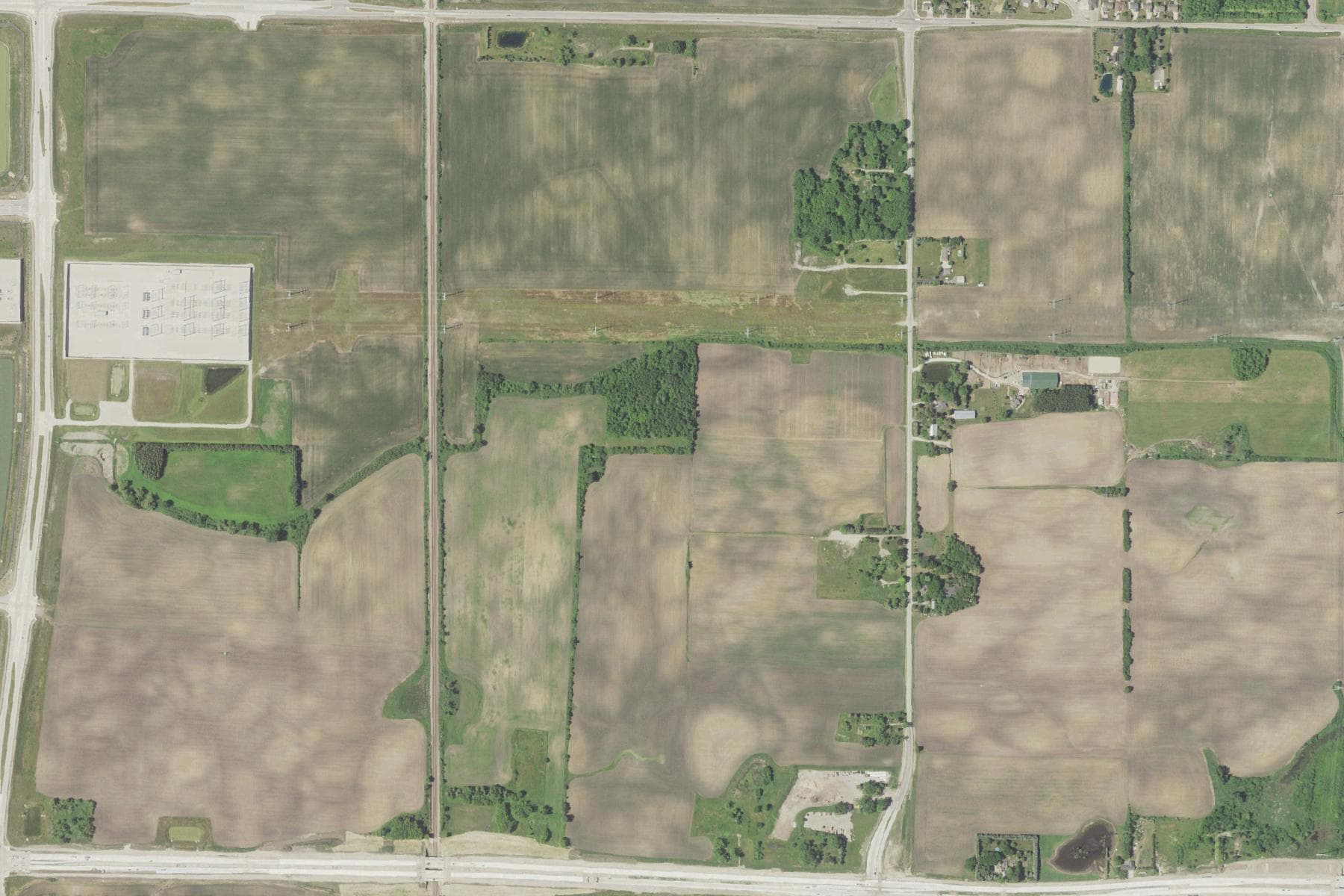
land now occupied by the Fairwater data center in Mount Pleasant, Wisconsin, photographed 2022-06-23. This is the ground in 2022, graded years earlier for the Foxconn project and still farmland. By 2026 a 1.2 million square foot campus stood on it and more than 1,000 households were suing over the sound.
USDA Farm Service Agency / USGS National Map, National Agriculture Imagery Program. Cropped from NAIP 0.6 m aerial imagery, scene m_4208717_se_16_060_20220623. (original)
Wisconsin at a glance
Major market
- Market size
- Major and growing fast; three resident lawsuits pending as of August 2026
- Hot spots
- Mount Pleasant (Microsoft Fairwater), Port Washington (Vantage), Beaver Dam
- Key operators
- Microsoft, Vantage Data Centers
- Documented disputes
- Sturtevant residents' noise class action v. Microsoft; Sierra Club v. Wisconsin DNR over environmental review; Great Lakes Neighbors United open meetings suit; Oracle v. Wisconsin PSC over tariff rules
- Statewide action
- The PSC's large-load tariff collateral requirements are under court challenge by Oracle (June 2026)
Key Takeaways
- Wisconsin is home to what reporting calls the first noise class action against a hyperscale AI data center: three Sturtevant residents suing Microsoft in 2026 over its 1.2 million square foot Fairwater facility in Mount Pleasant, seeking to represent everyone within a 1.5 mile radius, more than 1,000 households.
- The Vantage project in Port Washington drew two suits in 2026: Sierra Club challenging the DNR's decision not to require a full environmental impact statement, and Great Lakes Neighbors United challenging extended closed-door sessions over the developer agreement.
- Even the industry is suing: Oracle took the Wisconsin Public Service Commission to court in June 2026 over collateral requirements in its large-load tariff rules.
- All three resident cases are pending, which means Wisconsin neighbors are writing the playbook in real time: nuisance class actions, environmental review challenges, and open meetings claims.
- Deadlines are short for procedural challenges and statutes of limitations govern damage claims. Document now and get legal advice early.
Data centers in Wisconsin, from the registry
All 40 sites40 sites on the public record: 22 operating, 2 under construction, 3 permitted, 8 proposed, 5 cancelled. 13 carry documented opposition or litigation. 3.0 GW planned.
By county, alphabetically. Each profile carries capacity, land, utility, water, subsidies, jobs, a timeline, and every source.
Brown County (2 sites)
- Cloverleaf Wrightstown Data Center Inquiry (Village of Wrightstown) · Wrightstown · Cloverleaf InfrastructureProposed · Opposed
- Netsonic Green Bay Data Center · Green Bay · Netsonic (Dynamic Ventures LLC)Operating · 4 MW
Calumet County (1 site)
- Ark Data Centers Green Bay (Harrison Campus) · Harrison · Involta (rebranded Ark Data Centers, May 2024)Operating · 20 MW
Columbia County (1 site)
- Stonebridge Pacific AI Data Center (Columbia County) · Pacific · StonebridgeCancelled
Dane County (7 sites)
- QTS Dane County Hyperscale Campus (DeForest) · DeForest · QTS Data CentersCancelled · Opposed
- US Signal WI02 Madison (Fitchburg) · Fitchburg · US SignalOperating · 6 MW
- US Signal WI01 Madison · Madison · US SignalOperating · 0.15 MW
- EdgeConneX Madison (MAD01) · Madison · EdgeConneXOperating
- Epic Hosting Verona Data Center · Verona · Epic Hosting, LLC (Epic Systems)Permitted
- Lumen Madison 1 · Madison · Lumen TechnologiesOperating
- SupraNet Madison Data Center · Madison · SupraNet Communications, Inc.Operating
Dodge County (2 sites)
- Meta Beaver Dam Data Center Campus · Beaver Dam · MetaUnder construction · 220 MW · Mixed reception
- Oppidan Beaver Dam Edge Data Center · Beaver Dam · Oppidan Investment CompanyPermitted
Dunn County (1 site)
- Menomonie Data Center Campus · Menomonie · Undisclosed (Balloonist LLC)Proposed · Contested
Eau Claire County (1 site)
- Data Holdings Eau Claire Data Center · Eau Claire · Data Holdings LLCOperating · 1 MW
Grant County (1 site)
- Cassville Data Center Campus (Undisclosed Developer) · Cassville · Undisclosed (major tech company, NDA not signed)Cancelled · Opposed
Jackson County (1 site)
- Cascade Digital Power Hatfield Bitcoin Mine (Lake Arbutus Hydro) · Hatfield · Cascade Digital Power (Digital Power Optimization)Operating · 6 MW
Kenosha County (1 site)
- Microsoft Kenosha Data Center Campus · Kenosha · MicrosoftProposed · Contested
Kewaunee County (1 site)
- Cloverleaf Carlton Data Center Site (Kewaunee County) · Carlton · Cloverleaf InfrastructureCancelled · Opposed
Milwaukee County (6 sites)
- Data Holdings Milwaukee Data Center · Milwaukee · Data Holdings LLCOperating · 10 MW
- Expedient MKE1 (Milwaukee/Franklin) · Franklin · ExpedientOperating · 1.6 MW
- Aventus Lakes Data Center · Milwaukee · Aventus Data CentersOperating
- CyberLynk Franklin Data Center (MKE1) · Franklin · CyberLynk Network, Inc.Operating
- TierPoint Milwaukee · Milwaukee · TierPointOperating
- Wells Interconnection Data Center (Wells Building) · Milwaukee · Wells InterconnectionOperating
Outagamie County (2 sites)
- Heartland Business Systems Little Chute Data Center · Little Chute · Heartland Business Systems, LLCOperating
- New Era Technology Appleton Data Center · Appleton · New Era TechnologyOperating
Ozaukee County (2 sites)
- Stargate Lighthouse Campus · Port Washington · Vantage Data CentersUnder construction · 902 MW · In litigation
- ISCorp Mequon Data Center (MQS5) · Mequon · ISCorpOperating
Price County (1 site)
- SOS Limited Park Falls Crypto Mine (Former Flambeau River Paper Mill) · Park Falls · SOS LimitedOperating · Contested
Racine County (2 sites)
- Microsoft Mount Pleasant Data Center Campus · Mount Pleasant · MicrosoftOperating · 1 GW · In litigation
- Project Nova Data Center Campus (Caledonia) · Caledonia · MicrosoftCancelled · Opposed
Rock County (3 sites)
- Town of Janesville Data Center Inquiry (Polzin/Fenric Roads) · Janesville · Undisclosed (approached through a San Diego-based consulting firm)Proposed · Opposed
- APECS Data Center Campus (Former GM Assembly Plant) · Janesville · Viridian Acquisitions LLCProposed · 800 MW · Contested
- Project Cornmaze Data Center (Town of Beloit) · Beloit · Cambrin LLCProposed
St. Croix County (1 site)
- Metered Mining Hammond Bitcoin Mining Facility · Hammond · Metered MiningPermitted · 6 MW · Contested
Waukesha County (1 site)
- N15W24250 Riverwood Drive Data Centre (Pewaukee) · Pewaukee · Mapletree Redwood Data Centre TrustOperating
Wood County (3 sites)
- DPO Wisconsin Rapids AI Computing Facility · Wisconsin Rapids · Digital Power OptimizationProposed · 20 MW
- Aventus 715 Data Center · Marshfield · Aventus Data CentersOperating
- Wisconsin Rapids Data Center · Wisconsin Rapids · PCH WI Holdings LLCProposed
In this article
Wisconsin went from a quiet data center market to one of the most legally active states in the country in about two years. Microsoft's enormous Fairwater campus in Mount Pleasant, Vantage's project in Port Washington, and growth around Beaver Dam brought hyperscale construction to communities that had never lived next to it, and three resident lawsuits followed. The one drawing national attention is the Sturtevant residents' class action against Microsoft over Fairwater's noise, reported as the first noise class action against a hyperscale AI data center anywhere. Here is where each fight stands and what you can do if a facility is affecting your home.
The data center footprint in Wisconsin
Three projects define the Wisconsin build-out. In Mount Pleasant, Microsoft's Fairwater data center, a 1.2 million square foot AI facility, rose on land in Racine County originally assembled for a different megaproject. In Port Washington, north of Milwaukee on Lake Michigan, Vantage Data Centers is developing a major campus that has dominated local politics. And Beaver Dam has emerged as a third growth site as operators look beyond the original clusters.
The scale arrived faster than the rules governing it. The state's utility regulator wrote new tariff requirements for giant electrical loads, the Department of Natural Resources had to decide how much environmental review these projects get, and city councils negotiated developer agreements behind closed doors. Every one of those decisions is now being tested in court.
What residents are dealing with
Wisconsin's complaints track the national pattern, with noise at the front:
- Noise in Mount Pleasant. Residents near the Fairwater facility describe constant mechanical noise from the AI campus, the core allegation in the pending class action. The proposed class covers everyone within a 1.5 mile radius, more than 1,000 households.
- Environmental review shortcuts. In Port Washington, DNR staff initially indicated the Vantage project needed a full environmental impact statement, then reversed after developer pushback. That reversal is now the subject of a lawsuit.
- Closed-door dealmaking. Port Washington's Common Council negotiated the Vantage developer agreement in extended closed sessions, prompting an open meetings suit from a residents' group.
- Grid costs. The Public Service Commission's large-load tariff rules, designed to protect other ratepayers, are being challenged in court by Oracle.
For the underlying issues, see our guides on noise claims and fighting a proposed data center.
Lawsuits and disputes in Wisconsin
Sturtevant residents v. Microsoft (2026). Three residents filed a class action over noise from Microsoft's Fairwater data center in Mount Pleasant, seeking to represent everyone living within a 1.5 mile radius, more than 1,000 households. Per reporting, it is the first noise class action against a hyperscale AI data center. The case sounds in private nuisance and is pending. Full coverage: the Mount Pleasant noise class action.
Sierra Club v. Wisconsin DNR (filed July 2026). This suit challenges the DNR's decision not to require a full environmental impact statement for the Vantage data center in Port Washington, after staff initially said one was needed and reversed following developer pushback. Pending.
Great Lakes Neighbors United v. Port Washington Common Council. A residents' group sued the city under the state's open meetings law over extended closed sessions in which the council negotiated the Vantage developer agreement. Pending. Both Port Washington cases are covered in our Port Washington article.
Oracle v. Wisconsin PSC (June 2026). Oracle sued the Public Service Commission over collateral requirements in its large-load tariff rules. It is a reminder that developers litigate too, and that the fight over who pays for grid upgrades is happening at the regulatory level, not through consumer class actions.
Your legal options in Wisconsin
The pending cases map the main paths available to Wisconsin neighbors:
- Nuisance claims, individual or class, for noise, dust, and interference with your home, seeking damages and abatement. The Mount Pleasant case shows the class route; individual suits remain available and are typically taken on contingency.
- Environmental review challenges when an agency skips or shortcuts review, the theory in Sierra Club v. DNR.
- Open meetings and procedural claims when approvals are negotiated out of public view, the theory in the Port Washington council suit. These run on short clocks after the violation.
- Regulatory participation at the PSC on tariffs and cost allocation, where the electricity cost question is actually being decided.
Statutes of limitations govern damage claims and procedural challenges have their own, often much shorter, deadlines; a Wisconsin attorney can confirm which apply to you. Our guide to lawsuit deadlines covers the general rules.
If you live near a Wisconsin data center
Start documenting today: a dated log of noise with times and conditions, decibel readings at your property line, photos and video, and written complaints to the operator and your municipality every time. If you live within a mile and a half of the Fairwater facility, keep records even if you have not complained before; class members benefit from a documented record too.
Then get a legal read on it. Our free intake form lets you tell us what is happening; where a participating attorney who handles these matters in Wisconsin is available, we may share your information with them with your consent, but we cannot promise that anyone will contact you.
Wisconsin cases we are tracking
- The Microsoft Fairwater Noise Class Action: 1,000 Households Take On a Hyperscale AI Campus
Three Sturtevant, Wisconsin residents filed a 2026 class action over noise from Microsoft's 1.2 million square foot Fairwater data center in Mount Pleasant, seeking to represent everyone within 1.5 miles, more than 1,000 households. Per reporting, it is the first noise class action against a hyperscale AI data center. What the case claims, why it matters, and what class membership means for residents.
- The Port Washington Lawsuits: An Environmental Review Reversal and Closed-Door Negotiations Over the Vantage Data Center
Two linked lawsuits challenge the Vantage data center in Port Washington, Wisconsin: Sierra Club v. Wisconsin DNR, filed July 2026 over the agency's reversal on requiring a full environmental impact statement, and Great Lakes Neighbors United v. Port Washington Common Council, an open meetings suit over extended closed sessions negotiating the developer agreement. Both are pending.
Frequently asked questions
Can I sue a data center in Wisconsin?
Yes. Wisconsin residents have three suits pending right now: a class action against Microsoft over noise from the Fairwater data center in Mount Pleasant, a Sierra Club challenge to the environmental review of the Vantage project in Port Washington, and an open meetings suit against the Port Washington Common Council.
Am I part of the Microsoft Mount Pleasant noise class action?
The three Sturtevant plaintiffs are seeking to represent everyone living within a 1.5 mile radius of the Fairwater facility, which reporting puts at more than 1,000 households. The class has not been resolved and the case is pending, so if you live in that radius, keep records of the noise and talk to an attorney about your options.
What is happening with the Port Washington data center lawsuits?
Two cases are pending over the Vantage project. Sierra Club sued the Wisconsin DNR in July 2026 for deciding not to require a full environmental impact statement after staff initially said one was needed. Great Lakes Neighbors United separately sued the Common Council under the open meetings law over extended closed sessions negotiating the developer agreement.
What can I do about data center noise in Wisconsin?
Document it: dated logs, decibel readings at your property line, and written complaints to the operator and your municipality. A documented record supports an individual nuisance claim, strengthens your position in any class action, and gives local officials a reason to act. An attorney can tell you which route fits your situation.
Will data centers raise my electric bill in Wisconsin?
The Public Service Commission wrote large-load tariff rules intended to make giant facilities cover their own grid costs, and Oracle sued the PSC over those rules in June 2026. The outcome will shape who pays for the build-out, so the rate fight is live, but it is regulatory litigation, not a consumer class action.
Article sources
Our editorial standards require primary sources: government publications, regulator data, company filings, and established industry research.
- 1.Wisconsin Examiner: Mount Pleasant residents file class action suit over Microsoft data center noise (2026)
- 2.WPR: Lawsuit challenges Wisconsin DNR environmental review of Port Washington data center
- 3.FOX6: Port Washington data center lawsuit alleges open meetings violations
- 4.The Daily Reporter: Oracle sues Wisconsin Public Service Commission over data center rules (June 2026)
Is a data center disrupting your home in Wisconsin?
Tell us what is happening. Where a participating attorney who handles data center cases in your state is available, we may share your information with them with your consent. It is free and carries no obligation, but we cannot promise that anyone will contact you.
- Tell us about your situation
- Independent attorneys
- No obligation
Attorney or law firm handling data center matters? Speak with us