State Guide
Data Centers in Kansas: Lawsuits, Disputes, and Your Rights
Kansas is a growing data center market, with Google and Meta projects in the Kansas City metro and Google's Project Helium approved in Barber County on August 31, 2026 by development agreement. The state's first data center suit is a city suing its own residents, and no resident suit against an operator is documented. This page explains what that means, what Kansas neighbors should watch for, and what legal options they have if harms emerge.
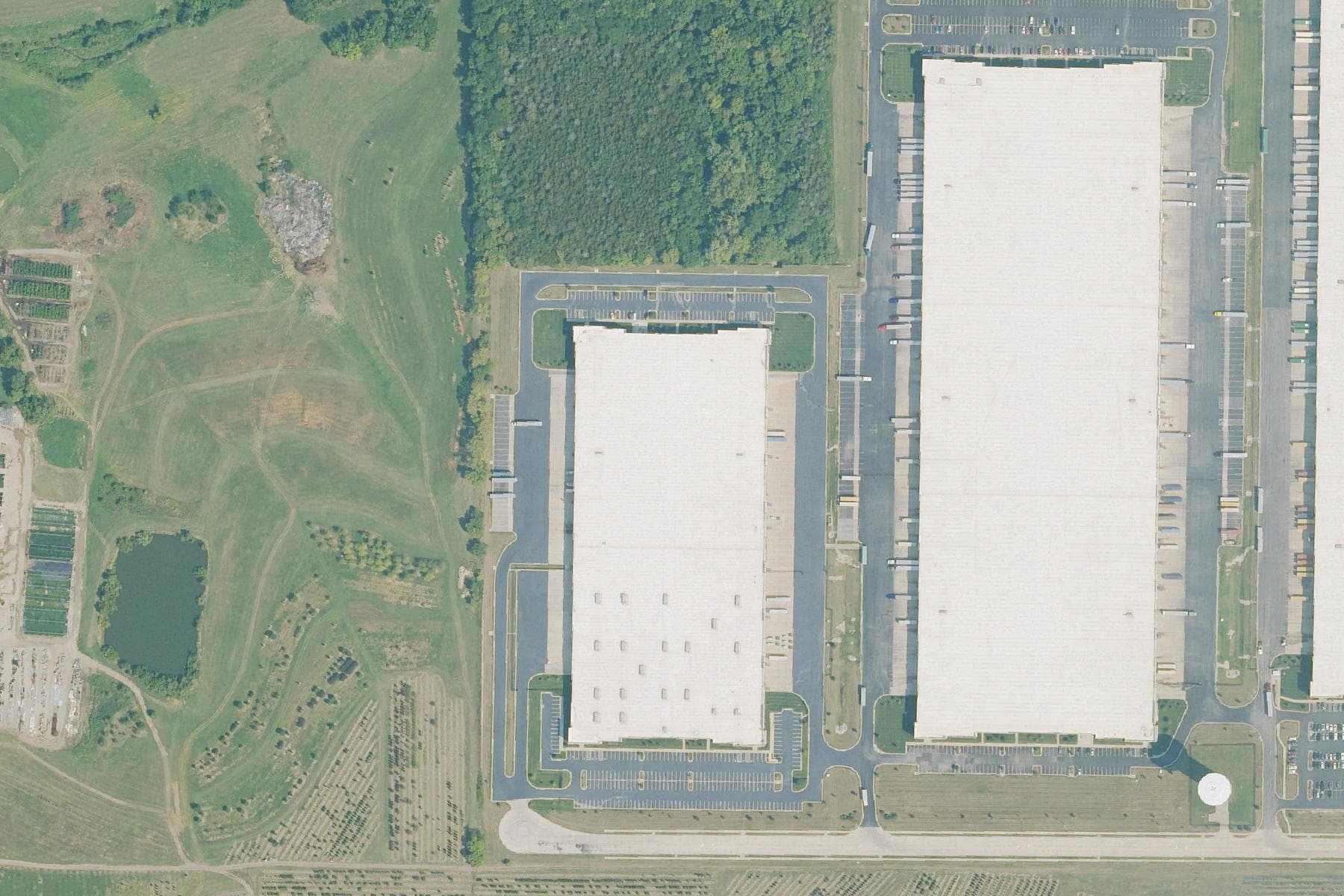
warehouse proposed for data center conversion in Edgerton, Kansas, photographed 2023-08-17. The Edgerton dispute is not about a parcel. The city sued its own residents over a petition for a citywide ordinance. This is the existing warehouse in Logistics Park Kansas City that the proposed conversion would occupy.
USDA Farm Service Agency / USGS National Map, National Agriculture Imagery Program. Cropped from NAIP 0.3 m aerial imagery, scene m_3809409_sw_15_030_20230817. (original)
Kansas at a glance
Fast growth
- Market size
- Growing; hyperscale projects concentrated on the Kansas side of the Kansas City metro
- Hot spots
- The Kansas City metro; Barber County, where Google's Project Helium was approved near Sharon on August 31, 2026
- Key operators
- Google (Kansas City metro and Project Helium in Barber County) and Meta
- Documented disputes
- City of Edgerton v. Schmidt, Public Trust Collective, and others, filed August 14, 2026 in Johnson County District Court: the city is suing its own residents to void a citizen petition that would ban high-impact data centers. Barber County, August 31, 2026: commissioners approved Google's Project Helium by development agreement, 2 to 0 with one abstention, in a county whose website lists no zoning office; no suit filed
- Statewide action
- None statewide; Saline County adopted a three year moratorium through March 1, 2029, and Riley and Sedgwick counties have paused, per the Programs.com tracker
Key Takeaways
- Kansas is a growing data center market, with Google and Meta building in the Kansas City metro, and on August 31, 2026 Barber County approved Google's 1.7 million square foot Project Helium near Sharon by development agreement, 2 to 0 with one abstention.
- No resident suit against a data center operator is documented in Kansas as of September 2026; the only filed case is Edgerton's suit against its own petitioners, and no statewide data center legislation is documented.
- Right across the state line, Missouri shows how fast that can change: Festus residents filed a Sunshine Law suit over a $6 billion project, and Peculiar blocked a $1.5 billion campus through zoning and elections.
- Kansas residents have the standard toolkit if harms emerge: nuisance and property damage claims, zoning participation and appeals, open meetings challenges, and ordinance enforcement.
- Neighbors of new sites should document baseline conditions during construction, the phase that has generated well and property damage claims in other states.
Data centers in Kansas, from the registry
All 17 sites17 sites on the public record: 5 operating, 1 under construction, 2 permitted, 7 proposed, 2 cancelled. 7 carry documented opposition or litigation. 2.0 GW planned.
By county, alphabetically. Each profile carries capacity, land, utility, water, subsidies, jobs, a timeline, and every source.
Barber County (2 sites)
- Google Project Helium (Barber County) · Sharon · GooglePermitted · Contested
- Google Data Center (Project Helium) · Sharon · GoogleProposed
Bourbon County (1 site)
- Evolution Technology Bitcoin Mine (Bourbon County) · Uniontown · Evolution TechnologyOperating · Opposed
Jefferson County (1 site)
- Crypto Colo Center McLouth Data Center (proposed), cancelled · McLouth · Crypto Colo Center CorpCancelled · Opposed
Johnson County (8 sites)
- DAMAC Digital Logistics Park Data Center · Edgerton · DAMAC Digital Solutions Kansas, LLCPermitted · In litigation
- Beale Infrastructure Gardner Campus · Gardner · Beale InfrastructureProposed · Opposed
- Beale Project Pilot (De Soto) · De Soto · Beale InfrastructureUnder construction · Mixed reception
- DataBank MCI3 South Lake Campus Data Center · Lenexa · DataBankOperating · 12.75 MW
- DataBank MCI2 Pine Ridge Data Center · Overland Park · DataBankOperating · 2 MW
- Data Center Proposal at 191st & Renner, Spring Hill, cancelled · Spring Hill · Bullock Capital / Colossus Data Center AdvisorsCancelled
- QTS Overland Park Data Center (OVP1) · Overland Park · QTS Data CentersOperating
- TierPoint Kansas City - Lenexa · Lenexa · TierPointOperating
Labette County (1 site)
- HyperDataGrid Parsons Data Center · Parsons · HyperDataGridProposed · 20 MW
Leavenworth County (1 site)
- Project Bluestem · Tonganoxie · Cloverleaf InfrastructureProposed · 1.2 GW · Opposed
Lyon County (1 site)
- Flint Hills Digital Campus · Emporia · Kanza Park Place LLCProposed
Wyandotte County (2 sites)
- Project Red Wolf · Kansas City · Red Wolf DCD Properties LLCProposed · 600 MW · In litigation
- Project Yardbird · Kansas City · PowerTransitionsProposed · 200 MW
In this article
The first data center lawsuit in Kansas is a strange one: in August 2026 the City of Edgerton sued its own residents to void a verified citizen petition that would ban high-impact data centers, before it could reach a vote. Beyond that case, Kansas has no documented resident suit against an operator. Two weeks later, on August 31, rural Barber County approved Google's Project Helium, a 1.7 million square foot data center near Sharon, by development agreement rather than zoning, in a county whose website lists no zoning office. Kansas is a growing market, with Google and Meta projects in the Kansas City metro, and the two most instructive data center fights in the region happened just across the state line in Missouri, where Festus residents took a $6 billion project to court and Peculiar blocked one entirely. Here is what Kansas hosts, what its neighbors' experience teaches, and what options Kansas residents have if a project starts affecting their homes.
The data center footprint in Kansas
Kansas's data center growth is a Kansas City story. Google and Meta have both placed major projects on the Kansas side of the metro, part of the broader Midwest wave driven by available land, wind power, fiber routes, and state and local incentives. For the communities involved, these are among the largest construction projects and electrical loads they have ever hosted.
The footprint is now reaching rural Kansas. On August 31, 2026, Barber County commissioners approved agreements with Google for Project Helium, a 1.7 million square foot air cooled data center on about 900 acres northwest of Sharon, about eight miles east of Medicine Lodge, with construction expected in early 2027 and operations in 2030. The county's press release projects the project's assessed value at roughly the entire county's current tax base.
The market is young enough that most facilities are in construction or early operation, which means the state's data center story is still being written, including whether the industry's arrival stays as quiet as it has been.
What residents are dealing with
Kansas has one documented data center fight, the Edgerton petition case described below, and no documented resident suit against an operator. The issues worth watching are the ones playing out in comparable markets, several of them next door:
- Approval transparency. In Festus, Missouri, residents sued over a $6 billion project approved through what they allege were serial private briefings designed to evade the state's open meetings law. Kansas has its own open meetings act, and the same scrutiny applies to any Kansas approval.
- Rapid rezonings. In Peculiar, Missouri, the backlash to a fast-moving 504 acre project led the city to remove data centers from its zoning code entirely, and voters replaced half the council.
- Construction and operations impacts. Noise, dust, truck traffic, and water demands are the recurring complaints wherever hyperscale campuses rise near homes, and they are the raw material of the nuisance suits now pending in Texas, Wisconsin, and Virginia.
- Grid costs. Serving hyperscale load requires utility investment, and whether households share that cost is the emerging fight in every growth state. See our guide on data centers and your electric bill.
Lawsuits and disputes in Kansas
City of Edgerton v. Schmidt (filed August 14, 2026). After residents filed a citizen petition on July 15, 2026 to ban high-impact data centers, and after the Johnson County Election Office verified the signatures, the City of Edgerton sued the petitioners in Johnson County District Court to have the petition declared void, arguing it rests on false claims about who supplies water and power to Logistics Park. A DAMAC Digital Solutions data center is already converting a building there. It is the first case in the country in which a government sued residents to stop a data center ban from reaching the ballot. Our full report on the Edgerton case has the details. Elsewhere in the state, Saline County adopted a three year moratorium and Riley and Sedgwick counties have paused, according to the Programs.com tracker.
Barber County, Project Helium (approved August 31, 2026, no suit filed). The Barber County Commission approved development, road use, and decommissioning agreements with Google by a 2 to 0 vote with one abstention; KAKE reported the contract was finalized in executive session and that dozens of residents confronted commissioners afterward. The approval was a contract, not a rezoning or permit, and the county's website lists no planning or zoning office, which changes what residents can challenge and how fast the clocks under K.S.A. 12-760 and the Kansas Open Meetings Act run. Our report on the Barber County approval walks through the terms and the statutes.
The nearest litigation is in Missouri, minutes away: the pending Festus Sunshine Law suit seeks to void a $6 billion project's rezoning over transparency violations, and Peculiar's zoning reversal killed a project with no suit at all. Both are directly relevant to how a Kansas City metro fight would likely unfold on the Kansas side, where similar open meetings and zoning tools exist.
Your legal options in Kansas
If a Kansas data center harmed your home or a proposal threatened your neighborhood, your options would include:
- Private nuisance and property damage claims for serious noise, dust, vibration, or water interference, seeking damages and mitigation, typically handled on contingency.
- Zoning participation and appeals. Neighbors can oppose rezonings and special permits at hearings and seek judicial review of defective approvals on short deadlines.
- Open meetings and records challenges. Kansas's open meetings and records laws let citizens challenge approvals reached through closed deliberations, the same family of claim now pending in Festus across the state line.
- Ordinance enforcement. Written noise and code complaints to the city or county create the record any later claim is built on.
Damage claims carry a statute of limitations that varies by claim type, commonly a few years; a Kansas attorney can confirm the deadlines for your situation.
If you live near a Kansas data center
If a project is proposed or under construction near you in the Kansas City metro, act while it is cheap to do so: request approval records and meeting minutes, keep every notice, photograph baseline conditions, test your well if you have one, and log noise, dust, and traffic with dates.
If something is already affecting your home, get a professional read. Our free intake form lets you tell us what is happening; where a participating attorney who handles these matters in Kansas is available, we may share your information with them with your consent, but we cannot promise that anyone will contact you.
Kansas cases we are tracking
- City of Edgerton v. Its Own Residents: The Kansas Lawsuit to Kill a Citizen Data Center Ban
On August 14, 2026, the City of Edgerton, Kansas sued the residents behind a citizen petition that would ban high-impact data centers, asking a Johnson County judge to declare the petition void before it can reach a vote. The county had already verified the signatures. The city says the petition rests on false claims about water and power; the petitioners say the city is trying to stop a vote it might lose. A DAMAC data center is already moving into Logistics Park. What the case says about who gets to decide.
- Project Helium in Barber County, Kansas: Google's Data Center Was Approved by Development Agreement, Not Zoning. Here Is What That Leaves Residents.
On August 31, 2026 the Barber County Commission approved Google's Project Helium by development agreement, 2 to 0 with one abstention, in a county with no zoning office. What the agreement promises, why the usual 30 day zoning challenge may not apply, and which clocks under Kansas open meetings law still run.
Frequently asked questions
Can I sue a data center in Kansas?
Yes, if a facility's noise, dust, or other impacts seriously interfere with your home, Kansas law allows nuisance, negligence, and property damage claims. No such suit is documented in Kansas as of August 2026, but the same claims are being litigated in neighboring states right now. An attorney can evaluate your specific facts.
Where are the data centers in Kansas?
The growth is concentrated in the Kansas City metro, where Google and Meta have placed major projects on the Kansas side of the state line, and Google's Project Helium was approved in Barber County near Sharon on August 31, 2026. The market is young, with most facilities in construction or early operation.
Has anyone sued a data center in Kansas?
No resident suit against a data center operator is documented as of September 2026. The only filed Kansas case runs the other way: the City of Edgerton sued its own residents over a data center ban petition in August 2026. The closest resident cases are across the state line in Missouri: the pending Festus Sunshine Law suit over a $6 billion project, and the Peculiar zoning reversal that blocked a $1.5 billion campus without litigation.
How do I fight a proposed data center in Kansas?
Engage before approval: attend and speak at hearings, submit written opposition, and request the project records under the Kansas open records act. Approvals reached through flawed or closed processes can be challenged, but post-approval deadlines are short, so involve an attorney early.
What should Kansas neighbors of a new data center document?
Baseline conditions before and during construction: a well water test, photos of your property and roads, and a dated log of noise, dust, and truck traffic. Written complaints to local officials create an official record. That documentation is what turns a future problem into a provable claim.
Article sources
Our editorial standards require primary sources: government publications, regulator data, company filings, and established industry research.
Is a data center disrupting your home in Kansas?
Tell us what is happening. Where a participating attorney who handles data center cases in your state is available, we may share your information with them with your consent. It is free and carries no obligation, but we cannot promise that anyone will contact you.
- Tell us about your situation
- Independent attorneys
- No obligation
Attorney or law firm handling data center matters? Speak with us