Lawsuit Tracker
City of Edgerton v. Its Own Residents: The Kansas Lawsuit to Kill a Citizen Data Center Ban
On August 14, 2026, the City of Edgerton, Kansas sued the residents behind a citizen petition that would ban high-impact data centers, asking a Johnson County judge to declare the petition void before it can reach a vote. The county had already verified the signatures. The city says the petition rests on false claims about water and power; the petitioners say the city is trying to stop a vote it might lose. A DAMAC data center is already moving into Logistics Park. What the case says about who gets to decide.
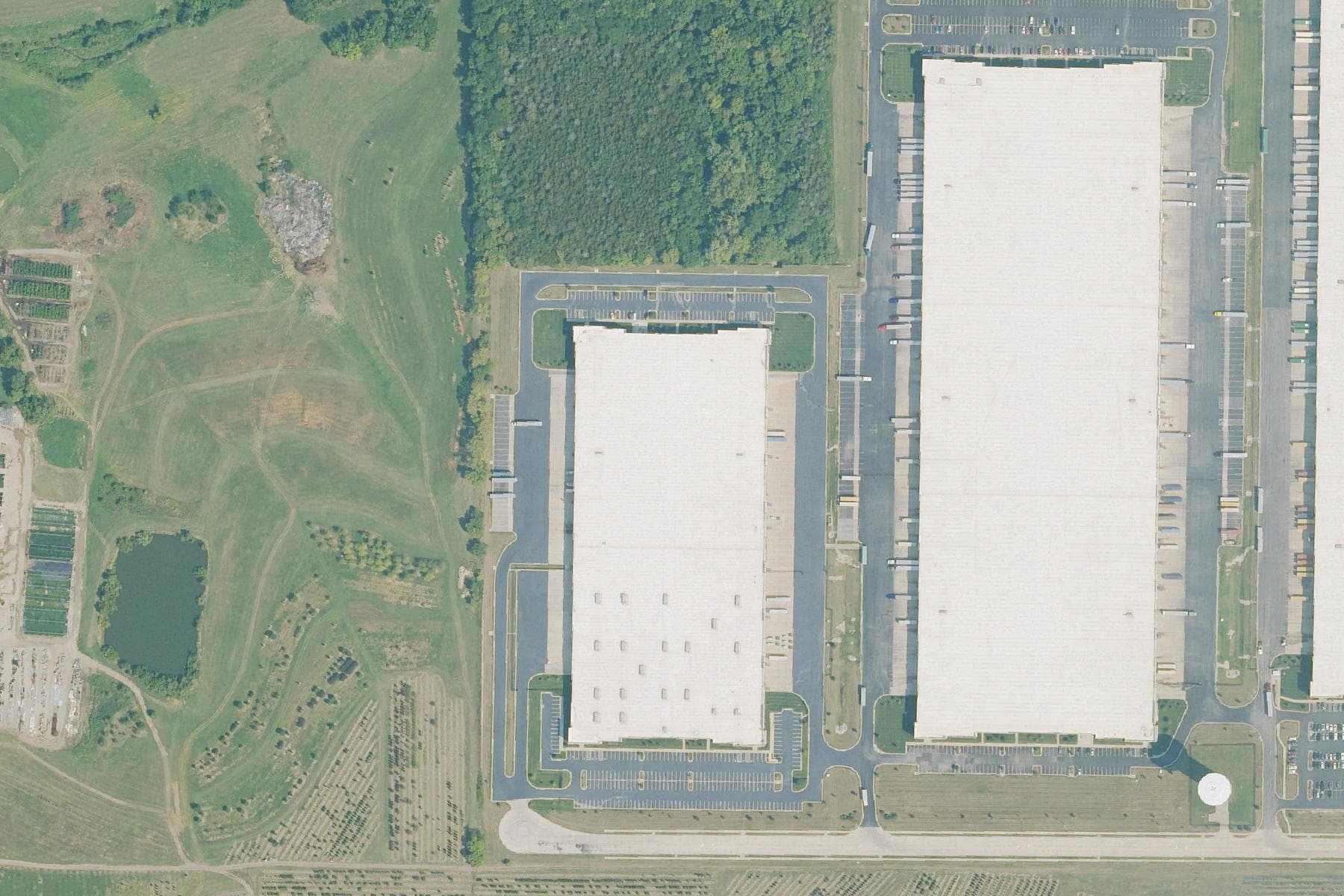
warehouse proposed for data center conversion in Edgerton, Kansas, photographed 2023-08-17. The Edgerton dispute is not about a parcel. The city sued its own residents over a petition for a citywide ordinance. This is the existing warehouse in Logistics Park Kansas City that the proposed conversion would occupy.
USDA Farm Service Agency / USGS National Map, National Agriculture Imagery Program. Cropped from NAIP 0.3 m aerial imagery, scene m_3809409_sw_15_030_20230817. (original)
Case facts
Dismissed
- Status
- Dismissed. Johnson County District Judge Stephanie Goodenow granted the residents' motion to strike under Kansas's Public Speech Protection Act, per KSHB 41 on September 5, 2026; a separate suit by a petitioner's husband against the city clerk has a show cause hearing September 24, 2026 on whether the petition goes on the November ballot
- Case
- City of Edgerton v. Carrie Schmidt, Public Trust Collective, Inc., Kimberly Twente, and others
- Court
- Johnson County District Court, Kansas
- Filed
- August 14, 2026
- The petition
- Filed July 15, 2026; would ban high-impact data centers; signatures verified as sufficient by the Johnson County Election Office; county legal staff confirmed it conformed to state requirements
- The project
- DAMAC Digital Solutions Kansas, LLC converting an existing building at Logistics Park, adjacent to the BNSF intermodal facility; City Council approved the site plan appeal 4 to 0 on July 16, 2026
- Relief sought
- Declaratory judgment voiding the petition and a permanent injunction blocking the ordinance from a vote; no money damages or fees
- The ruling
- Judge Stephanie Goodenow granted the defendants' motion to strike and dismissed the city's case, releasing Carrie Schmidt, Kimberly Twente and the Public Trust Collective under Kansas's Public Speech Protection Act. The court wrote that the city's evidence was "conclusory, verified pleading, and therefore insufficient at this stage," per KSHB 41. The city called it a procedural decision that did not answer whether the ordinance is legally eligible to proceed
- What is still open
- Eric Twente's separate suit against the Edgerton city clerk argues the petition is legislative, not administrative, and asks that it be placed on the November ballot. The judge denied an emergency order but ordered the city to show cause why the petition should not be on the ballot; arguments are set for September 24, 2026, per KSHB 41
Key Takeaways
- Update, September 5, 2026: Johnson County District Judge Stephanie Goodenow granted the residents' motion to strike and dismissed the city's case under Kansas's Public Speech Protection Act, per KSHB 41. A separate suit by a petitioner's husband against the city clerk, seeking to put the petition on the November ballot, has a show cause hearing September 24, 2026.
- The City of Edgerton, Kansas sued residents Carrie Schmidt and Kimberly Twente, the Public Trust Collective, and others on August 14, 2026 in Johnson County District Court, asking a judge to void a citizen petition to ban high-impact data centers before it can reach voters.
- The petition, filed July 15, 2026, had already cleared its procedural hurdles: the Johnson County Election Office verified the signatures as sufficient and the county's legal department found it conformed to state requirements.
- The city argues the petition is built on false factual claims: that the city does not supply water to Logistics Park (Rural Water District No. 7 does), does not operate the electric utility (Evergy does), has received no new data center construction application, has permitted data center uses under its zoning since April 2025, and that the proposed ordinance would illogically exempt other industrial projects with greater resource demands.
- The city seeks only a declaratory judgment and an injunction; its attorney says it is not asking for damages or fees. A DAMAC Digital Solutions data center is already converting a building at Logistics Park after the council approved the site plan 4 to 0 on July 16.
- It is the first case on this tracker in which a government is the plaintiff and residents are the defendants, and it tests whether a city can stop a data center ban from reaching the ballot by litigating the accuracy of the petition's premises.
In this article
The city lost. On September 5, 2026, KSHB 41 reported that Judge Stephanie Goodenow had granted the residents' motion to strike and dismissed the case; what follows is the record of how it was filed, and what is still open. Most data center lawsuits are residents suing a government. In Edgerton, Kansas, the government sued the residents. On August 14, 2026, the City of Edgerton filed suit in Johnson County District Court against Carrie Schmidt, Kimberly Twente, the Public Trust Collective, Inc., and others, the people behind a citizen petition, filed July 15, that would ban high-impact data centers in the city. The Johnson County Election Office had already verified the petition's signatures as sufficient and county legal staff had found it conformed to state requirements. The city's suit asks a judge to declare the petition void and invalid and to permanently enjoin the ordinance from ever reaching a vote, on the ground that the petition rests on claims about city water and power that the city says are simply untrue. Meanwhile, DAMAC Digital Solutions Kansas is already converting a building at Logistics Park, next to the BNSF intermodal yard, into a data center. The case is a test of who decides: the voters who signed, or the court the city asked to stop them.
The petition, and what it cleared
Edgerton sits at the southwest edge of the Kansas City metro and is best known for Logistics Park Kansas City, the sprawling industrial district built around the BNSF Railway intermodal facility. In 2026, DAMAC Digital Solutions Kansas, LLC moved to convert an existing building in the park into a data center. On July 16, the City Council approved the site plan on appeal, 4 to 0.
The day before that vote, on July 15, residents filed a citizen initiative petition proposing an ordinance to ban high-impact data centers in the city. The petition's stated purposes were to prevent industrial nuisances, protect residents' property, and preserve the city's municipal resource capacity. Under Kansas law, a valid initiative petition with sufficient signatures forces the governing body either to adopt the ordinance or to put it to the voters. The Johnson County Election Office verified the signatures as sufficient. The county's legal department confirmed the petition conformed to state requirements.
That left the city with three options: adopt the ban, hold the election, or go to court. It chose court.
The city's argument: a petition built on false premises
Edgerton's complaint does not argue that residents have no right to petition. It argues that this petition is legally void because its factual premises are false, and a ballot measure that misleads voters about what the city controls cannot lawfully proceed. The city lists its objections point by point:
- Water. The city does not provide water to Logistics Park; Rural Water District No. 7 does. A petition premised on protecting the city's water capacity, the city says, misstates who supplies it.
- Power. The city does not own or operate an electric utility; Evergy provides power. The same objection applies.
- The application. The city says it has received no application for new data center construction; the DAMAC project converts an existing building.
- Zoning. Data center uses have been permitted under the city's zoning since a determination in April 2025, so the ban would reverse an existing entitlement.
- Logic. The proposed ordinance would exempt other industrial projects with greater water and power demands than a data center, which the city calls illogical.
The relief sought is narrow in form and sweeping in effect: a declaratory judgment that the petition is void and invalid, and a permanent injunction blocking the ordinance from a vote or passage. City Attorney Todd Luckman emphasized that the city is not asking for any financial compensation, attorney's fees, or monetary damages from the residents it sued. No hearing date had been set as of the filing.
The residents, and the pattern across the country
The named defendants, Carrie Schmidt, Kimberly Twente, and the Public Trust Collective, are the organizers of a petition that gathered enough verified signatures in a city of a few thousand people to force the question. Their position, in local reporting, is that the city is using litigation to stop a vote it might lose, and that the questions the petition raises, about nuisance, property, and resource capacity, belong to the voters regardless of which utility holds the contract.
The fight fits a national pattern that has moved fast in 2026. Local moratoriums and bans have spread to 40 states, and the industry and its allies have begun suing to overturn them: a lawsuit forced Hill County, Texas to rescind its moratorium within weeks; developers are litigating bans in Smithfield, Rhode Island and Lordstown, Ohio, the latter now at the Ohio Supreme Court; and a Kentucky industrial group sued Cave City over its pause. Edgerton is the mirror image, a city acting preemptively against its own residents' ban, and our moratorium tracker follows the whole wave. Elsewhere in Kansas, Saline County has adopted a three year moratorium and Riley and Sedgwick counties have paused as well.
What this case means for you
If you are organizing a petition, referendum, or ballot measure on data centers, Edgerton is the case that shows how a city can fight back, and how to petition-proof your effort:
- Get every fact right. The city's entire case is that the petition misstated who supplies water and power. Confirm utility providers, zoning status, and pending applications from public records before you draft.
- Draft the ordinance narrowly and consistently. The city's logic objection, that the ban exempts heavier industrial users, is the kind of drafting gap a court may weigh.
- Expect litigation and budget for it. The county verified the petition and the city sued anyway. Organizers named as defendants need counsel even when, as here, no damages are sought.
- Know the timeline. A petition filed the day before a site plan approval is a petition that arrived late. Watch council agendas from the first rumor of a project.
Our guide to fighting a proposed data center covers moratoriums, petitions, and the approval process. If a project is already moving near you and the fight has turned legal, our free case review connects you with an independent attorney in our network who handles data center cases in your state, at no cost and with no obligation.
Frequently asked questions
Why is the City of Edgerton suing its residents?
On August 14, 2026, the City of Edgerton, Kansas sued Carrie Schmidt, Kimberly Twente, the Public Trust Collective, and others in Johnson County District Court to void a citizen petition, filed July 15, that would ban high-impact data centers. The city argues the petition is built on false claims, including that the city supplies water and power to Logistics Park when Rural Water District No. 7 and Evergy do, and asks the court to block the ordinance from reaching a vote. It seeks no damages.
Did the Edgerton data center petition have enough signatures?
Yes. The Johnson County Election Office verified the signatures as sufficient, and the county's legal department confirmed the petition conformed to state requirements. The city's lawsuit challenges the petition's factual premises rather than its signatures.
Is there a data center in Edgerton, Kansas?
DAMAC Digital Solutions Kansas, LLC is converting an existing building at Logistics Park, adjacent to the BNSF intermodal facility, into a data center. The City Council approved the site plan appeal 4 to 0 on July 16, 2026. The city says data center uses have been permitted under its zoning since April 2025.
Can a city block a citizen petition to ban data centers?
That is the question the Edgerton case tests. Cities can challenge petitions on procedural grounds, and Edgerton is asking a court to go further and void a petition because its factual claims are allegedly false. Kansas law generally requires a governing body to adopt a valid initiative ordinance or put it to voters. An attorney can advise on the initiative rules where you live.
Article sources
Our editorial standards require primary sources: government publications, regulator data, company filings, and established industry research.
- 1.KSHB 41: Judge dismisses Edgerton, Kansas, lawsuit against citizens in data center debate (September 2026)
- 2.KCTV5: Edgerton calls citizen petition void and invalid, files suit to block data center ban (August 14, 2026)
- 3.Programs.com: Data center moratoriums by state, tracker and statistics (as of August 26, 2026)
Related cases
- Festus, Missouri: The Sunshine Law Lawsuit Over a $6 Billion Data Center
Wake Up JeffCo and four property owners filed a 12-count, 54-page lawsuit against the City of Festus and developer CRG over a $6 billion data center, alleging Missouri Sunshine Law violations including serial private briefings and a development agreement released the Friday before a Monday vote. The suit seeks to void the rezoning and the development contract.
- Project Blue in Pima County: The Open Meetings Suit Over a Data Center Tucson Rejected
After the Tucson City Council rejected the $3.6 billion Project Blue data center campus in August 2025, the Pima County Board of Supervisors approved a roughly 300 acre land sale for $20.875 million plus rezoning. Opponents sued the county in January 2026 alleging open meeting law violations, including an undisclosed rezoning purpose and land sale negotiations kept secret from 2023 to 2025. The Superior Court dismissed the case in April 2026; plaintiffs say they will appeal.
- Bessemer's Project Marvel Lawsuit: How a Dismissed Case Still Forced a Do-Over
Homeowners near Rock Mountain Lake Road sued Bessemer, Alabama in April 2025 over the rezoning for Project Marvel, a $14.5 billion, 18-building data center campus. A TRO blocked the council vote, the city restarted the process, and the case was dismissed by joint stipulation on June 22, 2026. What the case won even in losing.
- The St. Louis Armory Data Center Lawsuit: Residents and Advocates Take a $3 Billion Permit to Court
On August 28, 2026, St. Louis residents, the Missouri Workers' Center, and the Missouri Coalition for the Environment sued the City of St. Louis, its Board of Adjustment, and developer David Lambiaso over the conditional use permit for a $3 billion hyperscale data center near the Armory in Midtown. After roughly 11 hours of public comment, the board had rejected the appeals; the suit says it acted arbitrarily and contrary to law and that a data center is not a permitted conditional use in the district. What the case argues and why urban data center permits are the next front.
Is a data center disrupting your home?
Tell us what is happening. We will connect you with an independent attorney who handles data center cases in your state, free and with no obligation. These cases are commonly taken on contingency, so there are typically no upfront fees.
- Free case review
- Independent attorneys
- No obligation
Attorney or law firm handling data center matters? Speak with us