Lawsuit Tracker
The St. Louis Armory Data Center Lawsuit: Residents and Advocates Take a $3 Billion Permit to Court
On August 28, 2026, St. Louis residents, the Missouri Workers' Center, and the Missouri Coalition for the Environment sued the City of St. Louis, its Board of Adjustment, and developer David Lambiaso over the conditional use permit for a $3 billion hyperscale data center near the Armory in Midtown. After roughly 11 hours of public comment, the board had rejected the appeals; the suit says it acted arbitrarily and contrary to law and that a data center is not a permitted conditional use in the district. What the case argues and why urban data center permits are the next front.
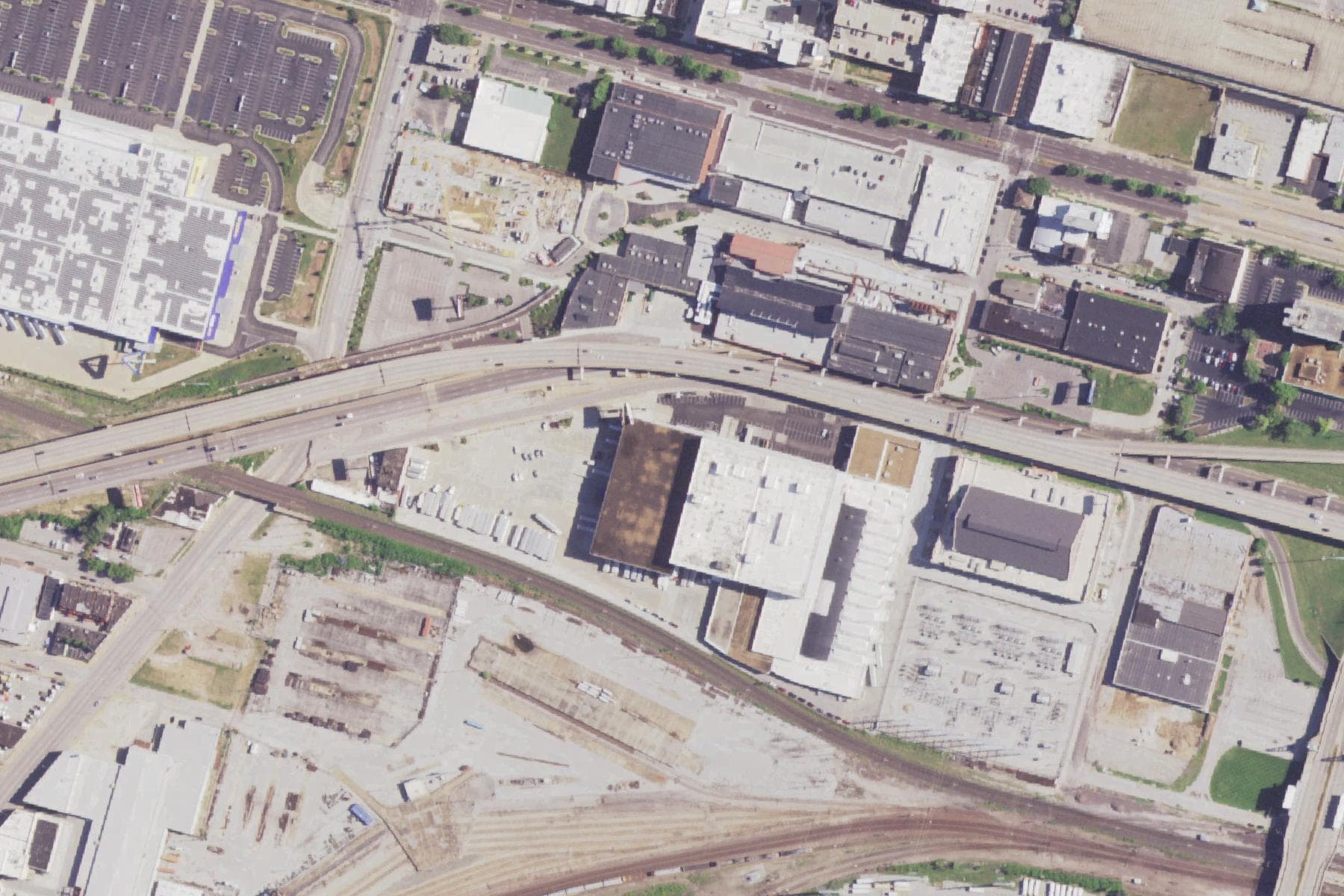
proposed data center site in St. Louis, Missouri, photographed 2022-06-18. Unlike almost every other case in this tracker, the Midtown proposal sits inside a dense city, not on farmland. The Market Street parcels lie beside the historic Armory, the interstate and the rail corridor, with neighbors on every side.
USDA Farm Service Agency / USGS National Map, National Agriculture Imagery Program. Cropped from NAIP 0.6 m aerial imagery, scene m_3809023_sw_15_060_20220618. (original)
Case facts
Active litigation
- Status
- Pending, filed August 28, 2026, St. Louis
- Case
- Daniel Pate, Kerry McCullen, other residents, the Missouri Workers' Center, and the Missouri Coalition for the Environment v. City of St. Louis, members of the Board of Adjustment, and David Lambiaso
- Court
- Filed in St. Louis; the court was not specified in initial reporting. Challenges to a Board of Adjustment decision are ordinarily brought in the city's circuit court
- Filed
- August 28, 2026
- Project
- Proposed $3 billion hyperscale data center near the Armory, Midtown St. Louis, redeveloped by David Lambiaso
- Decision challenged
- Board of Adjustment denial of appeals and grant of a conditional use permit, after roughly 11 hours of public comment
- Core claim
- The board erred and acted arbitrarily, capriciously, and contrary to law; a data center is not a recognized conditional use in the zoning district
- Relief sought
- A stay pending litigation and reversal of the board's decision
Key Takeaways
- Residents including Daniel Pate and Kerry McCullen, joined by the Missouri Workers' Center and the Missouri Coalition for the Environment, sued the City of St. Louis, its Board of Adjustment, and developer David Lambiaso on August 28, 2026 over the permit for a $3 billion hyperscale data center near the Armory in Midtown.
- The Board of Adjustment had rejected the residents' appeals and approved a conditional use permit after a hearing with roughly 11 hours of public comment.
- The suit argues the board erred and acted arbitrarily, capriciously, and contrary to law, and that a data center is not a recognized conditional use in the district; it asks for a stay and reversal.
- Plaintiffs also cite air and water pollution, construction noise, and the facility's electricity demand as reasons the permit should not have issued.
- It is one of the first lawsuits over a data center inside a major city's core rather than in a rural county, and it was filed six weeks after St. Charles County, across the river, adopted a six month moratorium.
In this article
The fight over a $3 billion data center in the middle of St. Louis has moved from the hearing room to the courthouse. On Friday, August 28, 2026, residents including Daniel Pate and Kerry McCullen, along with the Missouri Workers' Center and the Missouri Coalition for the Environment, filed suit against the City of St. Louis, the members of its Board of Adjustment, and David Lambiaso, who is redeveloping a site near the Armory in Midtown into a hyperscale data center. The board had rejected the residents' appeals and granted a conditional use permit after a marathon hearing with roughly 11 hours of public comment. The complaint says the board erred, acted arbitrarily, capriciously, and contrary to law, and approved a use that the zoning district does not recognize as a conditional use at all. The plaintiffs want the decision stayed and reversed. As McCullen put it in reporting on the filing, these hyperscale data centers are not welcome in St. Louis.
What the lawsuit challenges
Most data center litigation on this tracker involves farmland, rural counties, and rezonings of hundreds or thousands of acres. The St. Louis case is different: a proposed hyperscale facility inside a major city's urban core, on a site near the historic Armory in Midtown, approved not by rezoning but by a conditional use permit issued under existing zoning. Developer David Lambiaso filed to redevelop the site into a data center reported at $3 billion.
Residents appealed the permit to the city's Board of Adjustment, the body that hears challenges to zoning decisions. The board's hearing drew roughly 11 hours of public comment, an extraordinary volume for a single item, and ended with the board rejecting the appeals and granting the conditional use permit. That decision is what the August 28 lawsuit attacks.
The complaint's core argument is legal rather than environmental: that the board erred in denying the appeals and granting the permit, and in doing so acted arbitrarily, capriciously, and contrary to law. The plaintiffs also contend that a data center is not a recognized conditional use in the zoning district, meaning the board approved something the code did not give it the power to approve. Around that legal core, the suit cites the concerns residents raised at the hearing: air and water pollution, construction noise, and the facility's electricity demand. The relief requested is a stay of the board's action while the case proceeds and reversal of the decision.
Who is suing
The plaintiff group pairs neighbors with organizations. Daniel Pate and Kerry McCullen are residents who fought the permit at the board; Pate told reporters the city was bending and twisting itself into pretzels to approve the project. The Missouri Workers' Center and the Missouri Coalition for the Environment bring institutional weight and the ability to sustain litigation, a pattern that also appears in the Stokes County, North Carolina case, where environmental and civil rights organizations joined residents as plaintiffs.
The city, through a spokeswoman for Mayor Cara Spencer, declined to comment on pending litigation.
The Missouri context
Missouri has become one of the busier data center battlegrounds of 2026. The Festus Sunshine Law suit over a $6 billion project was filed in April. Peculiar removed data centers from its zoning code entirely. And in the weeks before the St. Louis filing, both Jackson County and St. Charles County, directly across the Missouri River from the city, adopted six month moratoriums, according to the national tracker we summarize in our moratorium tracker. The St. Louis case asks whether the city itself, which has no moratorium, followed its own code when it let a hyperscale campus into Midtown.
The case also previews a question that will recur as operators run out of rural land near power: whether existing urban industrial and commercial zoning was ever written to accommodate a facility that draws the electricity of a small city. When the code is silent, the fight is over whether silence means yes.
What this case means for you
If a data center near you is being approved under a permit rather than a rezoning, St. Louis is the case to watch, and its lessons apply now:
- Read the district's use list. If data center, or the category the city is using to cover it, does not appear as a permitted or conditional use, that is the strongest argument available.
- Exhaust the appeal. The St. Louis residents went to the Board of Adjustment first. Courts generally require that administrative step before they will review a permit.
- Build the record at the hearing. Eleven hours of public comment created a record the court can now examine for whether the board addressed it.
- Watch the clock. Petitions for review of a board decision run on short deadlines, often 30 days. Our deadlines guide explains why.
Our guide to fighting a proposed data center covers the process from first notice to filing. If you are facing a permit like this one, our free case review connects you with an independent attorney in our network who handles data center cases in your state, at no cost and with no obligation.
Frequently asked questions
Who is suing over the St. Louis Midtown data center?
Residents including Daniel Pate and Kerry McCullen, together with the Missouri Workers' Center and the Missouri Coalition for the Environment, filed suit on August 28, 2026 against the City of St. Louis, the members of its Board of Adjustment, and developer David Lambiaso over the conditional use permit for a proposed $3 billion hyperscale data center near the Armory in Midtown.
What does the St. Louis data center lawsuit argue?
The complaint says the Board of Adjustment erred in denying residents' appeals and granting the permit, and acted arbitrarily, capriciously, and contrary to law. It also contends that a data center is not a recognized conditional use in the zoning district. The plaintiffs cite air and water pollution, construction noise, and electricity demand, and ask for a stay and reversal of the board's decision.
What did the St. Louis Board of Adjustment decide?
After a hearing that included roughly 11 hours of public comment, the board rejected the appeals challenging the conditional use permit and approved the permit for the Armory site data center. The lawsuit seeks judicial review of that decision.
Can you challenge a data center conditional use permit in court?
Generally yes, after exhausting the local appeal. Courts review whether the board's decision was supported by the record and consistent with the zoning code, including whether the use was one the code allows. Deadlines for seeking review are short, often 30 days, so residents should consult an attorney immediately after a board decision.
Article sources
Our editorial standards require primary sources: government publications, regulator data, company filings, and established industry research.
- 1.St. Louis Public Radio: Opponents of St. Louis data center take their fight to court (August 29, 2026)
- 2.First Alert 4: Residents, organizations file lawsuit against proposed Midtown data center (August 29, 2026)
- 3.Programs.com: Data center moratoriums by state, tracker and statistics (as of August 26, 2026)
Related cases
- Festus, Missouri: The Sunshine Law Lawsuit Over a $6 Billion Data Center
Wake Up JeffCo and four property owners filed a 12-count, 54-page lawsuit against the City of Festus and developer CRG over a $6 billion data center, alleging Missouri Sunshine Law violations including serial private briefings and a development agreement released the Friday before a Monday vote. The suit seeks to void the rezoning and the development contract.
- The Grayslake Lawsuit: Nine Neighbors Sue to Void a 472 Acre, 1.55 Gigawatt Data Center Campus
On July 31, 2026, a residents' collective and nine Lake County homeowners sued the Village of Grayslake, T5 Data Centers, and Alter Asset Management to void approvals for T5@Chicago IV, a 472 acre, 10 million square foot campus drawing about 1.55 gigawatts. The suit alleges a 61 second hearing, code-name-only public notices, an Open Meetings Act violation, and approvals for a use the zoning code does not contain. What the case says and what it means for anyone facing a fast-tracked approval.
- The Stokes County Project Delta Lawsuit: 1,845 Acres on the Dan River, a 3 to 2 Vote, and a Burial Ground
On March 12, 2026, seven Stokes County families and four organizations, including the National Hairston Clan and the Dan River Basin Association, sued the Stokes County Board of Commissioners over its January 2026 vote to rezone roughly 1,845 acres of residential-agricultural land on the Dan River for the Project Delta hyperscale data center, overriding the Planning Board. The suit, brought by the Southern Coalition for Social Justice and the Southern Environmental Law Center, alleges defective notice, no factual basis, and no assessment of noise, air, water, or the Saura and Hairston sites on the land.
- Project Blue in Pima County: The Open Meetings Suit Over a Data Center Tucson Rejected
After the Tucson City Council rejected the $3.6 billion Project Blue data center campus in August 2025, the Pima County Board of Supervisors approved a roughly 300 acre land sale for $20.875 million plus rezoning. Opponents sued the county in January 2026 alleging open meeting law violations, including an undisclosed rezoning purpose and land sale negotiations kept secret from 2023 to 2025. The Superior Court dismissed the case in April 2026; plaintiffs say they will appeal.
Is a data center disrupting your home?
Tell us what is happening. We will connect you with an independent attorney who handles data center cases in your state, free and with no obligation. These cases are commonly taken on contingency, so there are typically no upfront fees.
- Free case review
- Independent attorneys
- No obligation
Attorney or law firm handling data center matters? Speak with us