State Guide
Data Centers in Missouri: Lawsuits, Disputes, and Your Rights
Missouri residents are fighting data centers on two fronts: a Sunshine Law suit over a $6 billion project in Festus, and a political reversal in Peculiar that blocked a $1.5 billion campus and ousted half the city council. What Missouri neighbors can do, and how to tell us about your situation.
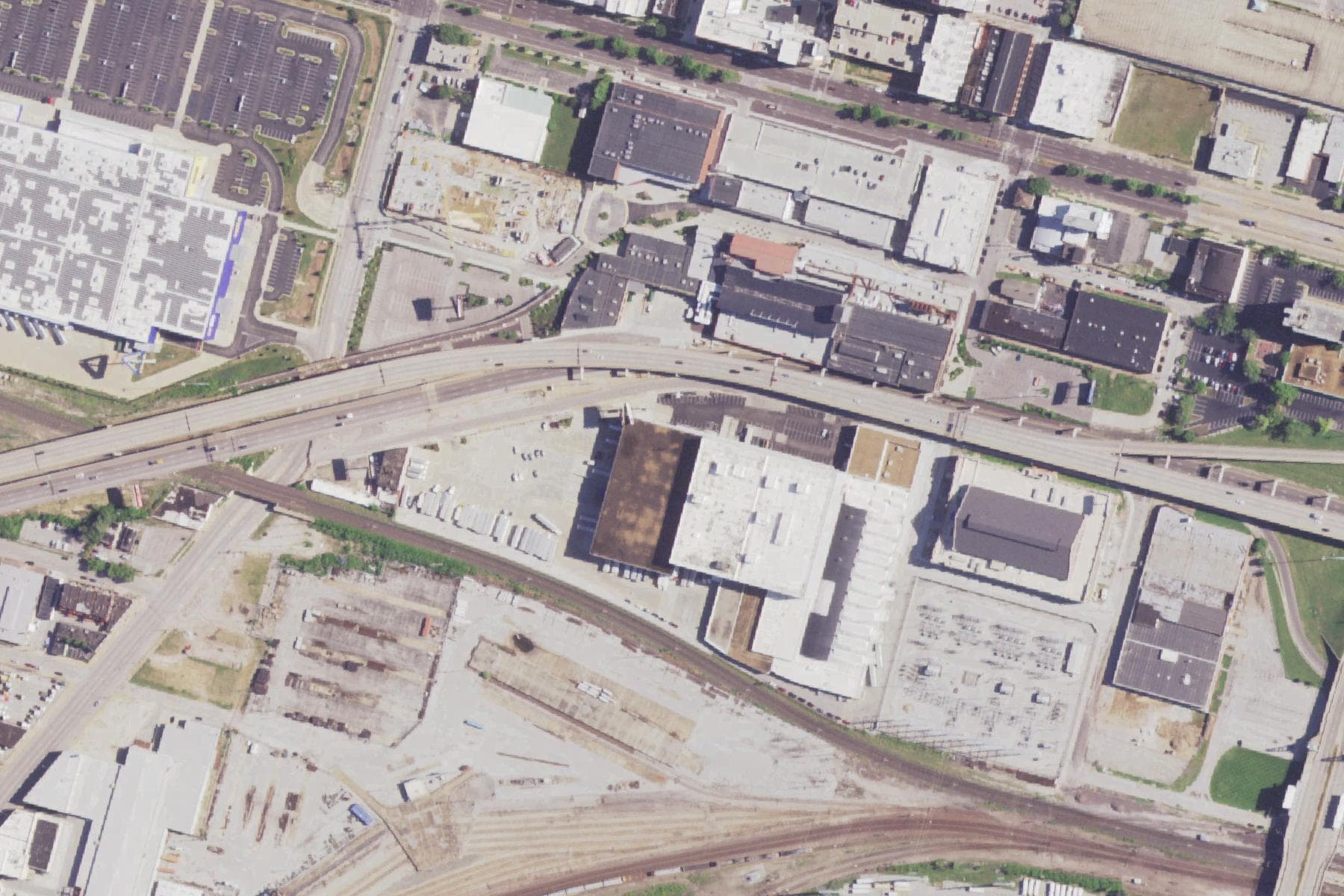
proposed data center site in St. Louis, Missouri, photographed 2022-06-18. Unlike almost every other case in this tracker, the Midtown proposal sits inside a dense city, not on farmland. The Market Street parcels lie beside the historic Armory, the interstate and the rail corridor, with neighbors on every side.
USDA Farm Service Agency / USGS National Map, National Agriculture Imagery Program. Cropped from NAIP 0.6 m aerial imagery, scene m_3809023_sw_15_060_20220618. (original)
Missouri at a glance
Emerging
- Market size
- Emerging; proposals concentrated around Kansas City and Jefferson County
- Hot spots
- Festus (Jefferson County), Peculiar (Cass County), and the Kansas City metro
- Key operators
- Developer CRG in Festus ($6 billion project); Diode Ventures' blocked $1.5 billion Project Harper in Peculiar
- Documented disputes
- Residents, the Missouri Workers' Center, and the Missouri Coalition for the Environment v. City of St. Louis and its Board of Adjustment over the conditional use permit for a $3 billion Midtown data center, filed August 28, 2026; Wake Up JeffCo and four property owners v. City of Festus and CRG, a 12 count Sunshine Law suit filed April 2026, pending; Peculiar zoning reversal with no suit
- Statewide action
- None documented as of August 2026
Key Takeaways
- In April 2026, opposition group Wake Up JeffCo and four property owners filed a 12 count, 54 page lawsuit against the City of Festus and developer CRG over a $6 billion data center, alleging Missouri Sunshine Law violations and seeking to void the rezoning and development agreement. The case is pending.
- The Festus complaint alleges officials were briefed serially in private groups of three to stay under quorum, and that a 29 page development agreement was released on a Friday for a Monday vote.
- In Peculiar, residents beat a $1.5 billion project without ever filing suit: the Board of Aldermen deleted the data center definition from the light industrial code, blocking Diode Ventures' Project Harper, and voters ousted half the city council with a petition seeking the mayor's removal.
- Missouri's two flagship fights teach the same lesson: transparency violations and local politics are the levers, and documenting how a deal was approved matters as much as what was approved.
- No Missouri homeowner damage suit over data center operations is documented yet, but nuisance and property damage claims remain available if a facility harms your home.
Data centers in Missouri, from the registry
All 21 sites21 sites on the public record: 4 operating, 7 under construction, 5 permitted, 5 proposed. 6 carry documented opposition or litigation. 6.0 GW planned.
By county, alphabetically. Each profile carries capacity, land, utility, water, subsidies, jobs, a timeline, and every source.
Clay County (4 sites)
- Metrobloks Liberty Campus · Liberty · MetrobloksProposed · 150 MW · Mixed reception
- Meta Kansas City Northland · Kansas City · MetaOperating · 750 MW · Supported
- Google Project Mica · Kansas City · GoogleUnder construction · 700 MW
- Google Kansas City Data Center (Hunt Midwest Business Center) · Kansas City · GoogleUnder construction
Franklin County (1 site)
- Diamond Farms (Gateway Digital Campus) · Villa Ridge · Provident Data CentersPermitted
Jackson County (2 sites)
- Nebius AI Factory (Independence) · Independence · Nebius GroupUnder construction · 1.2 GW · In litigation
- Patmos KC Star Building Campus · Kansas City · Patmos HostingOperating · 35 MW
Jefferson County (2 sites)
- Festus Data Center Campus · Festus · CRG (Clayco)Proposed · 600 MW · In litigation
- Hematite Bitcoin Mining Facility · Hematite · NYDIG / Global Connect CommunicationsPermitted
Lincoln County (1 site)
- Cloverleaf Troy Campus · Troy · Cloverleaf InfrastructureProposed · 500 MW
Montgomery County (2 sites)
- Google Project Spade Campus · New Florence · GoogleUnder construction · 1.2 GW · In litigation
- AWS Project Green Campus · New Florence · Amazon Web ServicesUnder construction · Contested
Nodaway County (1 site)
- White Cloud Acres · Barnard · Scale MicrogridsProposed · 600 MW
Platte County (2 sites)
- Lambda Kansas City AI Supercomputer · Kansas City · LambdaUnder construction · 100 MW
- Project Kestrel · Kansas City · Shenandoah Computing LLCPermitted
St. Louis city (2 sites)
- Netrality 210 North Tucker (St. Louis) · St. Louis · Netrality Data CentersOperating
- TierPoint St. Louis - Olive · Saint Louis · TierPointOperating
St. Louis County (1 site)
- Project Butterfly (former Emerson campus) · Ferguson · SSL Investments / Next Revolution TechnologiesProposed · Contested
Warren County (1 site)
- Crusoe Warrenton Campus · Warrenton · CrusoePermitted · Mixed reception
Webster County (1 site)
- Marshfield Data Center (Lumon Solutions) · Marshfield · Lumon Solutions Marshfield, LLCUnder construction
County not on record (1 site)
- Armory Innovation District Data Center · St. Louis · Contour / TerraWatt (with Steadfast City, THO Investments, ARCO, Lewis Rice)Permitted · 120 MW · In litigation
In this article
Can Missourians fight a data center? They already are, on two fronts. In Festus, an opposition group and four property owners filed a sweeping Sunshine Law suit in April 2026 seeking to void the rezoning and development agreement behind a $6 billion data center. In Peculiar, residents killed a $1.5 billion project without filing anything: the city deleted data centers from its industrial code, and voters then swept out half the council. Missouri is an emerging market, and its residents have shown that both the courthouse and the ballot box work. Here is where things stand and what your options are.
The data center footprint in Missouri
Missouri sits on the edge of the Midwest data center wave. The Kansas City metro, with cheap land, fiber, and power, has drawn steady interest on both sides of the state line, and developers have pushed into smaller communities: Diode Ventures proposed the $1.5 billion, 504 acre Project Harper in Peculiar, south of Kansas City, and developer CRG advanced a $6 billion data center project in Festus, in Jefferson County south of St. Louis.
Neither community had hosted anything like a hyperscale campus before, and in both, the speed and opacity of the approval process, not just the projects themselves, became the flashpoint.
What residents are dealing with
Missouri's disputes so far are about process and consent rather than operating impacts:
- Deals negotiated out of view. The Festus suit alleges city officials received serial private briefings in sub quorum groups of three, a pattern the plaintiffs say was designed to evade Missouri's Sunshine Law, and that the public got a 29 page development agreement on a Friday before a Monday vote.
- Rezonings that residents felt were done to them, not with them. In Peculiar, the backlash to Project Harper was strong enough that the Board of Aldermen removed the data center definition from the light industrial code entirely, blocking the project.
- Political consequences. Peculiar voters ousted half the city council after the project fight, and a petition sought the mayor's removal. In an emerging market, elections are part of the toolkit.
Because no large campus is operating near homes in Missouri yet, the noise, water, and dust complaints seen in mature markets have not materialized here. Residents near approved sites should document baseline conditions before construction, as our evidence guide explains.
Lawsuits and disputes in Missouri
Wake Up JeffCo v. City of Festus (pending). Filed April 8 to 10, 2026, this 12 count, 54 page suit by the opposition group and four property owners names the City of Festus and developer CRG. It alleges Sunshine Law violations in how the $6 billion project was approved, including the serial private briefings and the last minute release of the development agreement, and asks the court to void the rezoning and the development contract. The case is pending as of August 2026. Read our full case study: the Festus Sunshine Law lawsuit.
Peculiar's Project Harper (no lawsuit). No litigation was filed in Peculiar, and none was needed: the Board of Aldermen deleted the data center use from the light industrial code, blocking Diode Ventures' 504 acre project, and the electorate then remade the city government. It is one of the clearest examples in the country of a data center defeated by ordinance and election rather than by a judge.
Your legal options in Missouri
Missouri residents facing a data center have several paths, most of them already proven in the state:
- Sunshine Law claims. Missouri's open meetings and records law gives citizens standing to challenge approvals reached through closed or serial deliberations, exactly the theory of the pending Festus suit, which seeks to void the rezoning itself.
- Zoning challenges and ordinance pressure. Rezonings can be contested on procedural grounds, and Peculiar showed that a city can amend its own code to exclude data center uses before a project vests.
- Elections, petitions, and recalls. Not a courtroom tool, but in Missouri it has been the most decisive one so far.
- Private nuisance and property damage claims if a facility is built and its noise, dust, or construction impacts harm your home, seeking damages and mitigation. These are typically handled on a contingency fee basis.
Timing matters everywhere: challenges to approvals run on short clocks, and damage claims carry statutes of limitations that vary by claim type. A Missouri attorney can confirm the deadlines for your situation; our guide to lawsuit deadlines covers the general rules.
If you live near a Missouri data center
If a project is proposed or approved near you, act while the record is fresh: request the approval documents and meeting minutes under the Sunshine Law, save every public notice, attend and speak at hearings, and keep dated notes. If construction has started, photograph conditions, log noise and truck traffic, and test your well if you have one.
Then get a professional read on your options. Our free intake form lets you tell us what is happening; where a participating attorney who handles these matters in Missouri is available, we may share your information with them with your consent, but we cannot promise that anyone will contact you.
Missouri cases we are tracking
- Independence, Missouri: A 16 Count Suit, a City Owned Power Company, and the Records That Are Actually Public
Residents along Bly Road in the Little Blue Valley filed a 16 count, 52 page suit against the City of Independence, Missouri ADC Holdings LLC and Independence Power Partners LP over the Nebius AI campus, and reported seeking a temporary restraining order. We could not obtain the court record, so here is what we could obtain: the ordinance number, the bond amount, the roll call vote, the moratorium resolutions, the pending zoning and utility ordinances, and what Missouri's Sunshine Law lets a resident demand.
- The St. Louis Armory Data Center Lawsuit: Residents and Advocates Take a $3 Billion Permit to Court
On August 28, 2026, St. Louis residents, the Missouri Workers' Center, and the Missouri Coalition for the Environment sued the City of St. Louis, its Board of Adjustment, and developer David Lambiaso over the conditional use permit for a $3 billion hyperscale data center near the Armory in Midtown. After roughly 11 hours of public comment, the board had rejected the appeals; the suit says it acted arbitrarily and contrary to law and that a data center is not a permitted conditional use in the district. What the case argues and why urban data center permits are the next front.
- Festus, Missouri: The Sunshine Law Lawsuit Over a $6 Billion Data Center
Wake Up JeffCo and four property owners filed a 12-count, 54-page lawsuit against the City of Festus and developer CRG over a $6 billion data center, alleging Missouri Sunshine Law violations including serial private briefings and a development agreement released the Friday before a Monday vote. The suit seeks to void the rezoning and the development contract.
- Ferguson Voted This Down in May. It Is Back With $7.5 Million Added, the Same 75 Percent Abatement, and a Term Sheet That Budgets $400 Million for Power the Project Says It Will Not Use.
Ferguson's City Council rejected the Project Butterfly tax abatement 3 to 3 on May 5, 2026. On September 10 it returned at first reading with $7.5 million for a neighborhood nonprofit attached and the abatement unchanged. The city's own term sheet budgets $400,000,000 for power grid infrastructure on a campus the developer says will never exceed its historical 14 megawatts. The Ferguson-Florissant School District puts its loss at $71 million over 15 years. Here is the record, line by line, including which resident claims we could verify and which we could not.
Frequently asked questions
Can I sue a data center in Missouri?
Yes. Missouri residents are doing it now: Wake Up JeffCo and four property owners sued the City of Festus and developer CRG in April 2026 over a $6 billion data center, alleging Sunshine Law violations and seeking to void the rezoning. Residents can also bring nuisance and property damage claims if an operating facility harms their homes.
What is the Festus data center lawsuit about?
The 12 count suit alleges the City of Festus violated Missouri's Sunshine Law in approving a $6 billion data center, including briefing officials in private groups small enough to avoid quorum rules and releasing a 29 page development agreement the Friday before a Monday vote. It asks the court to void the rezoning and the development contract, and it is pending.
How did Peculiar, Missouri stop its data center?
Without a lawsuit. The Board of Aldermen deleted the data center definition from the city's light industrial zoning code, which blocked Diode Ventures' $1.5 billion Project Harper. Voters then ousted half the city council, and a petition sought the mayor's removal. It shows ordinance changes and elections can defeat a project outright.
Can Missouri residents stop a proposed data center?
It has happened twice in different ways: Peculiar blocked its project through a zoning code change and electoral pressure, and Festus residents are asking a court to void their city's approvals over transparency violations. Success generally requires acting quickly, building a documented record, and getting legal help before approvals become final.
What is the Missouri Sunshine Law and how does it apply to data centers?
It is Missouri's open meetings and public records law. Public bodies must deliberate and decide in properly noticed open sessions, and citizens can sue over violations. The Festus suit alleges officials evaded it through serial private briefings, and uses those alleged violations as grounds to void the data center approvals themselves.
Article sources
Our editorial standards require primary sources: government publications, regulator data, company filings, and established industry research.
Is a data center disrupting your home in Missouri?
Tell us what is happening. Where a participating attorney who handles data center cases in your state is available, we may share your information with them with your consent. It is free and carries no obligation, but we cannot promise that anyone will contact you.
- Tell us about your situation
- Independent attorneys
- No obligation
Attorney or law firm handling data center matters? Speak with us