By Company
Digi Power X Lawsuits: The Three Mile Noise Class Action Over a Crypto Mine Becoming an AI Data Center
Digi Power X, the Miami company that turned a defunct North Tonawanda, New York gas peaker plant into a bitcoin mine and is now converting it to AI computing, faces a federal class action covering everyone within three miles. The suit alleges nearly four years of round-the-clock cooling fan noise and asks for medical monitoring. The record, the company's own footprint, and what it means.
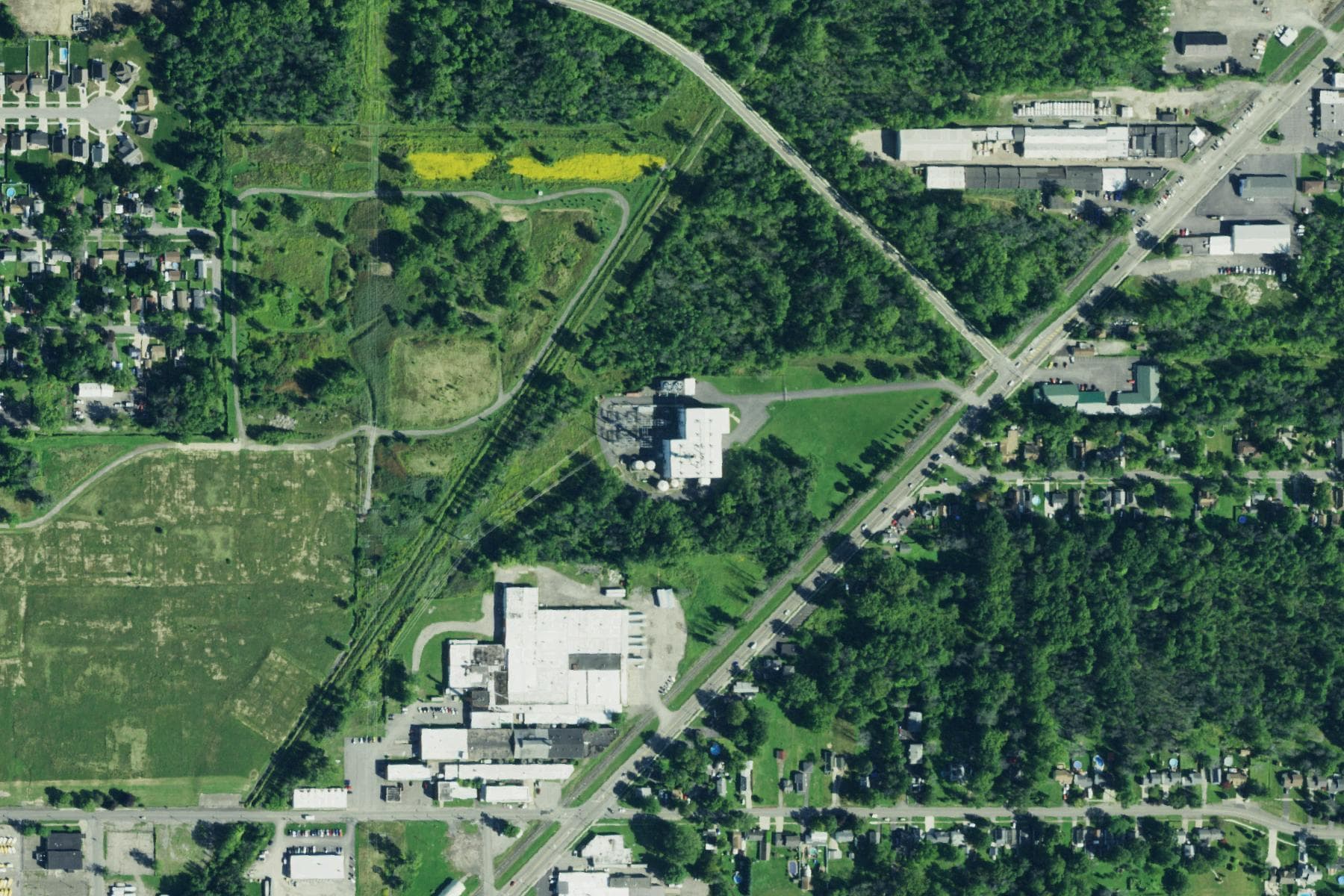
former Fortistar power plant in North Tonawanda, New York, photographed 2019-10-05. The former Fortistar plant off River Road, a small gas-fired station with houses on three sides. This 2019 imagery predates the mining hardware; the proximity it shows is the case.
USDA Farm Service Agency / USGS National Map, National Agriculture Imagery Program. Cropped from NAIP 0.6 m aerial imagery, scene m_4307858_sw_17_060_20191005. (original)
Digi Power X on the tracker
- Tracker entries
- One: Demers v. Digi Power X Inc., a proposed class action filed April 2026 in the U.S. District Court for the Western District of New York
- What kind of operator
- Vertically integrated energy and compute company: it owns its own power generation and runs bitcoin mining and AI data center capacity on it, rather than leasing utility power like a colocation provider
- Corporate identity
- Digi Power X Inc., headquartered in Miami, Florida, listed on Nasdaq as DGXX and previously known as Digihost
- Footprint at issue
- 1070 Erie Avenue, North Tonawanda, New York: a former Fortistar gas-fired peaker plant bought in early 2021 and mined since 2022, which the company describes on its own site as a 60 megawatt plant and is converting to AI data center use
- Company response
- Digi Power X did not comment on the filing in initial reporting, and a Buffalo television station reported that it did not respond to a request for comment
Key Takeaways
- Digi Power X appears in one tracker entry, Demers v. Digi Power X, a proposed federal class action filed in April 2026 over cooling fan noise from its North Tonawanda, New York site. The allegations are unproven and the case is pending.
- The proposed class is the widest on this site: everyone who has owned property or lived within three miles of 1070 Erie Avenue since 2021, a group the plaintiffs estimate in the thousands. The 2026 AI data center noise classes use one to 1.5 mile radii.
- The complaint asks for something no other data center noise case does, a court-supervised medical monitoring program, alongside damages, punitive damages, and an expert-designed abatement order.
- The company is a vertically integrated energy and compute operator, not a colocation landlord. It bought a defunct gas peaker plant, generates its own power, and describes the North Tonawanda plant as 60 megawatts on its own website.
- It is converting the site from bitcoin mining to AI computing, which makes this the clearest preview on the tracker of what happens when a crypto mine's neighbors become an AI campus's neighbors without ever moving.
In this article
Has Digi Power X been sued over its data center? Yes, once, by the whole neighborhood. In April 2026, three North Tonawanda, New York residents filed a proposed class action in the U.S. District Court for the Western District of New York against the Miami-based company, alleging that the industrial cooling fans at 1070 Erie Avenue have produced loud, droning noise and low-frequency vibration nearly 24 hours a day since September 2022. The proposed class covers every property owner and resident within three miles of the site since 2021, and the relief requested goes further than any other data center noise case on our tracker: damages, punitive damages, an expert-designed abatement order, and a medical monitoring program. Digi Power X, listed on Nasdaq as DGXX and formerly known as Digihost, describes itself as a vertically integrated AI infrastructure company that owns its own power generation, and it bought the defunct Fortistar gas peaker plant at that address in early 2021. It did not comment on the filing in initial reporting. The allegations are unproven, the case is pending, and the company is converting the site to AI computing.
Every case on the tracker
- Active litigationNew YorkDemers v. Digi Power X: The Three Mile Noise Class Action Against a Crypto Mine Turning Into an AI Data Center
Pending, U.S. District Court, W.D. New York (filed April 2026)
In April 2026, three North Tonawanda, New York residents filed a federal class action against Digi Power X over nearly four years of round-the-clock cooling fan noise from a bitcoin mining operation in a former gas peaker plant at 1070 Erie Avenue, on behalf of everyone within three miles. The suit seeks damages, punitive damages, an injunction, and a medical monitoring program, and the company is converting the site into an AI data center. What the case alleges and why the three mile radius and the medical monitoring demand are new.
Every Digi Power X site in the registry
3 sites on the public record in 2 states: 2 operating, 1 under construction, 0 permitted, 0 proposed. 2 carry documented opposition or litigation. 160 MW planned. Most contested first.
- Digihost / Digi Power X, Fortistar North Tonawanda · North Tonawanda, NYOperating · 120 MW · In litigation
- Digi Power X Columbiana AI Data Center · Columbiana, ALUnder construction · 40 MW · Contested
- Digihost, Erie County (Buffalo) · Buffalo, NYOperating · 42 MW
A peaker plant that stopped peaking
The building at 1070 Erie Avenue was a gas-fired peaker plant, the kind of facility that runs a few hundred hours a year when the grid is stressed. Digi Power X, then operating as Digihost, bought it in early 2021 and filled it with mining computers, which turned an occasional machine into a continuous one. According to the complaint, the noise began in September 2022 and has not stopped: loud, droning, and persistent, with a low-frequency component residents describe as vibration inside their homes. The suit pleads private nuisance, public nuisance, negligence, and negligent infliction of emotional distress. The company did not comment when the case was filed, and none of the allegations has been tested in court.
That business model is the operator's own description of itself. Digi Power X presents its power generation as the point rather than an input, calling itself a vertically integrated AI infrastructure company that owns and operates generation, data centers, and GPU compute capacity, and citing the North Tonawanda plant at 60 megawatts as the cost foundation of the rest. For neighbors, an operator that owns its own generation is an operator with fewer external constraints on when it runs. Our full report on Demers v. Digi Power X covers the complaint in detail.
Three miles, medical monitoring, and the AI conversion
Two features of this case make Digi Power X the defendant that other operators are watching. The first is the radius. The Michigan, New Jersey, and Wisconsin noise classes claim one to 1.5 miles. This one claims three, retroactive to 2021, on the theory that low-frequency noise carries far beyond what the A-weighted decibel readings in most ordinances capture. The second is the remedy. Medical monitoring is borrowed from toxic exposure litigation, where courts have ordered defendants to fund screening before disease appears. Asking for it in a noise case treats years of disrupted sleep as an exposure. Whether New York law allows either at this scale is unsettled, and the ruling will be cited in every noise case that follows.
Then there is the conversion. Digi Power X has been public about moving the site from bitcoin mining to AI computing, and AI workloads need at least as much cooling as mining does. The case is, in effect, a suit against an AI data center filed before the facility finished becoming one, which is why the crypto docket keeps generating the doctrine that AI campus neighbors will use. The same pattern runs through the Granbury, Texas cases and the Dowagiac, Michigan class action. Our noise lawsuit guide explains how these claims are built, our New York page covers the state's moratorium on new hyperscale permits, and our free case review connects you with an independent attorney in our network who handles data center cases in your state, at no cost and with no obligation.
Frequently asked questions
Has Digi Power X been sued over its data center?
Yes. In April 2026, North Tonawanda, New York residents Sharon Demers, Karen Hance, and Mark Polito filed a proposed class action in the U.S. District Court for the Western District of New York over continuous cooling fan noise from the company's site at 1070 Erie Avenue. The proposed class covers property owners and residents within three miles since 2021. The case is pending and the allegations have not been proven; the company did not comment on the filing in initial reporting.
What kind of company is Digi Power X?
Digi Power X Inc. is a Miami, Florida company listed on Nasdaq as DGXX and previously known as Digihost. It describes itself as a vertically integrated AI infrastructure company that owns and operates power generation assets, data centers, and GPU compute capacity, and it cites its North Tonawanda plant as a 60 megawatt facility.
Is the North Tonawanda site a crypto mine or an AI data center?
Both, in sequence. Digi Power X bought a former Fortistar gas-fired peaker plant at 1070 Erie Avenue in early 2021 and ran it as a bitcoin mining site from 2022, and it has said it is converting the site to AI data center use. The noise complaints stem from the industrial cooling fans the computers require, which AI workloads also need.
Article sources
Our editorial standards require primary sources: government publications, regulator data, company filings, and established industry research.
- 1.Digi Power X corporate site: business description, Miami headquarters, and the 60 megawatt North Tonawanda plant
- 2.Digi Power X corporate site (homepage, Nasdaq: DGXX)
- 3.WKBW: Class action lawsuit filed against Digi Power X in North Tonawanda (company did not respond to a request for comment)
- 4.The Daily Record (Rochester): Digital mining operation sued by North Tonawanda neighbors (April 16, 2026)
Is a Digi Power X data center disrupting your home?
Tell us what is happening. We will connect you with an independent attorney who handles data center cases in your state, free and with no obligation. These cases are commonly taken on contingency, so there are typically no upfront fees.
- Free case review
- Independent attorneys
- No obligation
Attorney or law firm handling data center matters? Speak with us