Claim Types
Data Center Air Pollution: Turbines, Generators, and Your Right to Sue
Data centers increasingly bring their own power: gas turbines and huge diesel generator banks. The NAACP's federal Clean Air Act suit against xAI shows neighbors can fight back directly. Here is how citizen suits work, how to read the permit file, and how to document health effects.
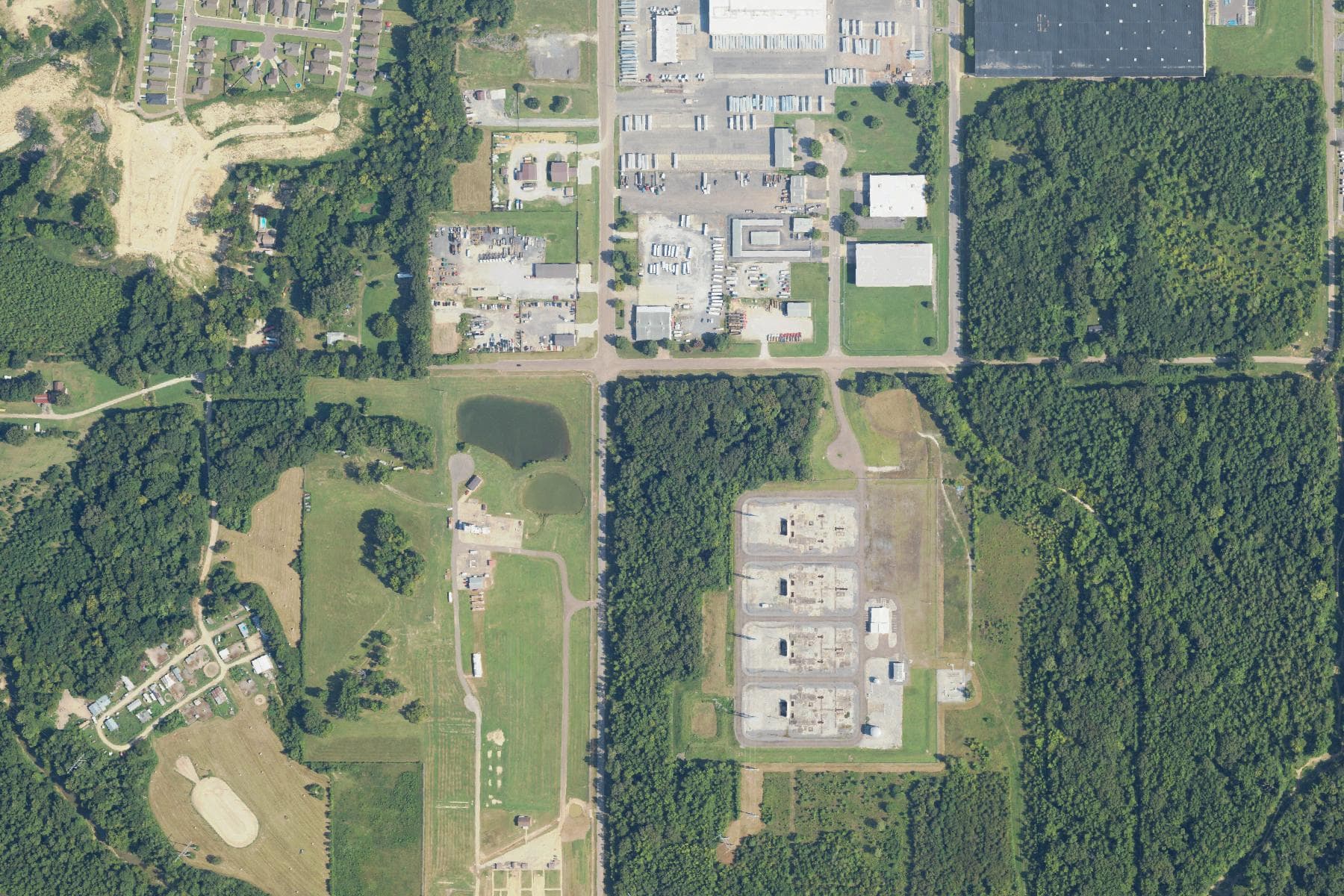
power plant site serving the Colossus data center in Southaven, Mississippi, photographed 2023-08-20. The plant stands on the pad of a demolished power station off Stanton Road, with houses a few hundred yards northwest through the trees. This 2023 imagery shows the foundations before the gas turbines were installed on them.
USDA Farm Service Agency / USGS National Map, National Agriculture Imagery Program. Cropped from NAIP 0.6 m aerial imagery, scene m_3409008_ne_15_060_20230820. (original)
Key Takeaways
- The air fight around data centers is about power equipment: on-site gas turbines and banks of diesel backup generators, not the servers themselves.
- Federal law hands neighbors a direct weapon. The Clean Air Act lets private citizens and groups sue polluters through a citizen suit, after serving a mandatory 60-day notice of intent.
- The flagship case is NAACP v. xAI: a federal Clean Air Act suit filed in April 2026 over 27 allegedly unpermitted gas turbines at the Colossus 2 site in Southaven, Mississippi, with a motion asking the court to halt unpermitted operation and impose daily penalties.
- Air permits are public records. The permit file tells you exactly what equipment a facility may run, under what limits, and whether reality matches the paperwork, and that comparison is where cases are born.
- Health documentation matters even though proving individual causation is hard: dated symptom logs, medical records, and odor and smoke reports build both regulatory complaints and legal claims.
In this article
If a data center's turbines or generators are polluting your air, you have more direct legal power than most neighbors realize: the Clean Air Act allows private citizens to sue polluters in federal court, and that is exactly what the NAACP is doing to xAI right now over gas turbines at its Colossus facilities in the Memphis area. Data centers were once passive electricity customers; the AI build-out has turned many into on-site power plants, running methane gas turbines for primary power and fielding dozens of diesel generators for backup. This guide explains where data center air pollution comes from, walks through the NAACP v. xAI fight in detail, shows how Clean Air Act citizen suits and the 60-day notice work, and lays out how to use public permit files and health documentation to build a claim.
Where data center air pollution comes from
A data center has no smokestack of its own until it starts generating power, and that is precisely what the AI era has pushed operators to do. Grid connections take years; AI campuses want power now. The result is two classes of combustion equipment parked next to residential areas:
- Gas turbines for primary power. Some facilities now run banks of methane gas turbines on site, functioning as unlicensed power plants in all but name. Turbines emit nitrogen oxides, which drive smog and respiratory problems, along with other combustion pollutants. At xAI's Colossus 1 site in South Memphis, roughly 35 turbines were reported operating; the permit later issued covered 15.
- Diesel backup generators. Every large data center fields backup generators, and a hyperscale campus can host dozens of them. They run during outages and during regular testing, and diesel exhaust carries fine particulate matter and nitrogen oxides. Generator fleets are a recurring permitting flashpoint: Wyoming saw controversy over Microsoft's diesel generator air permits in Cheyenne, and Quincy, Washington fought permit battles over data center generator banks back in the 2010s.
For neighbors, the experience is odors, haze or visible exhaust, engine noise during test runs, and worry about what constant combustion up the road means for children, older residents, and anyone with asthma. For lawyers, the question is narrower and more powerful: does the facility hold the permits the law requires, and is it complying with them?
NAACP v. xAI: the case that defines the playbook
The most important data center air pollution fight in the country is the two-track battle over xAI's Colossus supercomputer facilities, brought by the NAACP with the Southern Environmental Law Center and Earthjustice. We cover it in full at our NAACP v. xAI case page; the short version shows how the legal machinery works.
Track one: South Memphis, the administrative route. In June 2025, the NAACP and SELC served a 60-day notice of intent to sue under the Clean Air Act over roughly 35 turbines operating at Colossus 1 without permits. On July 2, 2025, the Shelby County Health Department issued a permit covering 15 turbines. SELC, for the NAACP and Young, Gifted and Green, appealed to the Memphis and Shelby County Air Pollution Control Board, arguing the department ignored the facility's pre-permit operations. After a seven-hour hearing, the board dismissed the appeals as moot in December 2025. The administrative route, in other words, ended with a permit issued and the challenge turned away.
Track two: Southaven, Mississippi, the federal courtroom. On April 14 and 15, 2026, the NAACP, represented by SELC and Earthjustice, filed a Clean Air Act citizen suit in the U.S. District Court for the Northern District of Mississippi against xAI and its subsidiary MZX Tech, over 27 gas turbines allegedly operating without permits at Colossus 2 in DeSoto County. In May 2026, the plaintiffs moved for a preliminary injunction asking the court to halt unpermitted operation, require best available control technology, and impose daily penalties. The case is pending as of August 2026.
Three lessons travel to every community: unpermitted operation is the strongest possible hook, because it turns a pollution debate into a paperwork fact; the administrative and judicial tracks are different games, and losing one does not end the other; and environmental justice framing, here the burden on a majority-Black community already ringed by industry, shapes how these cases are told and litigated.
How Clean Air Act citizen suits and the 60-day notice work
Congress built private enforcement directly into the Clean Air Act. When regulators will not act, citizens can, and the structure looks like this:
Who can sue. Any person or group with standing, meaning they are actually affected by the violation. Neighbors who breathe the air near a facility are the textbook plaintiffs, and organizations like the NAACP can sue on behalf of affected members.
What you sue over. Violations of the Act's requirements: operating a major emissions source without required permits, exceeding permit limits, or failing to install required pollution controls. This is why the permit file matters so much; the suit is measured against it.
The 60-day notice. Before filing, you must serve a notice of intent to sue on the violator, the EPA, and the state, then wait 60 days. The notice specifies the violations and gives regulators a chance to step in and the violator a chance to comply. It is not a formality; the xAI fight began with exactly this notice in June 2025, and the notice period is often when permits suddenly get filed and negotiations start.
What courts can order. Injunctions halting illegal operation, civil penalties assessed per day of violation (payable to the government, not plaintiffs), and orders requiring pollution controls. Critically for community groups, the Act allows courts to award attorney fees to successful plaintiffs, which is how nonprofit legal groups can afford to bring these cases at no cost to residents.
What citizen suits do not do. They do not pay your medical bills or compensate your property loss. Personal compensation runs through state law claims, private nuisance and negligence, which can be brought alongside or after a federal enforcement action. A facility held to be violating federal law makes those state claims considerably stronger.
The permit file is public. Read it.
Every air permit, permit application, and emissions inventory a facility files is a public record held by your state environmental agency or local air district. The file answers the questions a case is built on:
- What is permitted? How many turbines or generators, what fuel, what emission limits, what testing schedule. Compare the paper to what you can count from the road or see in aerial imagery. The gap between roughly 35 turbines observed and 15 permitted is the entire origin of the Memphis fight.
- What kind of permit? Major sources need far more rigorous permits, with best available control technology, than minor sources. A common flashpoint is a facility carving equipment into smaller batches to stay under major-source thresholds.
- Is it complying? Files include stack tests, monitoring reports, and any notices of violation. A facility already cited by regulators has handed you the core of a complaint.
Request the file by writing to the agency and asking for all air permits, applications, emissions inventories, compliance reports, and enforcement records for the facility by name and address. Public records statutes require a response. If the agency drags its feet, that fact itself is useful: The Dalles, Oregon showed that even aggressive secrecy claims around data centers collapse under records litigation.
While you are at it, pull the facility's zoning approvals. Conditions attached during rezoning sometimes restrict generator counts or testing hours separately from the air permit, and violations of those conditions are enforceable through the county. Our guide on fighting a proposed data center covers using permit review as leverage before equipment is ever installed.
Documenting air impacts and health effects
Air cases run on two parallel records: what the facility emits, and what your household experiences. Build both.
1. Log every observable event. Date, time, and description of odors, visible smoke or haze, and generator test runs, with photos and video where possible. Note wind direction; a pattern of impacts when the wind blows from the facility toward your home is meaningful evidence.
2. File complaints with the air agency, in writing, every time. Agencies log complaints, and complaint volume drives inspections. Inspection reports then become public evidence you can cite.
3. Keep a symptom diary and see your doctor. Dated entries for headaches, respiratory irritation, asthma flare-ups, and sleep disruption during odor or smoke events, and medical visits that put those symptoms into your chart. Be clear-eyed: proving one facility caused one person's illness is scientifically demanding, and honest lawyers will say so. But contemporaneous health records make every version of the case, regulatory, nuisance, or federal, more credible, and in a neighborhood-wide pattern they become powerful.
4. Consider community air monitoring. Low-cost particulate sensors, deployed by several households, generate a continuous public dataset. Monitoring data collected near the Memphis facilities became part of the public debate; the same approach works anywhere.
5. Coordinate. A citizen suit needs affected residents; a nuisance case gains force with numbers; and agencies respond to organized communities. Our evidence guide covers the full documentation system.
Your options, in order of escalation
Putting it together, a neighbor dealing with turbine or generator pollution has a ladder of options: written complaints to the air agency; a public records dig into the permit file; organized community pressure during any permit renewal or expansion, where public comment is a legal right; state law nuisance and negligence claims for personal compensation where harm is documented; and, where violations are clear, a Clean Air Act citizen suit with experienced counsel, beginning with the 60-day notice. These are not mutually exclusive; the xAI fight has run on the administrative and federal tracks simultaneously.
If you live near a data center running turbines or a large generator fleet and you are experiencing odors, smoke, or health effects, start the log, request the permit file, and get a professional read on your situation. Our free intake form lets you tell us what is happening; where a participating attorney who handles these matters is available, we may share your information with them with your consent, but we cannot promise that anyone will contact you. It costs nothing, there is no obligation, and an attorney can tell you whether the facts you are documenting support a claim, and which track fits them best.
Frequently asked questions
Can I sue a data center for air pollution?
Yes, through two routes. The Clean Air Act lets citizens sue a facility directly in federal court over permit violations after serving a 60-day notice, which is what the NAACP is doing to xAI over its gas turbines. Separately, state law nuisance and negligence claims can seek personal compensation for documented harm from odors, exhaust, and emissions.
Do data centers pollute the air?
The servers themselves do not, but the power equipment can. Some facilities run on-site gas turbines that emit nitrogen oxides and other combustion pollutants, and large campuses field banks of diesel backup generators that emit particulates during outages and testing. The legal question is usually whether that equipment is properly permitted and compliant.
What is the NAACP lawsuit against xAI about?
The NAACP, represented by the Southern Environmental Law Center and Earthjustice, filed a Clean Air Act citizen suit in federal court in Mississippi in April 2026, alleging xAI operated 27 gas turbines without permits at its Colossus 2 data center in Southaven. Plaintiffs have asked the court to halt unpermitted operation, require best available control technology, and impose daily penalties. The case is pending.
What is a Clean Air Act citizen suit?
It is a federal lawsuit the Clean Air Act authorizes private citizens and groups to bring against polluters violating the Act, such as by operating without required permits. You must first serve a 60-day notice of intent to sue on the violator, the EPA, and the state. Courts can order violations stopped and impose daily civil penalties, and can award attorney fees to successful plaintiffs.
How do I find out if a data center has air permits?
Air permits are public records. Send a public records request to your state environmental agency or local air district asking for all air permits, applications, emissions inventories, and compliance records for the facility by name and address. The file shows exactly what equipment is authorized and under what limits, which you can compare against what is actually operating.
How do I prove a data center's generators are making me sick?
Individual causation is genuinely hard to prove, so build the record that makes every claim stronger: a dated log of odor and smoke events with wind direction, written complaints to the air agency, a symptom diary backed by medical records, and ideally community air monitoring data. Patterns across a neighborhood, tied to the facility's operations, carry far more weight than any single account.
Article sources
Our editorial standards require primary sources: government publications, regulator data, company filings, and established industry research.
- 1.SELC: Civil rights group sues xAI for illegal pollution from data center power plant (2026)
- 2.Earthjustice: NAACP asks court for emergency action to stop illegal air pollution from xAI's data center power plant (2026)
- 3.Mississippi Today: Data center turbines in Southaven draw federal suit (April 2026)
- 4.SELC: Groups appeal permit for xAI's South Memphis data center over unpermitted methane gas turbines
- 5.ABC24 Memphis: Press conference on xAI environmental fight in Memphis
- 6.SELC: Memphis health leaders grant air permit for xAI data center (2025)
Related reading
- Can You Sue a Data Center? What Neighbors Can Actually Do in 2026
Yes, neighbors are suing data centers and winning real concessions: noise class actions, well water claims, voided rezonings, and Clean Air Act suits. Here is who has a case, the six legal theories that work, and what to do first.
- The Evidence That Wins Data Center Cases: What to Document and How
Data center cases are won on records, not memories. The complete evidence manual: dated logs, decibel readings done right, baseline well tests, timestamped photos, the county complaint paper trail, public records requests, medical documentation, and appraisals.
- How to Fight a Proposed Data Center Before It Breaks Ground
Approval fights are the most successful category of data center litigation. Here is the playbook: reading the rezoning file, spotting notice and open meetings defects, organizing neighbors, referendums and recalls, moratoriums, and the short appeal clocks that decide everything.
- Finding a Lawyer for a Data Center Case: Who to Hire and What to Ask
Three kinds of lawyers handle data center cases: land use attorneys, environmental litigators, and plaintiff firms. How the fees actually work, the questions to ask in a first consult, what to bring, the red flags to avoid, and what our free intake form does and does not do.
Is a data center disrupting your home?
Tell us what is happening. Where a participating attorney who handles data center cases in your state is available, we may share your information with them with your consent. It is free and carries no obligation, but we cannot promise that anyone will contact you.
- Tell us about your situation
- Independent attorneys
- No obligation
Attorney or law firm handling data center matters? Speak with us